


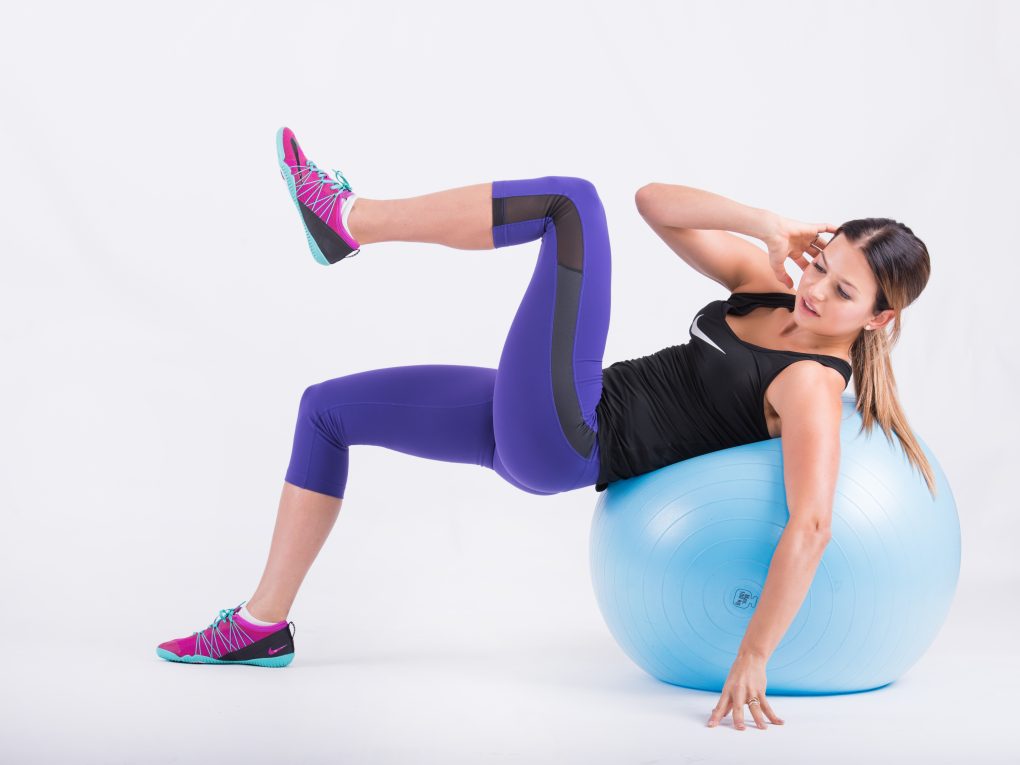
STABILITY BALL EXERCISES
Just warm up and do it!
Ten exercises on an exercise ball, each shown in the start and finish position. Repeat each exercise 15-30 times.
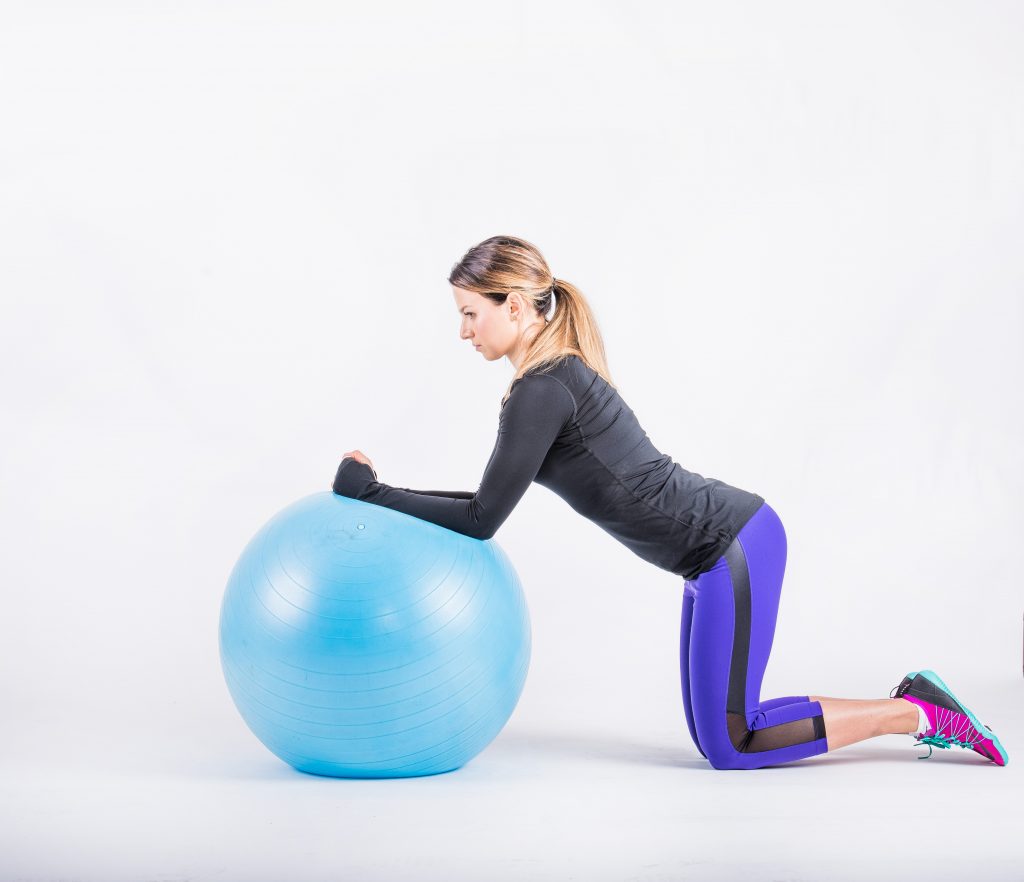
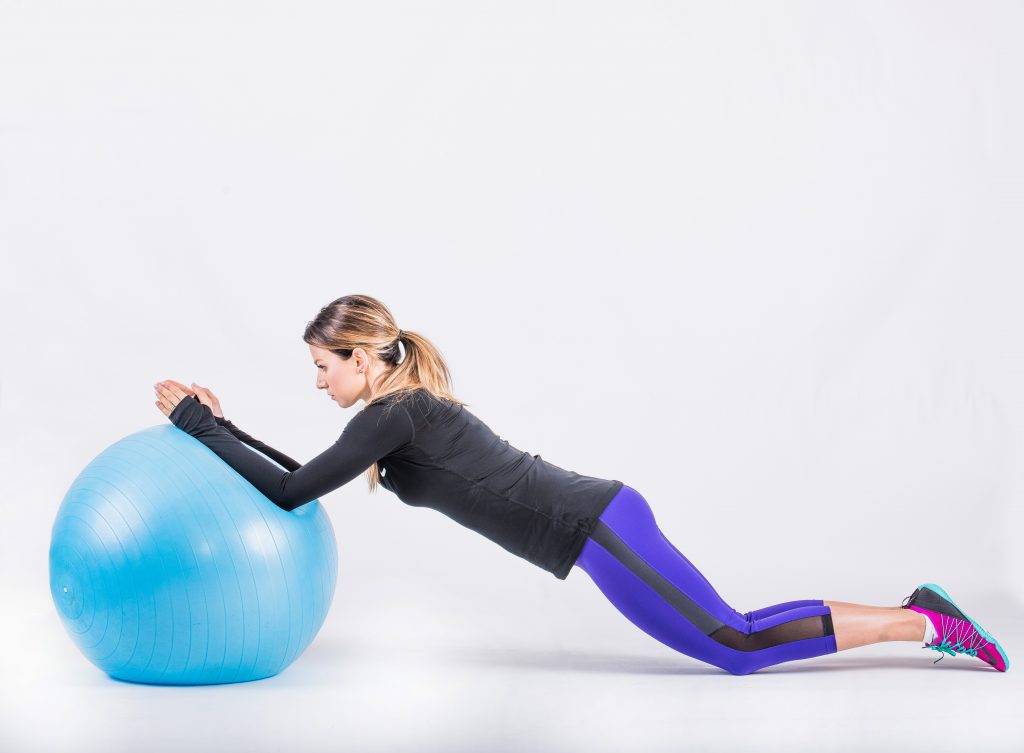
1. Ball rollout from the knees
Kneel behind the ball, with arms down on top. Slowly use the arms to push the ball forward until the legs are almost all the way extended with the knees on the ground. A tight core will keep the body moving straight ahead. Roll the ball backwards and go back to the starting position.
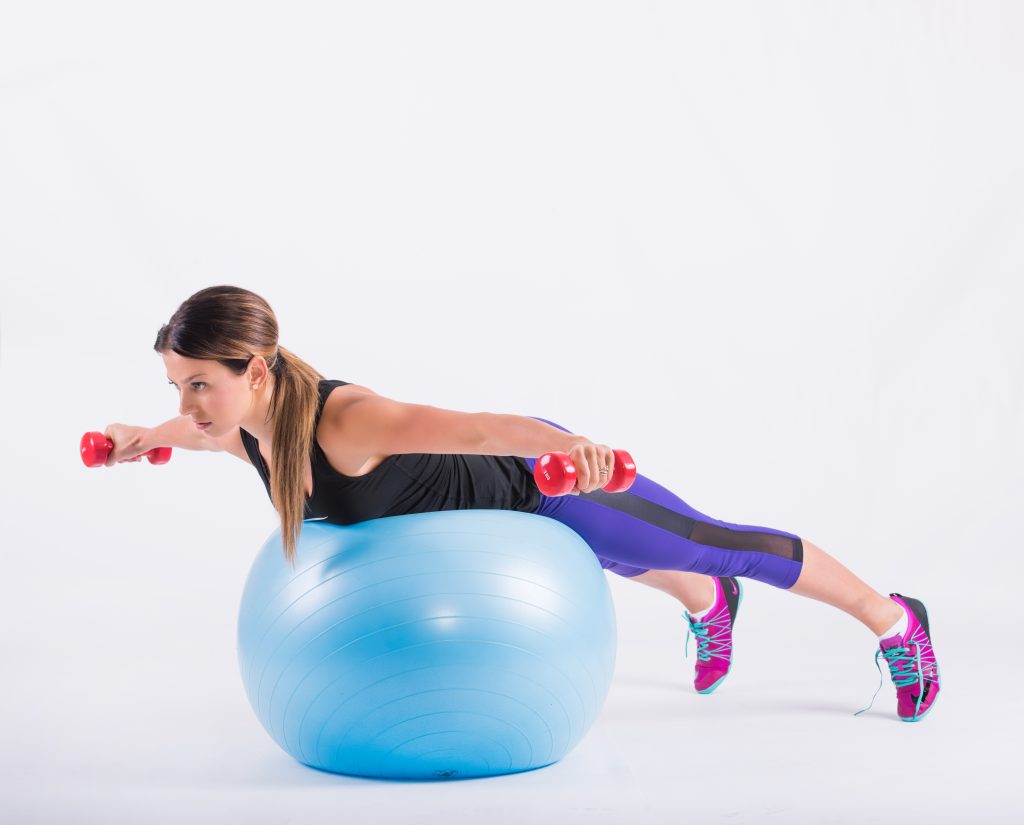
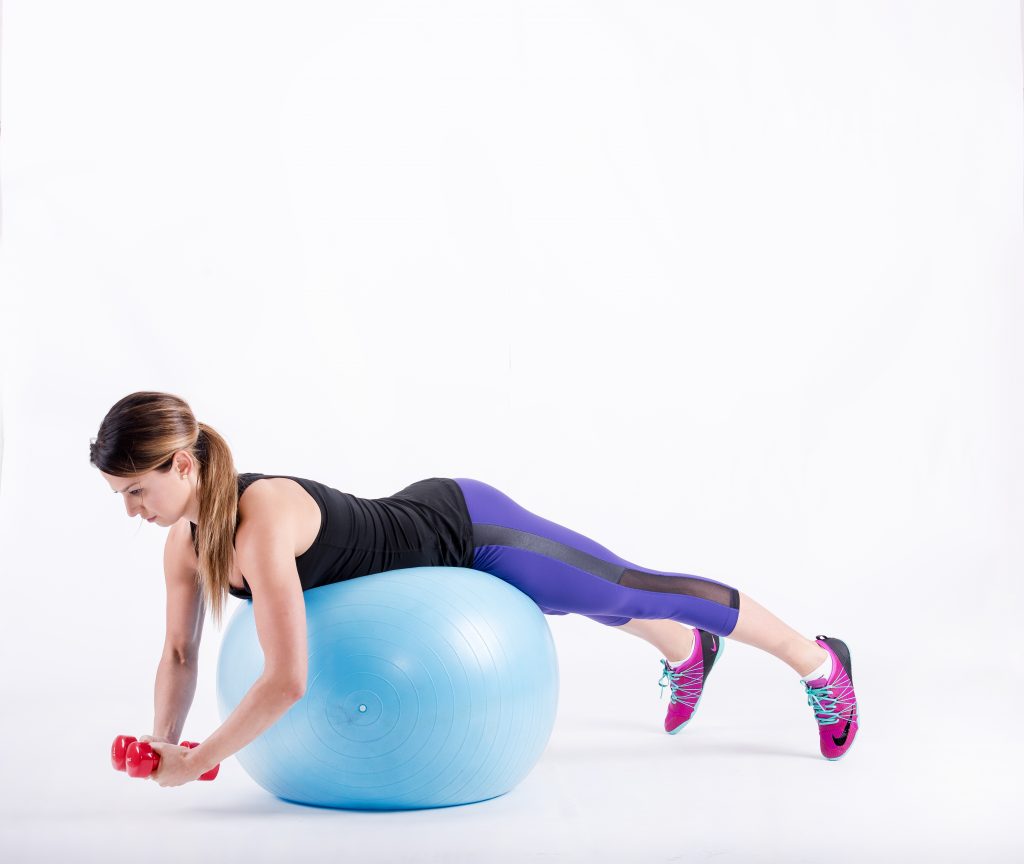
2. Reverse fly over the ball
Start with the stomach and hips on the ball, legs extended straight behind, toes resting on the ground. Take dumbbells, remembering that their weight needs to suit your abilities, and hold them out to your sides with elbows at 90 degrees. Slowly lower them back down to bring your hands together, elbows out to the sides.
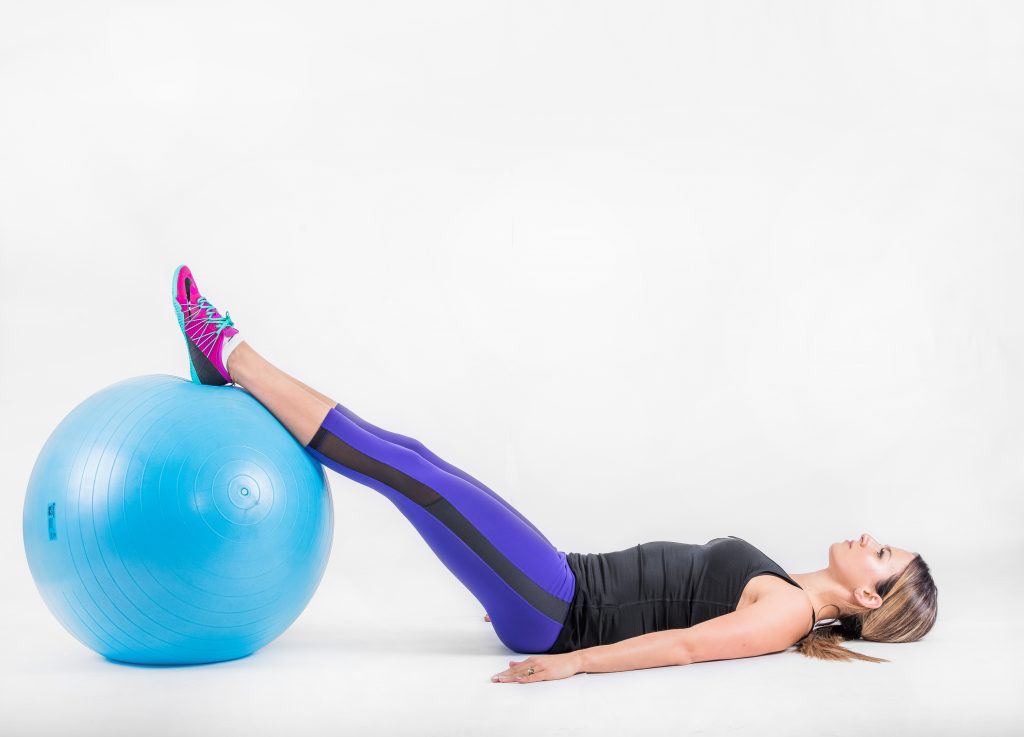
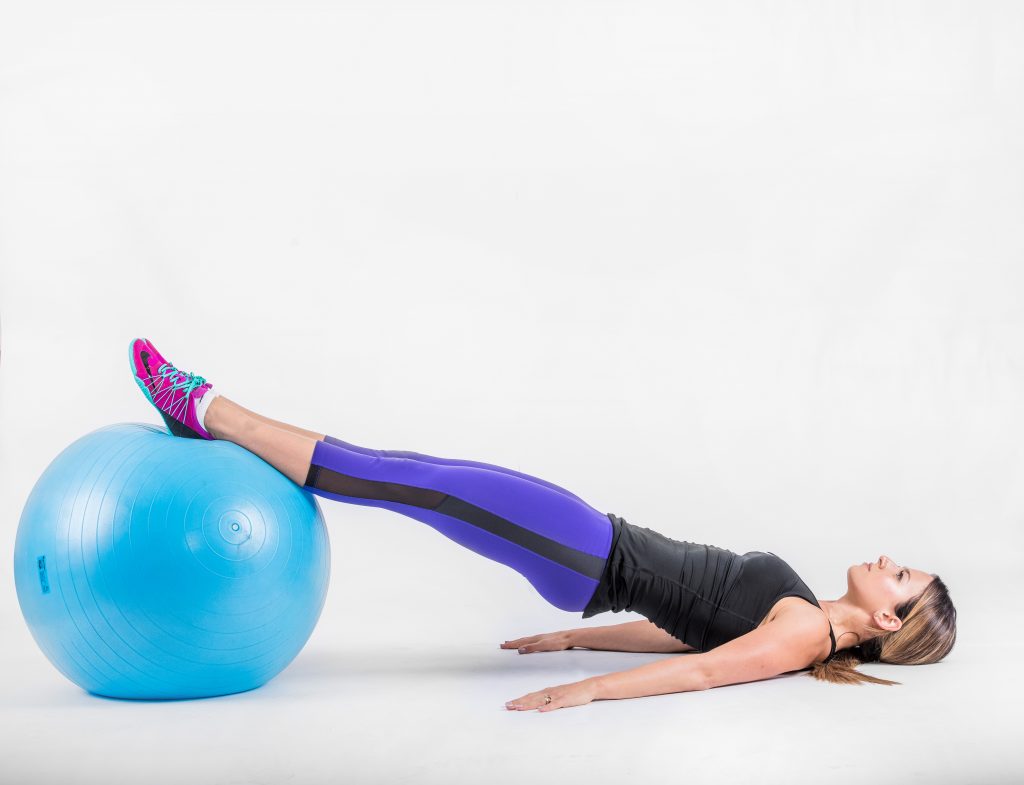
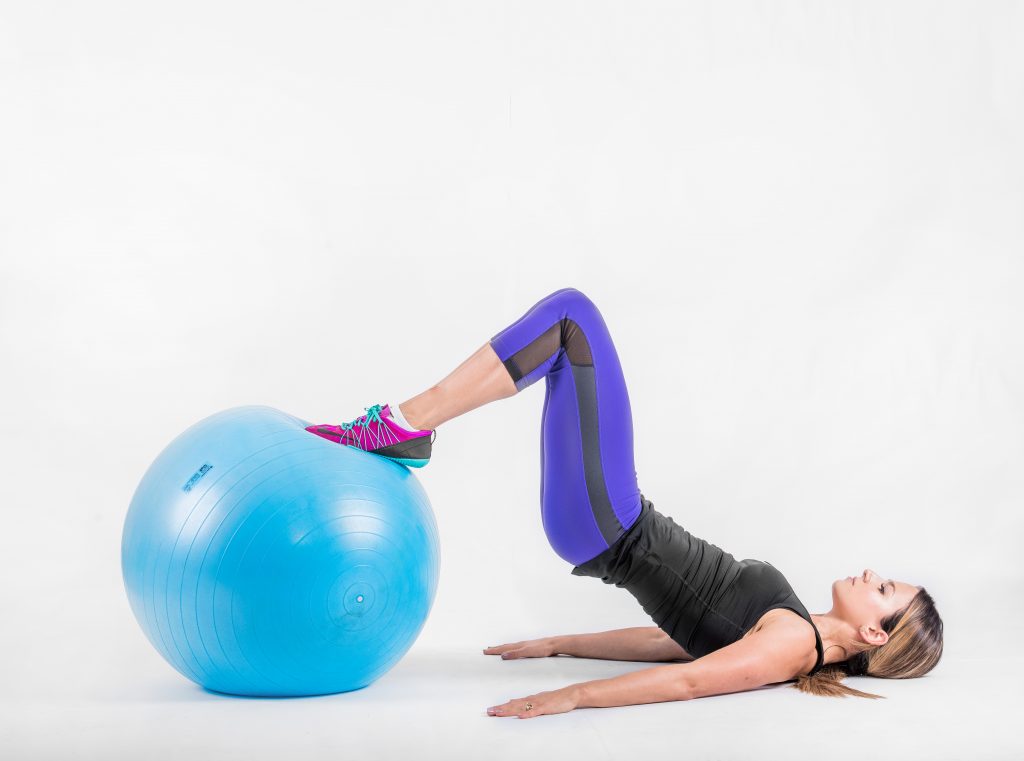
3. Hip lift with heels on the ball
Lie on the floor with arms extended perpendicular to the torso and lower calves and heels resting on the ball. Lift the hips up from the floor, keeping your glutes tight, and hold the body in one line for a moment. Then bring the knees in towards the hips, so the feet rest flat on top of the ball.
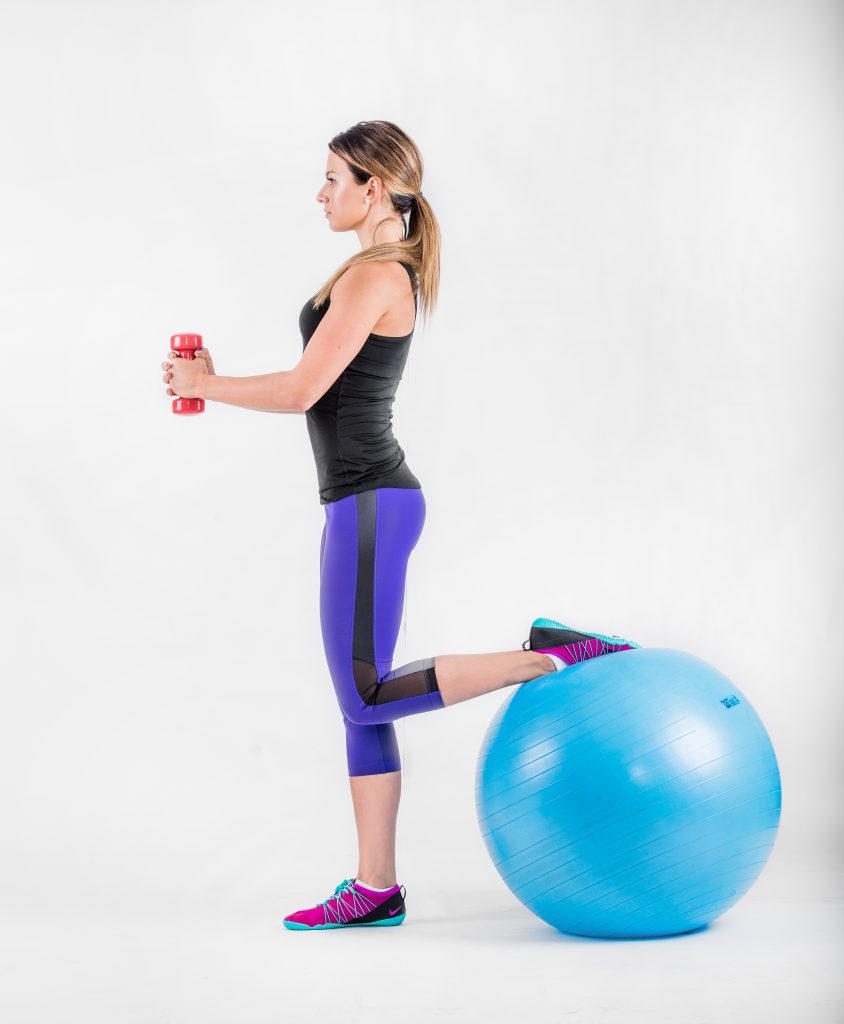
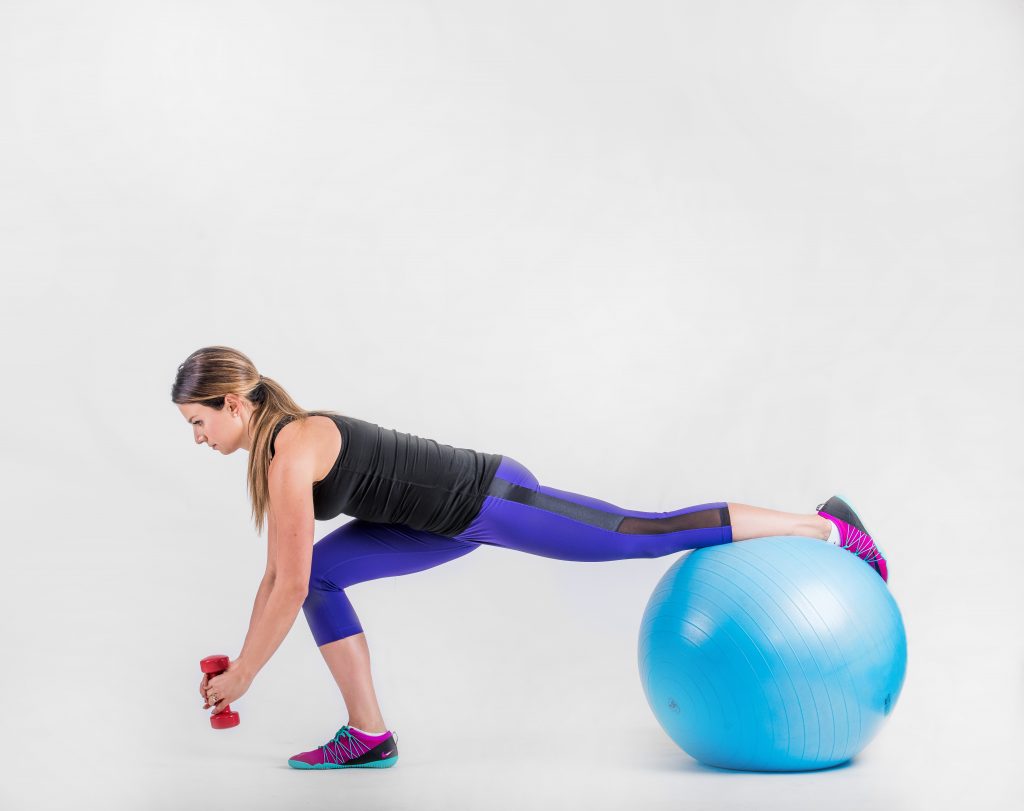
4. Split squat with the rear foot on the ball
Take a dumbbell. Stand with one ankle on top of the exercise ball behind you and lower down until your knee is at a 90 degree angle. Raise yourself up by extending your leg and lean forward afterwards, keeping the knee at 90 degrees.
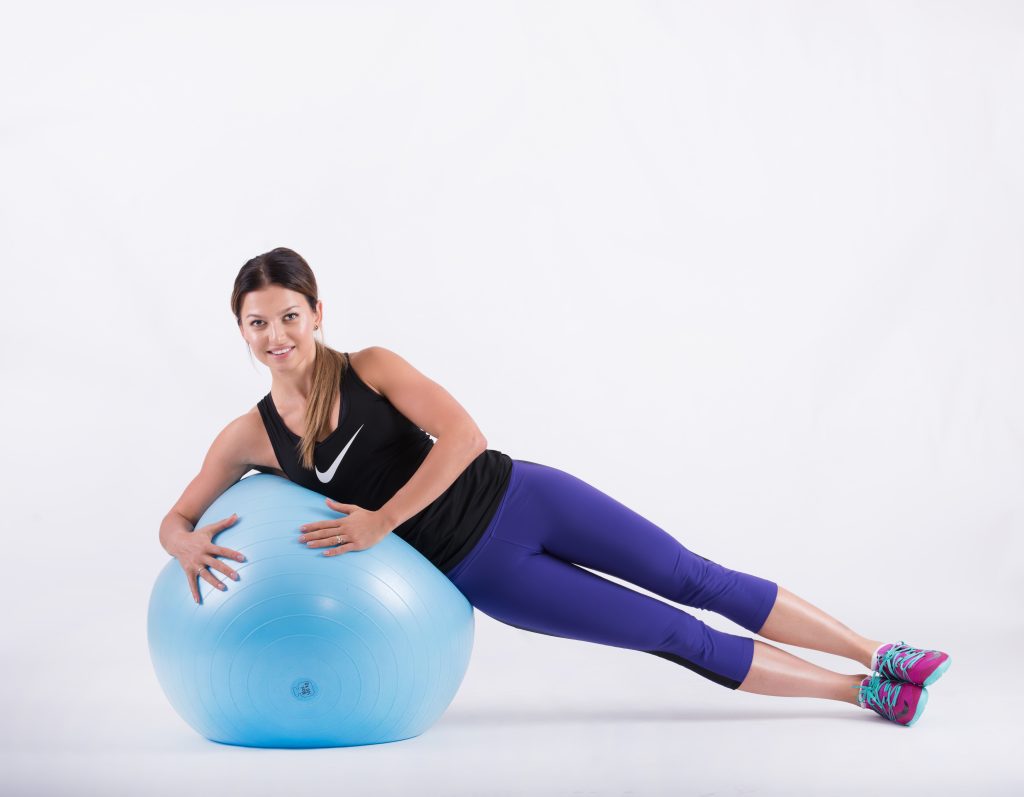
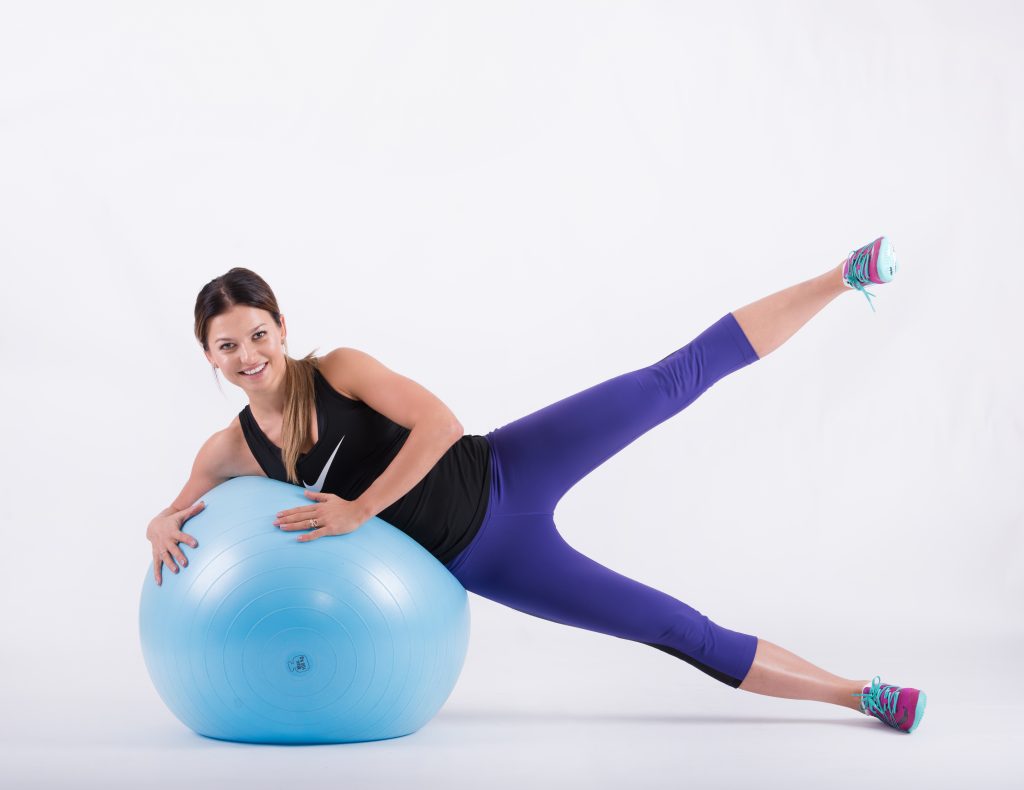
5. Side leg lift against the ball
Lean on your side pressed against the exercise ball, back and legs extended, hands on the ball. Lift your upper leg, keep stable, stomach and core tight. Repeat on each side.
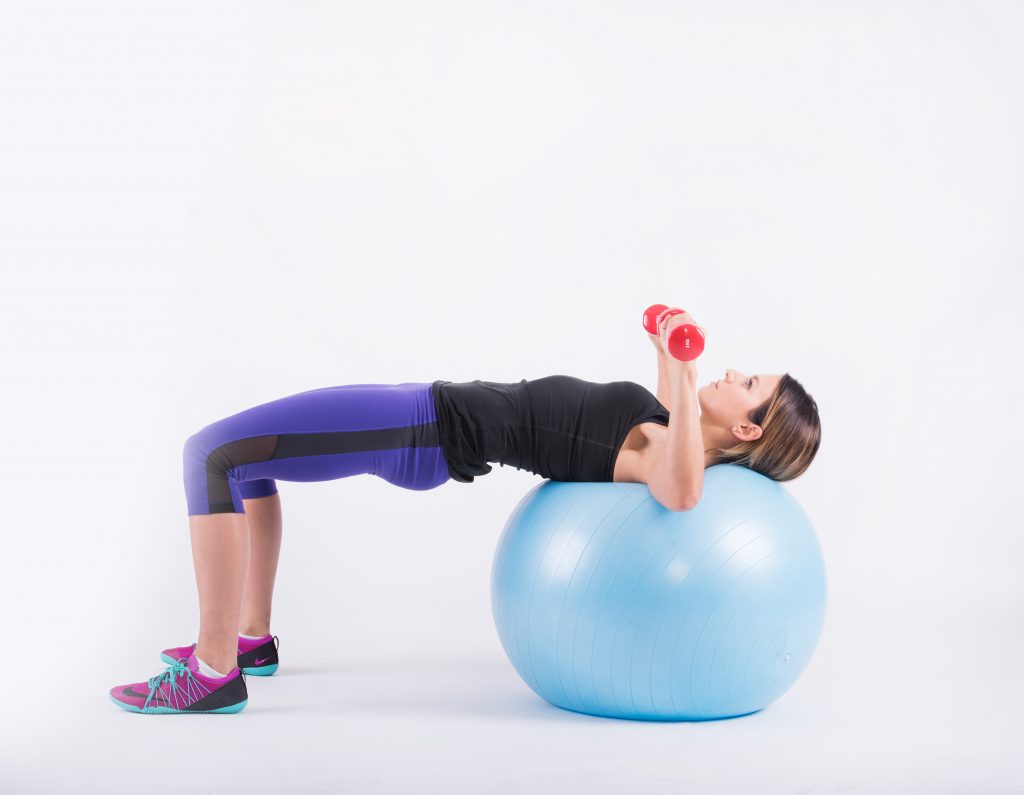
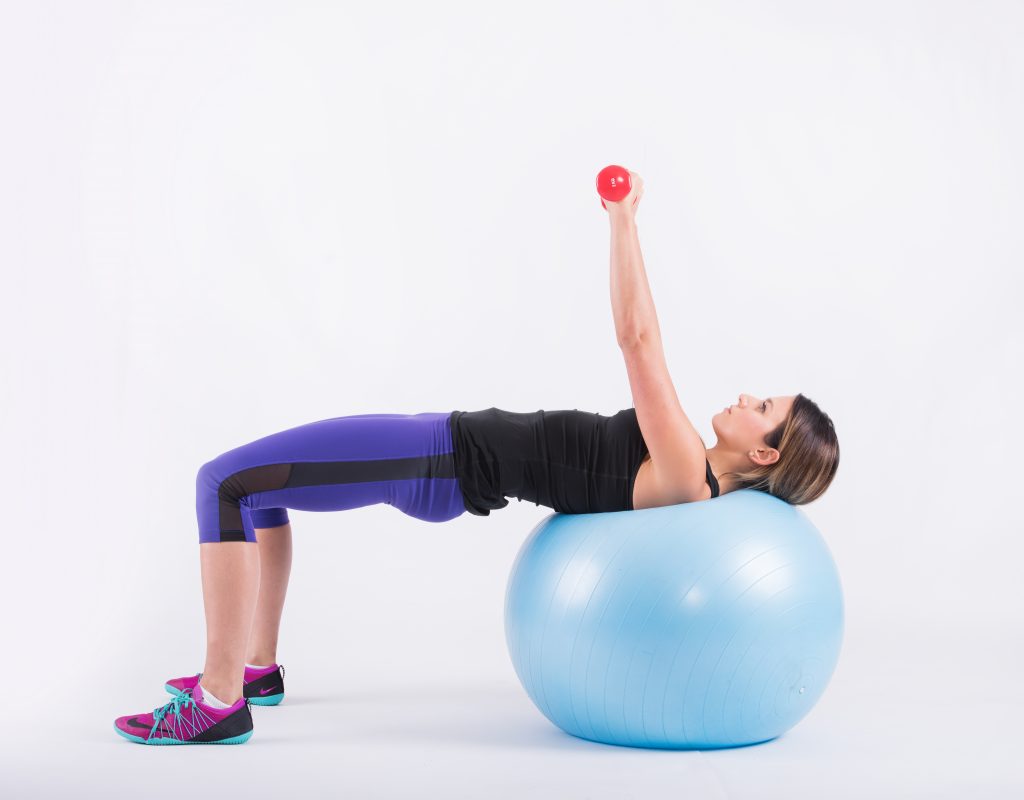
6. Chest press with the shoulder blades on the ball
Lie on your back with the shoulder blades on top of the exercise ball, back extended, knees flexed at 90 degrees, holding dumbbells on each side of your chest. Push the dumbbells straight up and slowly lower them after a short pause, until the elbows are at 90 degrees. Your whole body works in this one.
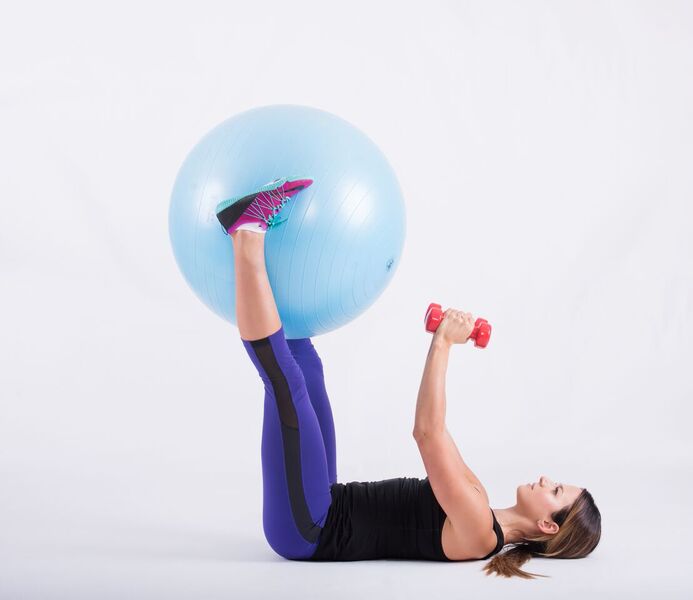
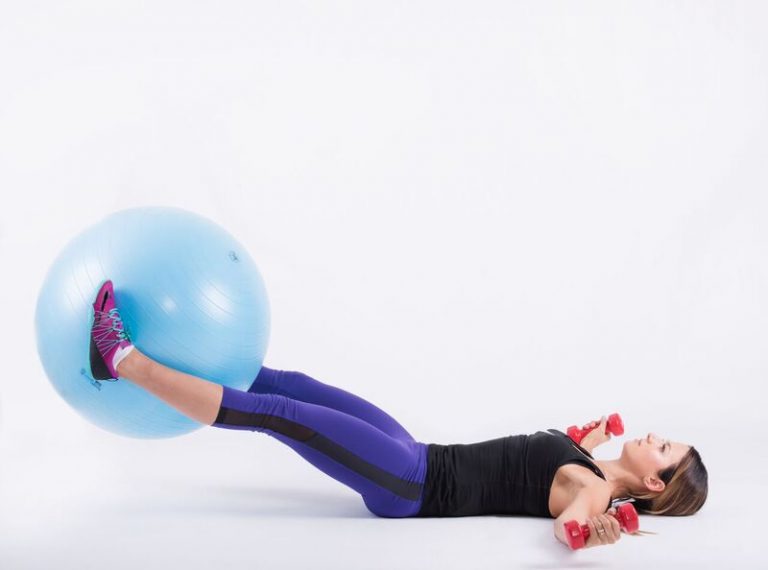
7. Dead bug with the ball between the legs
Lie on your back and grip the exercise ball between your legs below the knees. Take dumbbells. Keep the ball held at 90 degrees. Simultaneously lower your feet towards the ground, to about 45 degrees, and your arms out to the sides. Neither arms nor legs touch the ground.
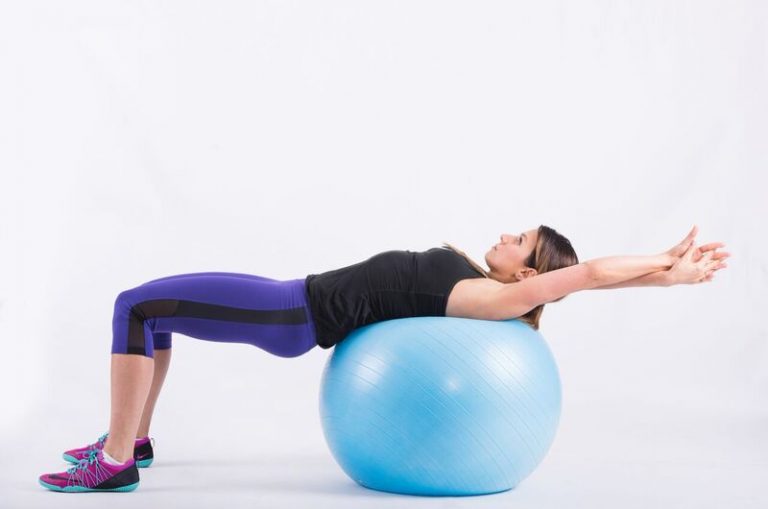
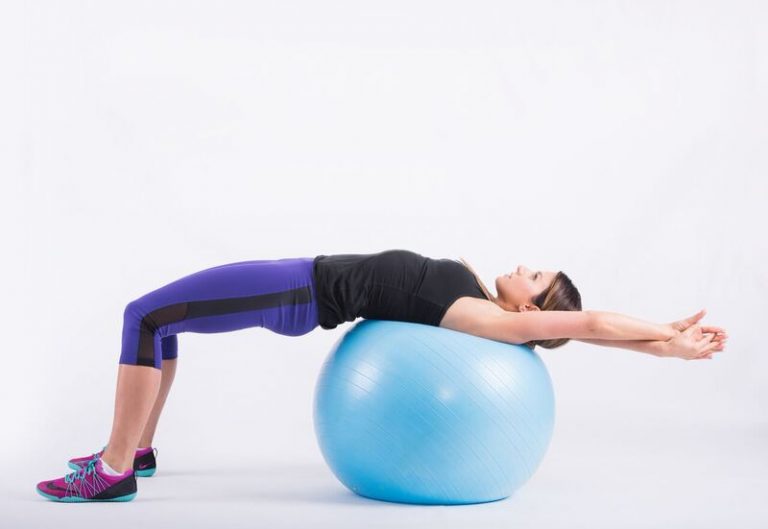
8. Back extension against the ball
Crouch down on your feet, press your shoulder blades against the exercise ball behind you and place your arms behind your head, extended and crossed. Without moving your feet, extend your back until it is parallel to the floor and lower it back after a short pause. Legs at 90 degrees, glutes tight. Stay still and keep everything tight.
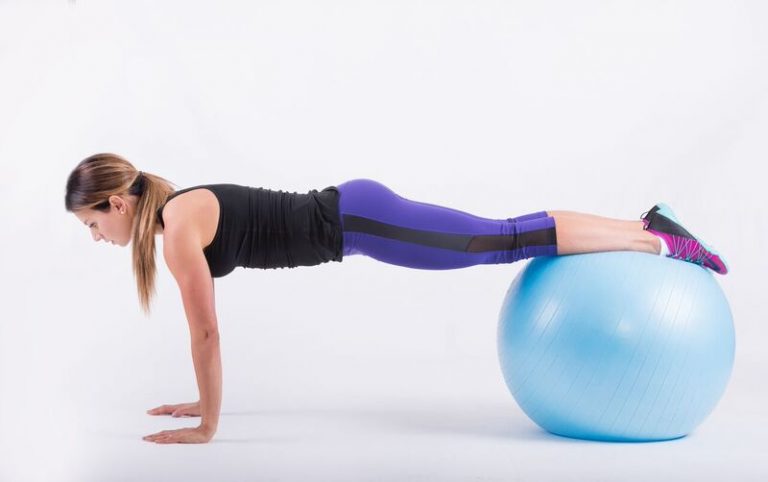
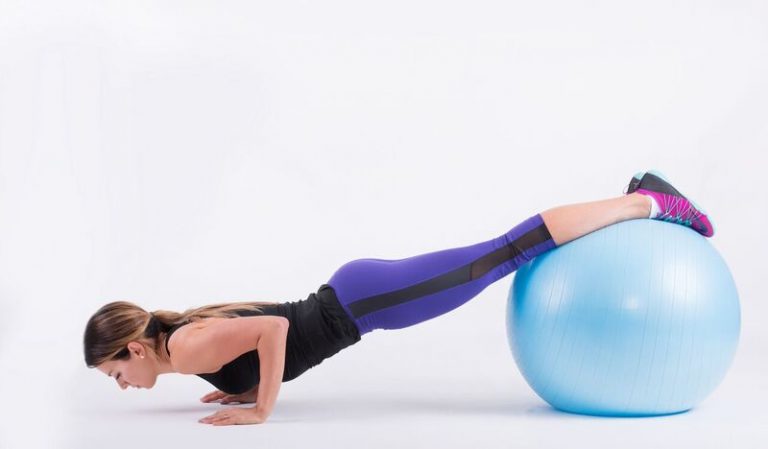
9. Press-up with the thighs on the ball
Lie face down with your thighs on top of the exercise ball, legs and back fully extended and hands on the floor, elbows bent. Push yourself up by extending your arms and slowly lower yourself back down. Tighten your belly and glutes and control your body. If it is too hard, skip the press-up.
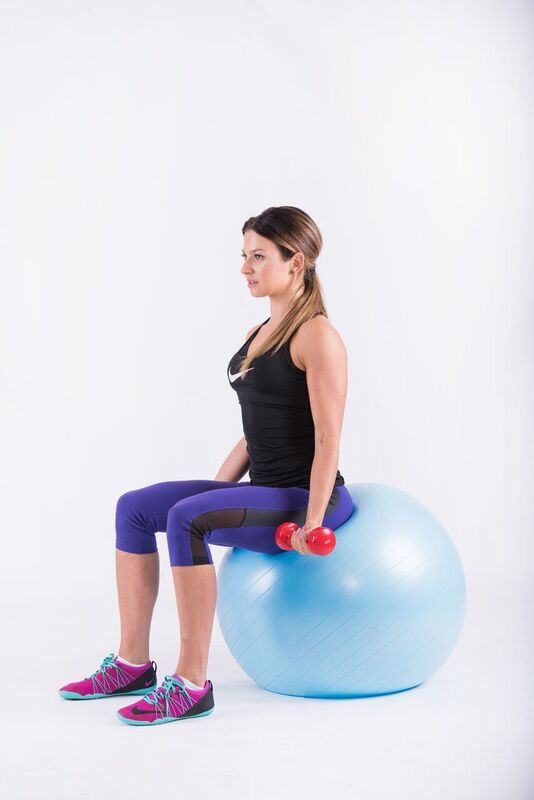
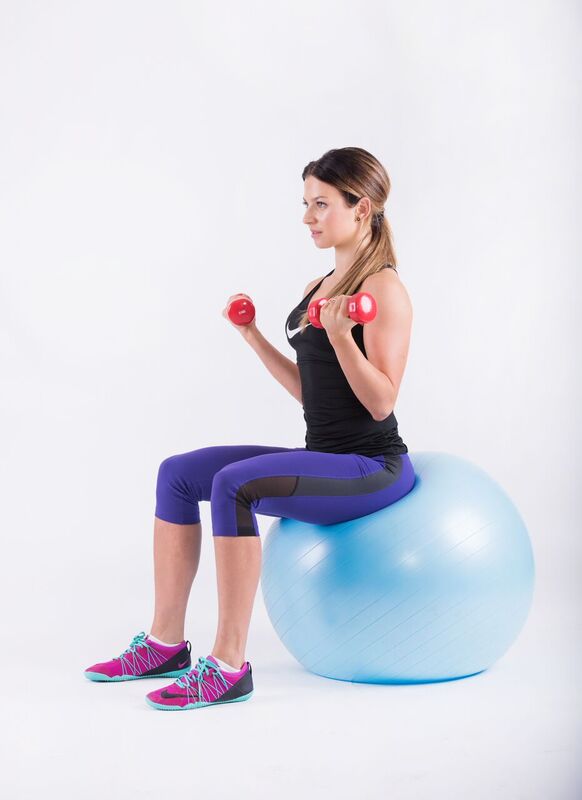
10. Biceps curl seated on the ball
Sit on the ball. Hold the dumbbells at the sides of your body. Bend your elbows and tighten your biceps. Keep your back straight and stay still.
Pick the right ball size
Almost every problem with these exercises comes down to the ball being the wrong size, and the test takes five seconds: sit on it with your feet flat on the floor and your knees should form a right angle, with the thighs parallel to the ground. As a starting point, a 55 cm ball suits heights up to about 165 cm, 65 cm up to about 180 cm, and 75 cm above that.
Inflation matters as much as diameter. A softer ball is more stable and easier for a beginner, a firmer one rolls more and demands more from the core. Inflate it to the marked size rather than until it is hard, and check it every few weeks, since balls lose air slowly and a sagging ball changes every angle in this workout.
The ball is the point, so go slowly
These are not the same movements done on a bench. The instability is the training effect: the core works constantly to stop the ball moving, which is why the instruction to stay tight and controlled repeats through the whole list.
That also means speed works against you here in a way it does not on solid ground. A fast repetition lets momentum carry the ball while the stabilising muscles switch off, which is the whole reason for using it. Slow down until you can feel the small corrections your body is making, and stop the set when those corrections turn into wobbling.
Where to set the ball up
Give yourself clear floor space on every side, because a ball that shoots out from under you needs somewhere to go and so do you. Bare floor is more slippery than a mat, and for the exercises where the ball is behind you, a wall a step away is a useful backstop rather than an obstacle.
Shoes with grip help more than you would expect in the split squat and the rollout, where the foot on the ground does all the anchoring. And 15 to 30 repetitions is a wide range on purpose: start at the bottom of it, and move up only once the movement stops wobbling.
Frequently asked questions
Sit on it with your feet flat on the floor: your knees should form a right angle and your thighs should be parallel to the ground. As a starting point, 55 cm suits heights up to about 165 cm, 65 cm up to about 180 cm and 75 cm above that.
Yes, as much as the diameter. A softer ball is more stable and easier for a beginner, a firmer one rolls more and demands more from the core. Inflate to the marked size rather than until it is hard, and check every few weeks, since a sagging ball changes every angle in the workout.
Because the instability is the training effect. A fast repetition lets momentum carry the ball while the stabilising muscles switch off, which is the whole reason for using it. Slow down until you can feel the small corrections your body is making.
When the corrections turn into wobbling. The range of 15 to 30 repetitions is wide on purpose: start at the bottom of it and move up only once the movement stops wobbling.
Clear floor space on every side, because a ball that shoots out from under you needs somewhere to go and so do you. For the exercises where the ball is behind you, a wall a step away is a useful backstop, and shoes with grip help in the split squat and the rollout, where the foot on the ground does the anchoring. Sessions like this one come planned out with video for each exercise in the Diet & Training by Ann app.
If you would rather have sessions like this one planned out for you, with video showing each exercise, that is what the Diet & Training by Ann app does.

Comments No Comments
Join the discussion…