


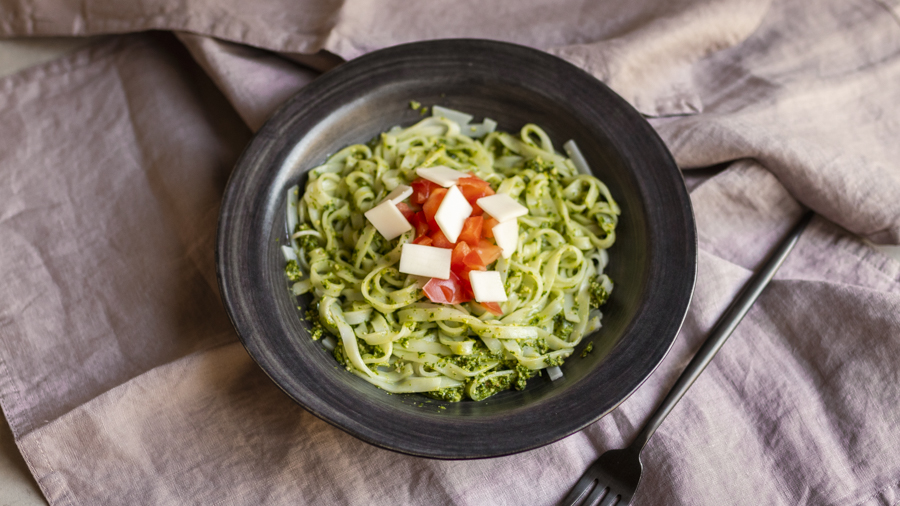
Pasta with Parsley Pesto & Goat Cheese
Spring is in full bloom and it’s green all around, and so should be our plates! Who likes pesto? This aromatic, green sauce is usually associated with basil, but I have a slightly different idea for you: parsley pesto. You know that I avoid boredom, also in the kitchen, and this recipe for pesto is just what I like.
There are lots of nutritious properties that parsley leaves offer, so let me just name a few. They contain a valuable combination of vitamin C and iron. In this duo, the absorption of iron is significantly improved, which is of great importance in the case of the plant origin of this ingredient.
What’s more, parsley is great for refreshing your breath. So let’s shop for the ingredients and get down to preparing a delicious spring lunch.
Preparation
I cooked the pasta following the recipe on the package. I cut the tomato and cheese into cubes, and chopped the parsley. I prepared the pesto by blending parsley with olive oil, lemon juice, salt, pepper, and almonds (if the pesto is too thick, you can add a little water and blend it again). I mixed the pasta with the pesto and added the tomato on top. I sprinkled it all with cheese.
Which parsley, and use the stems
Flat-leaf parsley is the one for this. It has a rounder, less grassy taste than the curly kind, which turns harsh when blended in quantity, and three quarters of a bunch is a lot of parsley.
The thin stems go in with the leaves. They carry as much flavour as the leaves and blend down completely, so stripping them off is work that costs you taste. Only the thick woody ends at the very bottom of the bunch need to go.
Why the pesto turns dark, and how to stop it
Blended raw parsley oxidises and the bright green fades towards olive within a couple of hours. The lemon juice in the recipe slows this down, which is one of the reasons it is there alongside the flavour.
If you want the colour to hold, drop the parsley into boiling water for ten seconds, then straight into cold water and squeeze it dry before blending. Blanching sets the green and softens the raw bite. Either way, keep the finished pesto in a jar with a film of olive oil on top, which is what actually keeps air off it.
Use pasta water, not tap water
The recipe says to add a little water if the pesto is too thick, and there is a better liquid within reach. Save a few tablespoons of the starchy water the pasta cooked in: the starch helps the sauce cling to the pasta instead of pooling at the bottom of the bowl, and it is already salted and hot.
Scoop it out just before draining and add it a tablespoon at a time. It is the difference between pasta that looks coated and pasta sitting in a puddle of green oil.
Rice pasta needs watching
Rice pasta goes from firm to falling apart in about a minute, with far less warning than wheat. Start tasting two minutes before the package time says, and drain it while it still has real bite, because it keeps softening in the hot pesto.
It also releases more starch, so rinsing briefly under warm water stops the strands gluing together. Do it only if you are serving straight away: rinsed pasta takes sauce less well, so this is a trade rather than an improvement.
Assembly and keeping
The tomato and goat cheese go on at the end, not into the hot pan. Cheese stirred through hot pasta melts into strings and disappears, while cubes scattered on top stay as distinct salty bites, which is the contrast this dish is built on.
The pesto keeps five days in the fridge under its layer of oil and freezes well in an ice cube tray, which is worth doing with three quarters of a bunch of parsley. Dressed pasta does not keep: make the pesto ahead, cook the pasta when you want to eat. If you would rather have spring lunches like this one planned into the week with a shopping list, that is what the Diet & Training by Ann app does.
Pasta with parsley pesto
Ingredients
Method
- Cook the pasta following the recipe on the package, tasting from two minutes before the stated time and draining it while it still has bite.
- Save a few tablespoons of the starchy pasta water before draining.
- Cut the tomato and the goat cheese into cubes and chop the parsley, thin stems included.
- Blend the parsley with the olive oil, lemon juice, salt, pepper and almonds, loosening the pesto with the reserved pasta water a tablespoon at a time.
- Mix the pasta with the pesto, scatter the tomato on top and finish with the goat cheese.
Notes
Frequently asked questions
Flat-leaf. It has a rounder, less grassy taste than the curly kind, which turns harsh when blended in quantity, and three quarters of a bunch is a lot of parsley. The thin stems go in with the leaves, since they carry as much flavour and blend down completely.
Blended raw parsley oxidises and the bright green fades towards olive within a couple of hours. The lemon juice slows it down. To hold the colour properly, drop the parsley into boiling water for ten seconds, then into cold water, and squeeze it dry before blending.
Starchy water from the pasta rather than tap water. The starch helps the sauce cling to the pasta instead of pooling at the bottom of the bowl, and it is already salted and hot. Scoop a few tablespoons out just before draining.
Start tasting two minutes before the package time and drain it while it still has real bite, because it keeps softening in the hot pesto. Rice pasta goes from firm to mush in about a minute, with far less warning than wheat.
Five days in the fridge under a film of olive oil, which is what actually keeps the air off it, and it freezes well in an ice cube tray. Dressed pasta does not keep, so make the pesto ahead and cook the pasta when you want to eat. Spring lunches like this one come planned into the week with a shopping list in the Diet & Training by Ann app.





Comments No Comments
Join the discussion…