


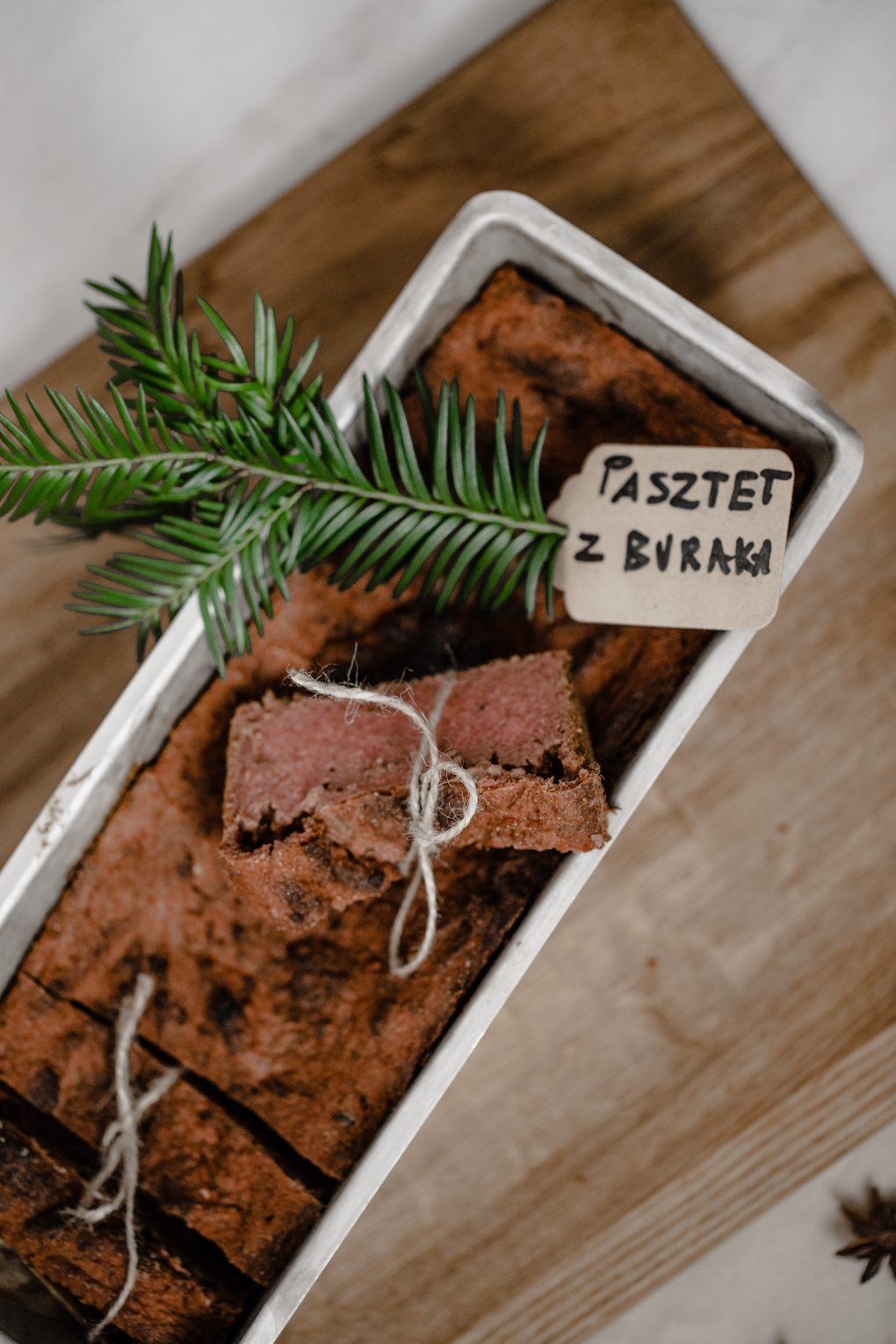
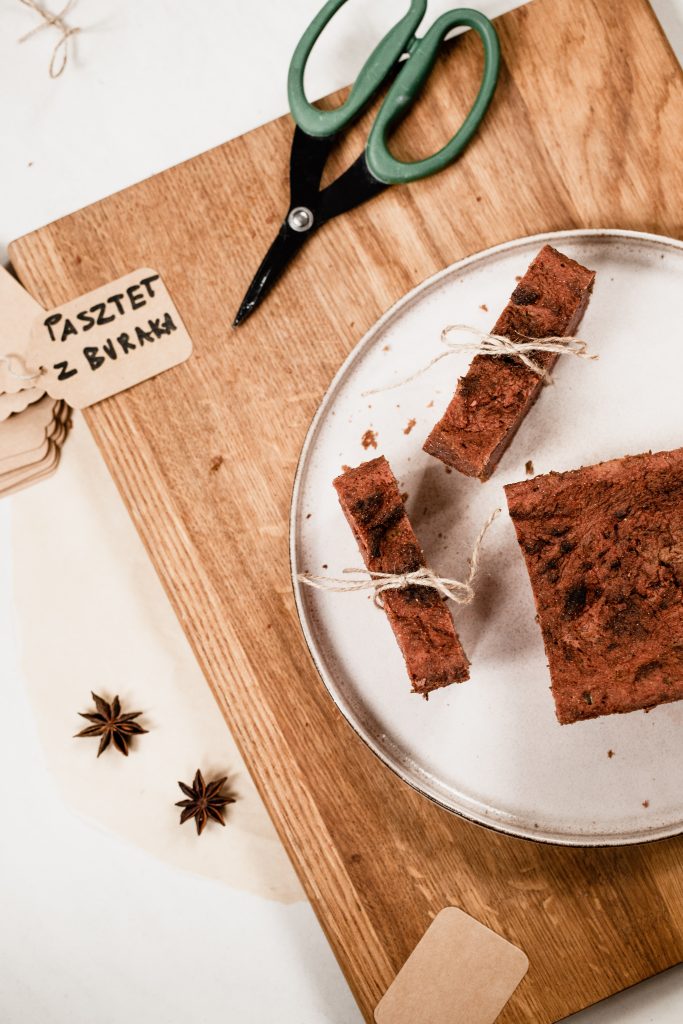
Beetroot Pate
INGREDIENTS:
- 200 g millet groats
- 500 g beets
- 2 white onions
-
1 tablespoon clarified butter
- 3 bay leaves
- 1 big apple
- 3 tablespoons corn flour
- a pinch of marjoram
- a pinch of thyme
- a pinch of oregano
- 2 tablepsoons flaxseed
- 1 tablespoon honey (optional)
 Buy
Buy I have been following your activity on my blog and I noticed that the recipe for cauliflower pâté has been really popular with you. It inspired me to develop one more recipe for vegetable pâté, this time made from beetroot. I recommend keeping it not only for the holiday season, but for the whole winter, when access to beets is almost unlimited. After all, we should eat seasonally all year round, not only in spring and summer.
Preparation
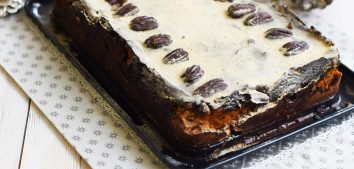
I rinsed the groats once or twice in cold running water, then cooked them following the recipe on the packaging. I baked the beets at 180°C (350°F) for about 45 minutes, then peeled and grated them. I chopped the onions finely and stewed them in clarified butter with a bay leaf. Then I added the cut apple and stewed it for a while with the lid on. I blended all the ingredients and seasoned them with the spices. Next I lined a tin with baking paper and poured in the mixture. I baked the pâté at 180°C (350°F) for about 45 minutes.
Bake the beets, do not boil them
Baking is what makes this pâté taste of beetroot rather than of a boiled vegetable. In the oven the beets lose water and their sugars concentrate, while boiling sends much of that flavour and colour into the water, which then goes down the sink.
Bake them whole and unpeeled, wrapped loosely in foil or in a covered dish. The skin holds the colour in and slips off easily once they have cooled a little, which is far less work than peeling them raw. Forty-five minutes suits medium beets; a knife should slide into the centre without resistance.
What holds a pâté together without eggs
There are no eggs here, so three ingredients share the job. The cooked millet is the body, the thing that turns a purée into something sliceable. The corn flour thickens as it bakes. The flaxseed holds water and gels, doing quietly what an egg would do.
None of the three can be cut without a replacement. If the mixture looks too wet before it goes into the tin, a spoonful more corn flour is the lever to reach for, not a longer bake, because extra time in the oven dries the surface long before it firms up the middle.
The apple and the bay leaf are the balance
Beetroot is sweet and earthy, and a whole tin of it can taste flat. The apple, stewed with the onion rather than added raw, brings acidity that lifts the whole thing, and the bay leaf works against the earthiness in the same way it does in a stock.
Stewing under a lid is deliberate: it softens the apple without browning it and keeps the liquid in the pan, which the blender then needs. The honey at the end of the list is optional for a reason, since how sweet this needs to be depends entirely on how sweet your beets and apple turn out.
The second 45 minutes, and why it must cool
The pâté goes into the oven already cooked through, so the second bake is not about cooking. It is about driving off moisture and setting the corn flour and flaxseed, which is what turns the mixture from a spread into a loaf you can cut.
It will still feel soft when it comes out, and that is normal. A pâté sets as it cools, so cutting it warm gives you a crumbling mess even when it was baked perfectly. Let it cool completely in the tin, then chill it for a few hours before slicing.
Keeping it
It keeps four days in the fridge, covered, and slices better on the second day than on the first. It also freezes well for three months, and freezing it already sliced, with baking paper between the pieces, means you can take out what you need.
Serve it cold, on bread or with a sharp pickle, which the sweetness asks for. If you would rather have winter cooking planned into the week with a shopping list, that is what the Diet & Training by Ann app does.
Beetroot pate
Ingredients
Method
- Rinse the millet groats in cold running water and cook them following the packet.
- Bake the beets whole and unpeeled at 180 C (350 F) for about 45 minutes, then peel and grate them.
- Chop the onions finely and stew them in clarified butter with the bay leaves.
- Add the chopped apple and stew for a while with the lid on.
- Blend all the ingredients together and season with the spices, adding honey to taste.
- Line a tin with baking paper, pour in the mixture and bake at 180 C (350 F) for about 45 minutes.
- Let the pate cool completely in the tin, then chill it for a few hours before slicing.
Notes
Frequently asked questions
Baking concentrates the flavour and keeps the colour, while boiling sends much of both into the water. Bake them whole and unpeeled, loosely wrapped, for about 45 minutes at 180 degrees; the skin slips off once they cool a little, which is far less work than peeling them raw.
Three things share the job. The cooked millet is the body that makes it sliceable, the corn flour thickens as it bakes, and the flaxseed holds water and gels, doing quietly what an egg would do. None of them can be cut without a replacement.
Add a spoonful more corn flour before it goes into the tin, rather than baking it longer. Extra time in the oven dries the surface long before it firms up the middle.
Balance. Beetroot is sweet and earthy and a whole tin of it tastes flat on its own, so the stewed apple brings acidity that lifts it and the bay leaf works against the earthiness the way it does in a stock.
Because it was cut too warm. The pate sets as it cools, so it will feel soft coming out of the oven even when baked perfectly. Let it cool completely in the tin, then chill it for a few hours. It slices better on the second day than the first. Winter cooking comes planned into the week with a shopping list in the Diet & Training by Ann app.




Comments No Comments
Join the discussion…