


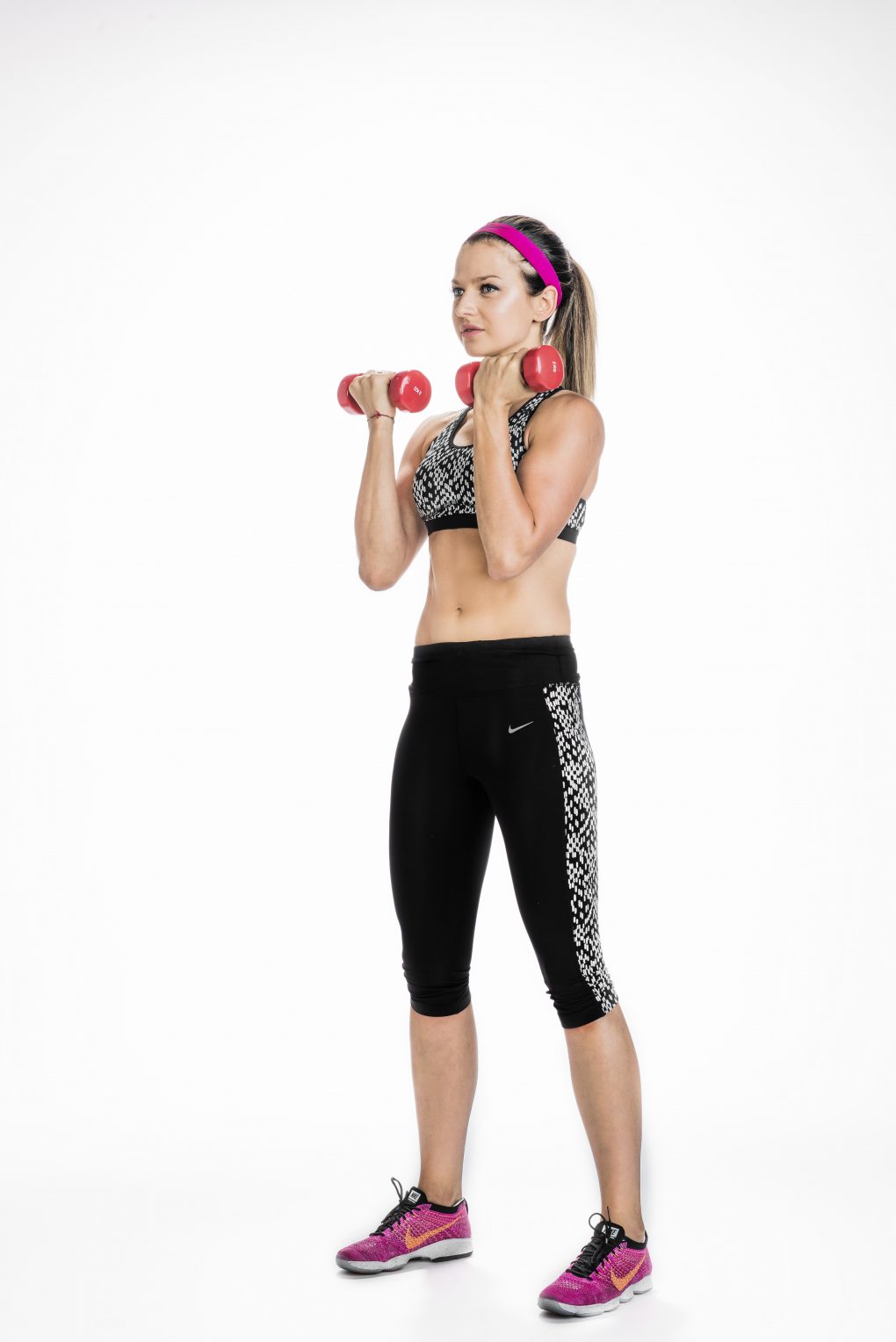
WORKOUT WITH WEIGHTS
Let’s take a break from all this cleaning and cooking! A quick warm-up and let’s exercise!
Shoulders are the part most home workouts skip, and they are the part that changes how everything you wear sits on you. This is a short set of five exercises with a pair of light weights, all done standing, and you can do the whole thing in a corner of a room.
Below is each exercise with photos of the start and finish position. Work through them in order.
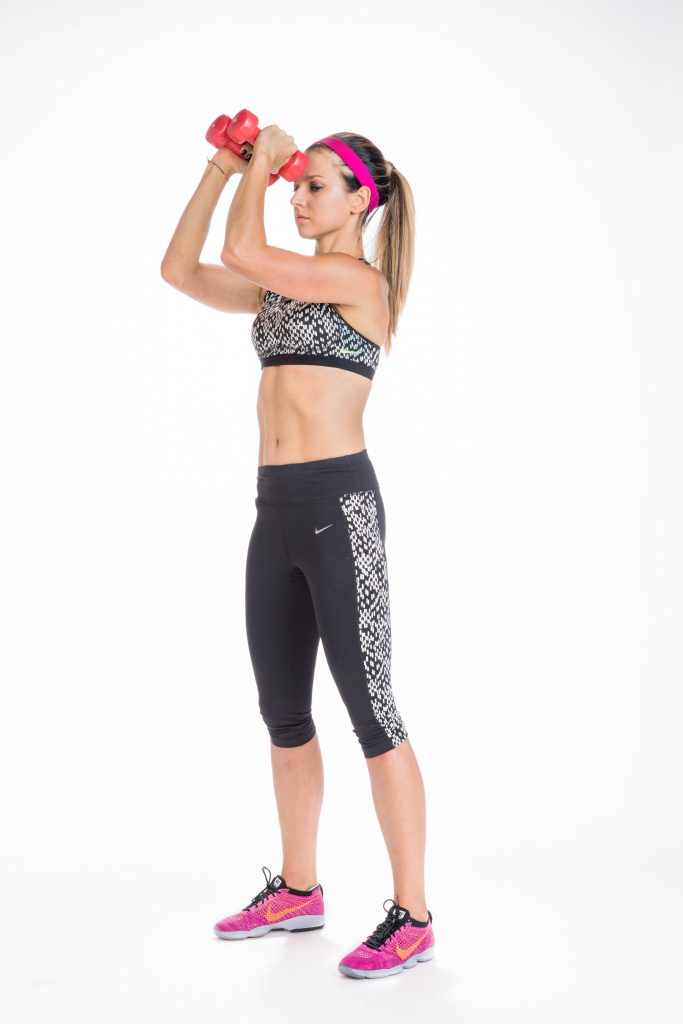
1. Overhead press
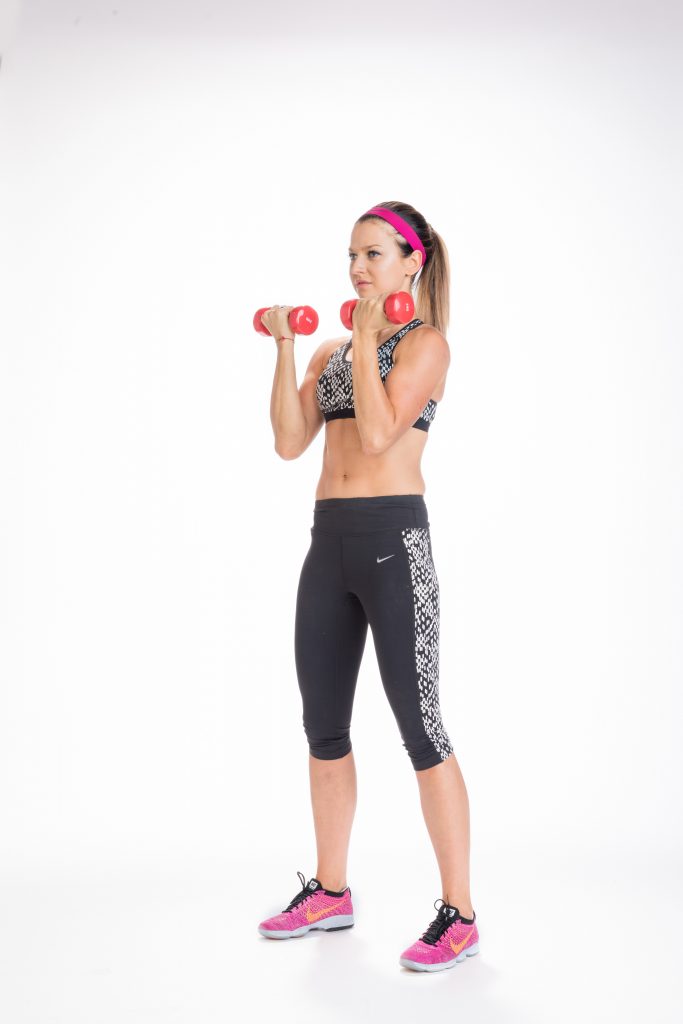
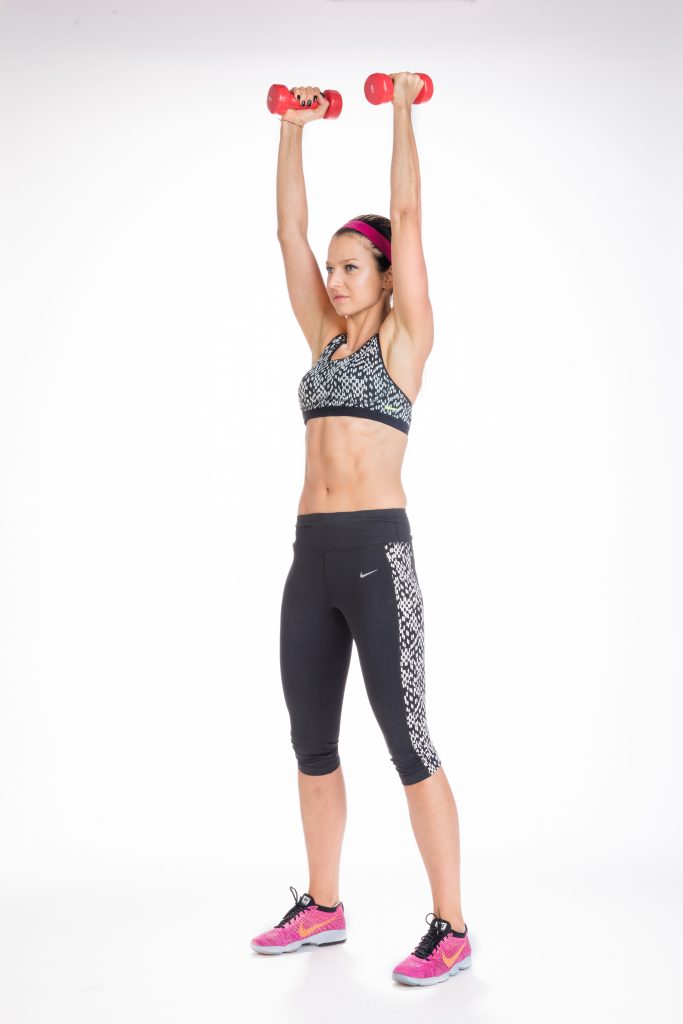
Feet planted at shoulder-width, back straight. Draw the weights towards yourself with your hands, just like in the picture. Straighten your arms above your head, tighten your tummy and buttocks. Back to the starting position. And repeat 30 times.
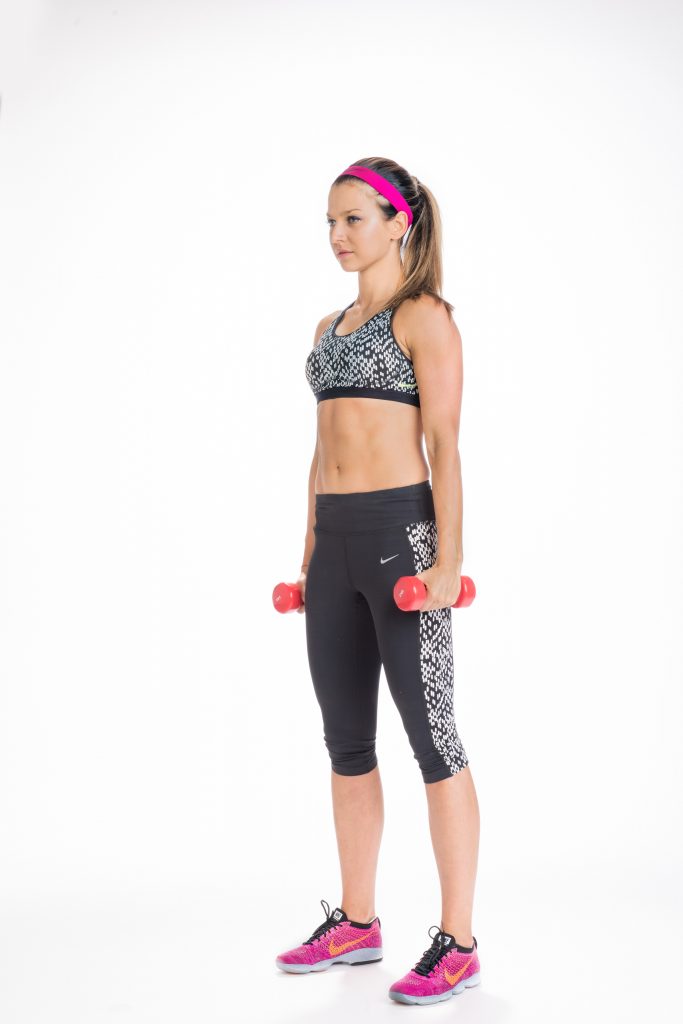
2. Upright row
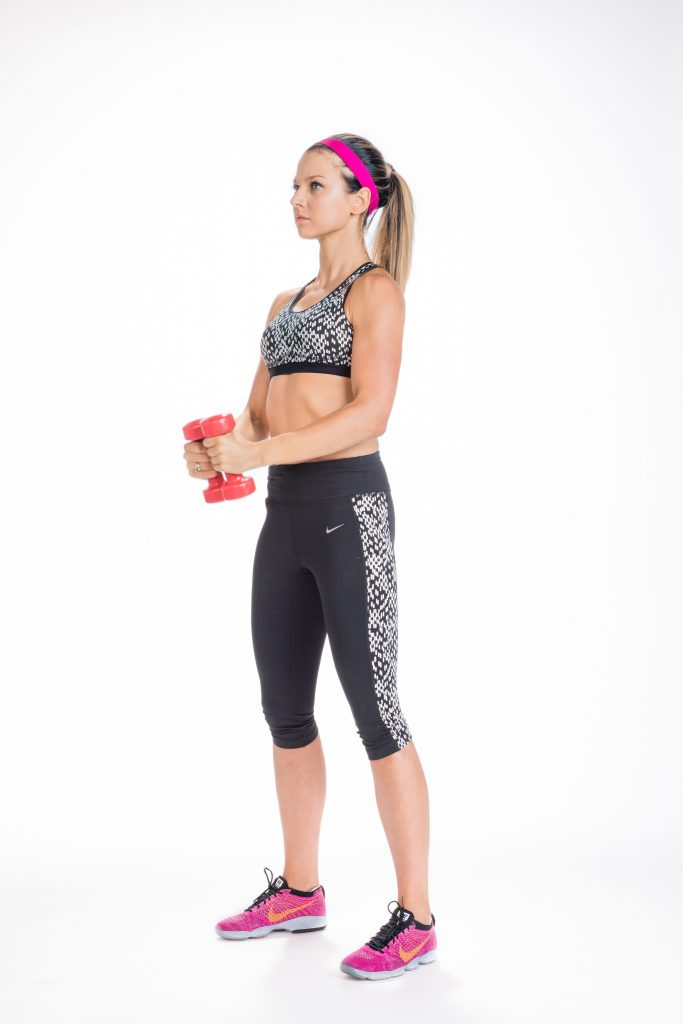
Feet planted at shoulder-width, back straight. Keep your hands (with weights) together, at your belly button level, just like in the picture. Pull your hands up to your face, draw your elbows together, keep your belly active and tighten your buttocks. Back to the starting position. Repeat 30 times.
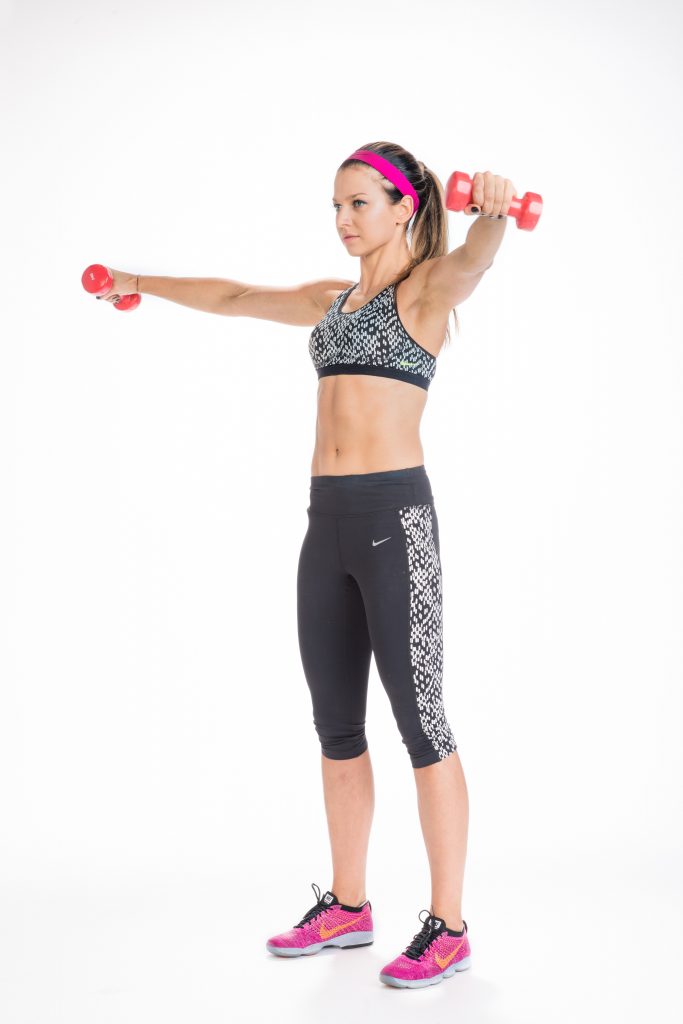
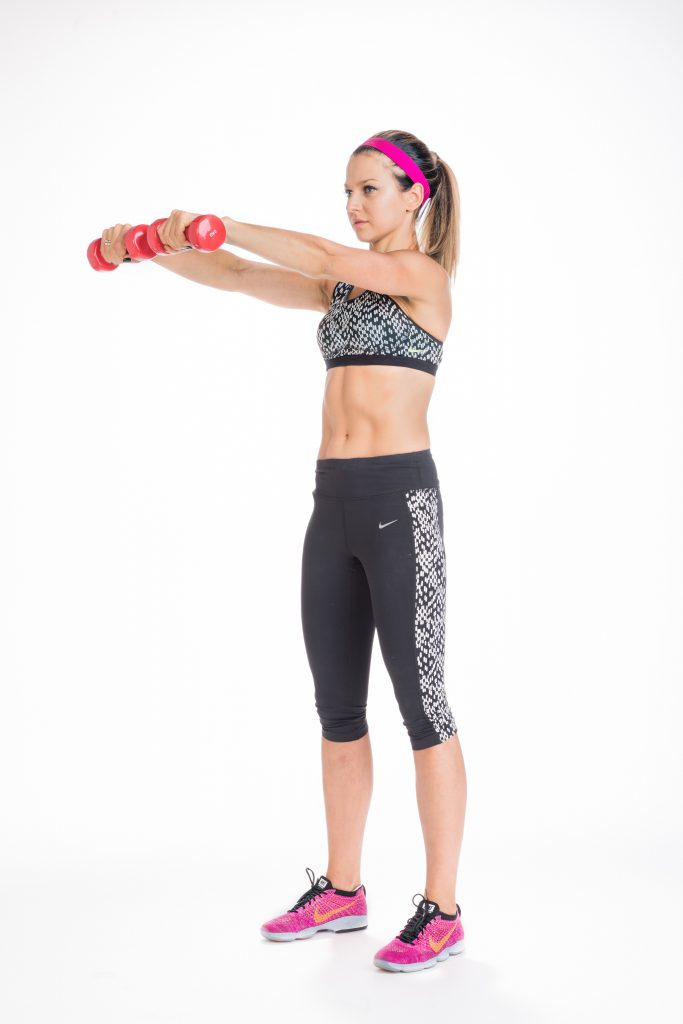
3. Lateral raise into a front squeeze
Feet planted at shoulder-width, back straight. Keep your arms along the sides of your body and keep the weights in your hands. Straighten your arms to the sides at the height of your shoulders, keep your body and arms in the same position. Keep your tummy active. Keeping your arms at the height of your shoulders, bring your arms together in front of you. Then go back and straighten your arms to the sides again. Go back to the starting position. Repeat 30 times.
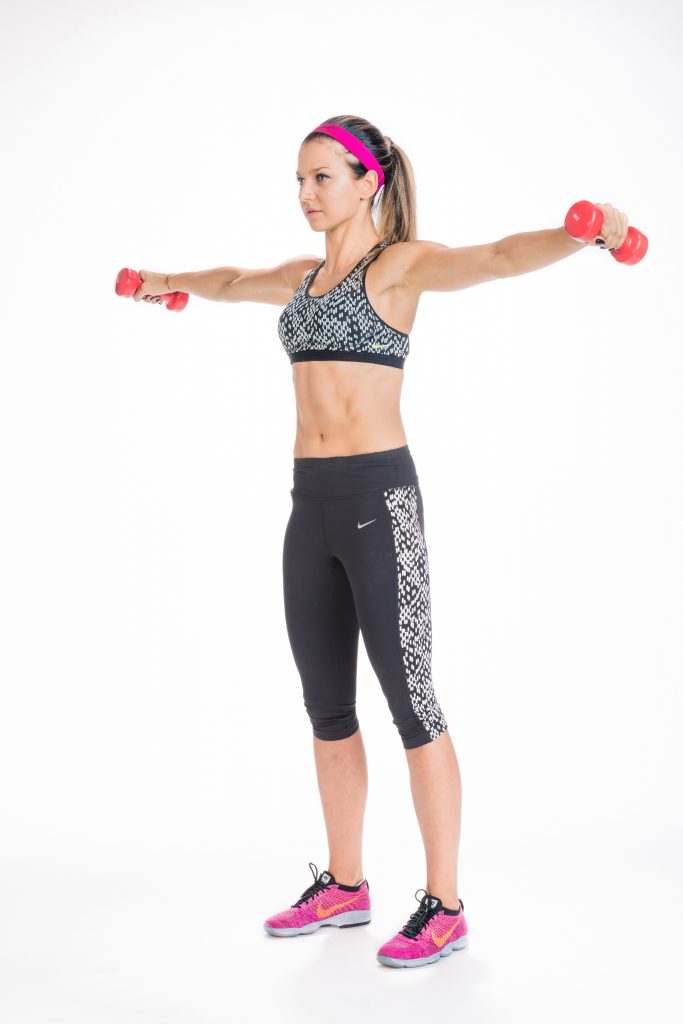
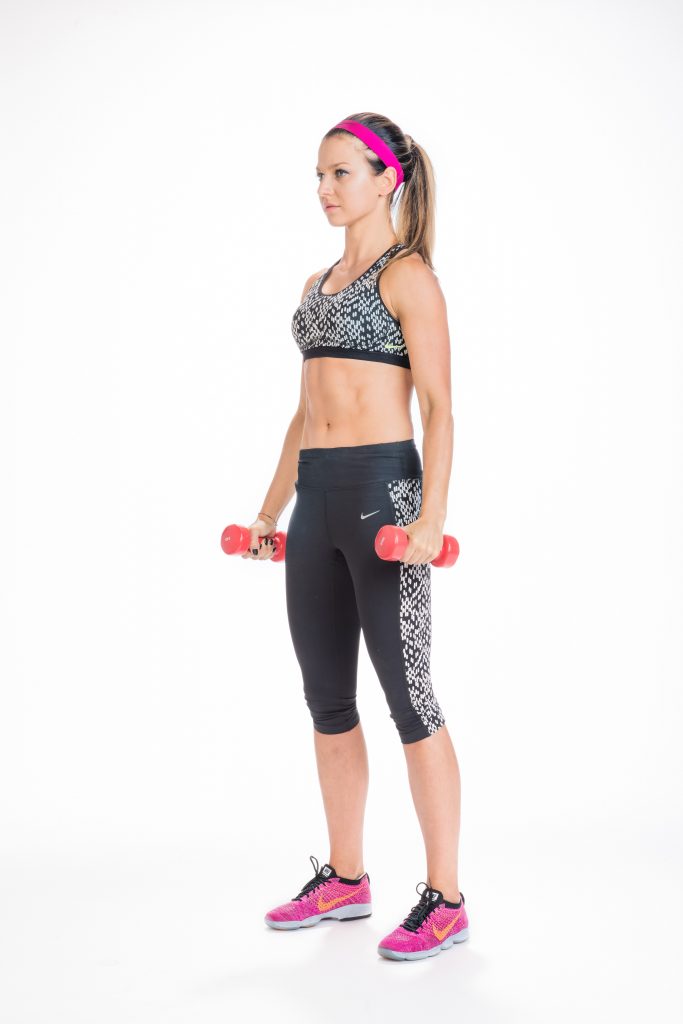
4. Bent-over lateral raise
Feet planted at shoulder-width, bend your knees a bit. Do a standing half forward bend. Keep your back straight. Lift your arms out (bent at right angle) to the sides, at the level of your shoulders. Keep that position. Back to the starting position. Repeat 30 times.
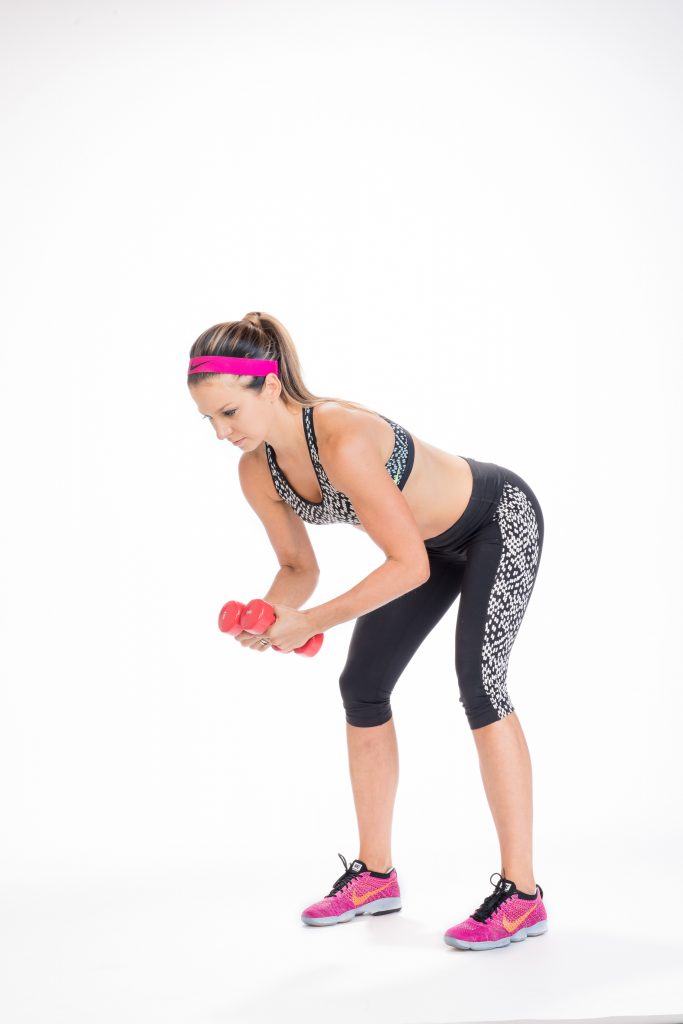
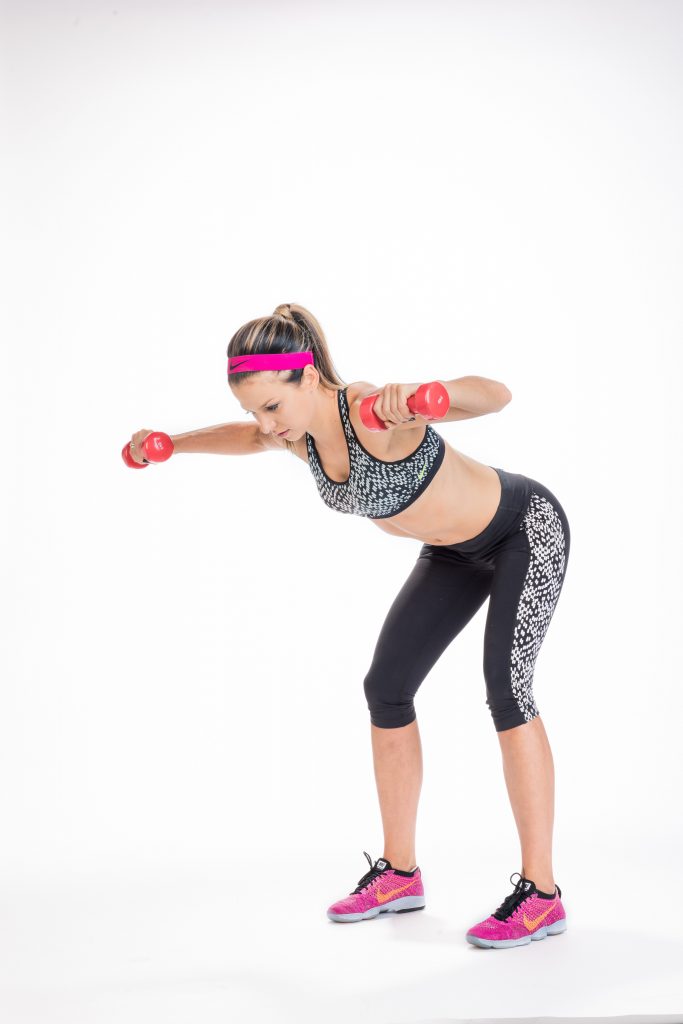
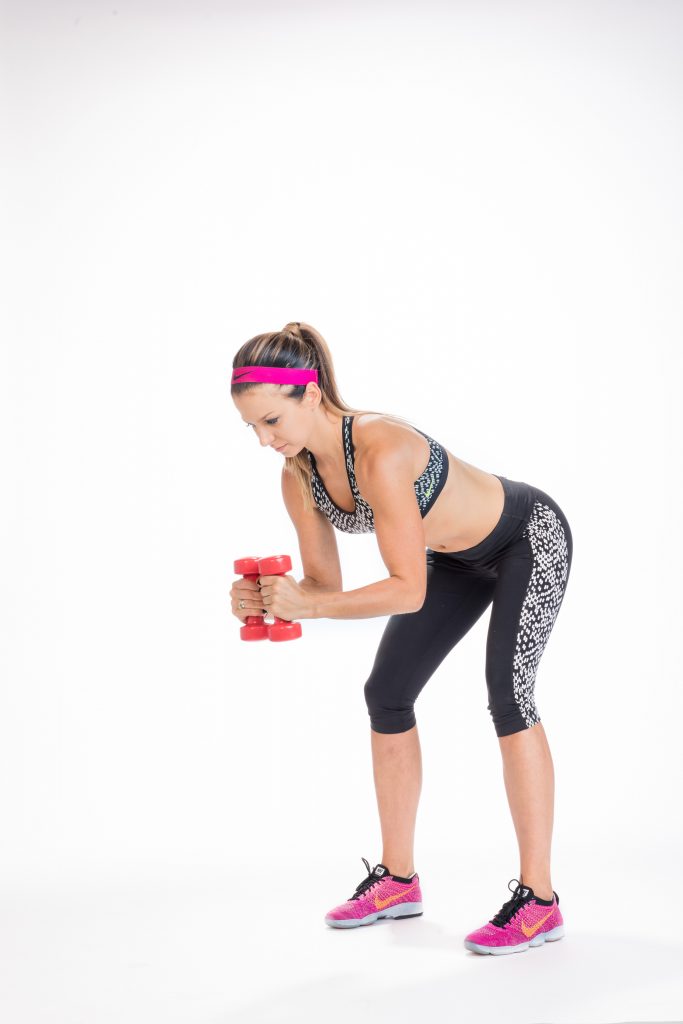
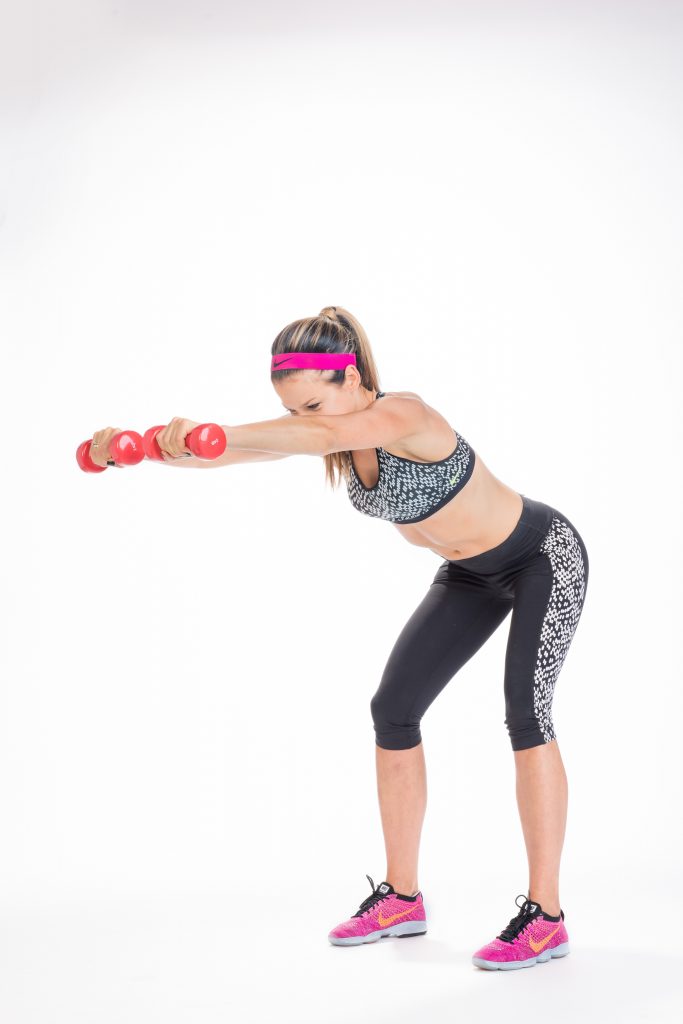
5. Bent-over front raise
Feet planted at shoulder-width, bend your knees a bit. Do a standing half forward bend. Keep your back straight. Bend your arms a bit and straighten them in front of you, at the level of your shoulders. Keep the rest of your body in position. Repeat 30 times.
What weight to pick
Thirty repetitions is a lot, and that number sets the load rather than the other way round. The right weight is the one where repetitions 25 to 30 are genuinely hard but your form does not change. For most people starting out that means 1 to 3 kg per hand, and full bottles of water work perfectly well before you buy anything.
If you can rush through all thirty without noticing, the weight is too light. If your shoulders start creeping up towards your ears by rep fifteen, it is too heavy. That creeping is the clearest signal in the whole session: it means the trapezius has taken over the work from the shoulder, which is exactly what these exercises are meant to avoid.
Slow down, especially on the way back
Each of these five movements has a lifting half and a lowering half, and the lowering half is where most of the benefit sits. Two counts up, three counts down, with a pause at the top. Letting the weights drop back under gravity halves the work and puts the load on the joint rather than the muscle.
The bent-over exercises, numbers four and five, are the ones where this matters most. In a forward bend the temptation is to swing the weights up using the back, and then the set trains momentum instead of shoulders. If you cannot lift them without a swing, the weight is too heavy.
Protecting the shoulder while you work it
The shoulder is the most mobile joint in the body and the least stable, which is why form here matters more than in a squat. Three rules cover almost everything: keep the shoulder blades drawn down and slightly back, never let a lifted arm go higher than shoulder level on the raises, and keep the ribs down rather than arching the lower back on the overhead press.
In the half forward bend, the back stays straight and the movement comes from the hips, not from rounding the spine. Bend the knees as much as you need to keep it that way. If you feel it in the lower back rather than the shoulders, it is the bend that is wrong, not the exercise.
Warming up, and how often to do this
Never start a shoulder session cold. Two or three minutes is enough: arm circles forwards and backwards, a few shoulder rolls, and one set of each of the first two exercises with no weights at all.
Twice a week is a sensible frequency, with at least a day between sessions, since shoulders are a small muscle group and recover on their own schedule. Just a few more minutes of stretching and you can rest. You feel better instantly, don’t you? And you’ll have beautiful shoulders, just in time for New Year’s Eve.
Frequently asked questions
The one where repetitions 25 to 30 are genuinely hard but your form does not change. For most people starting out that means 1 to 3 kg per hand, and full bottles of water work perfectly well before you buy anything.
Your shoulders start creeping up towards your ears partway through the set. That means the trapezius has taken over the work from the shoulder, which is exactly what these exercises are meant to avoid. Swinging the weights up in the bent-over exercises is the other sign.
Two counts up, three counts down, with a pause at the top. The lowering half is where most of the benefit sits, and letting the weights drop under gravity halves the work while putting the load on the joint rather than the muscle.
Keep the shoulder blades drawn down and slightly back, never raise an arm above shoulder level on the lateral and front raises, and keep the ribs down rather than arching the lower back on the overhead press. In the half forward bend, the movement comes from the hips and the back stays straight.
Twice a week, with at least a day between sessions, since shoulders are a small muscle group. Warm up for two or three minutes first with arm circles, shoulder rolls and one set of the first two exercises without weights. Sessions like this one come planned out with videos for each exercise in the Diet & Training by Ann app.
If you would rather have sessions like this one planned out for you, with videos showing each exercise and plans at different levels, that is what the Diet & Training by Ann app does.






Comments No Comments
Join the discussion…