


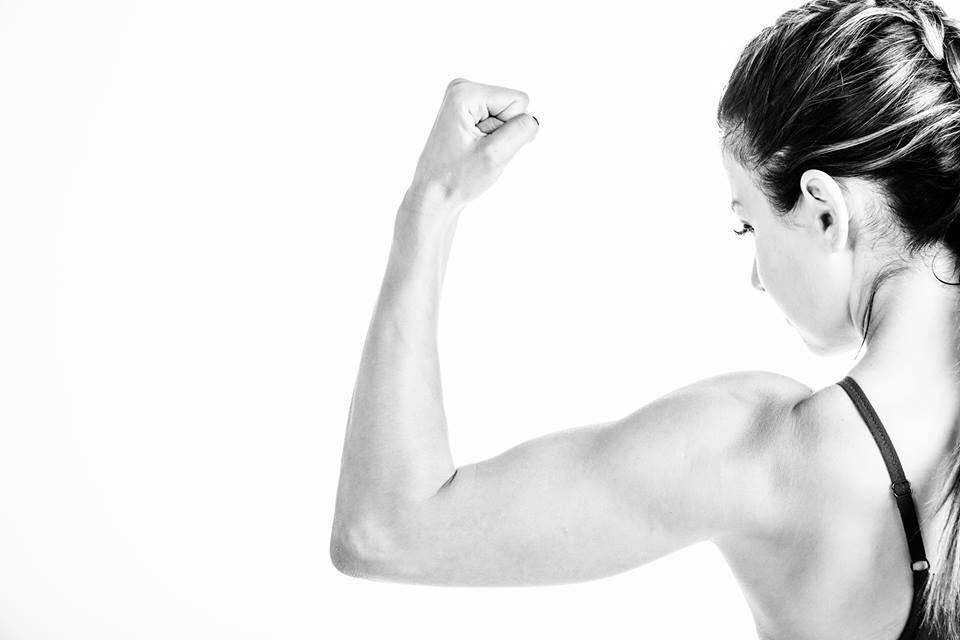
Biceps
Today some exercises on biceps. Before you start, read about the rules. It’s important to follow them.
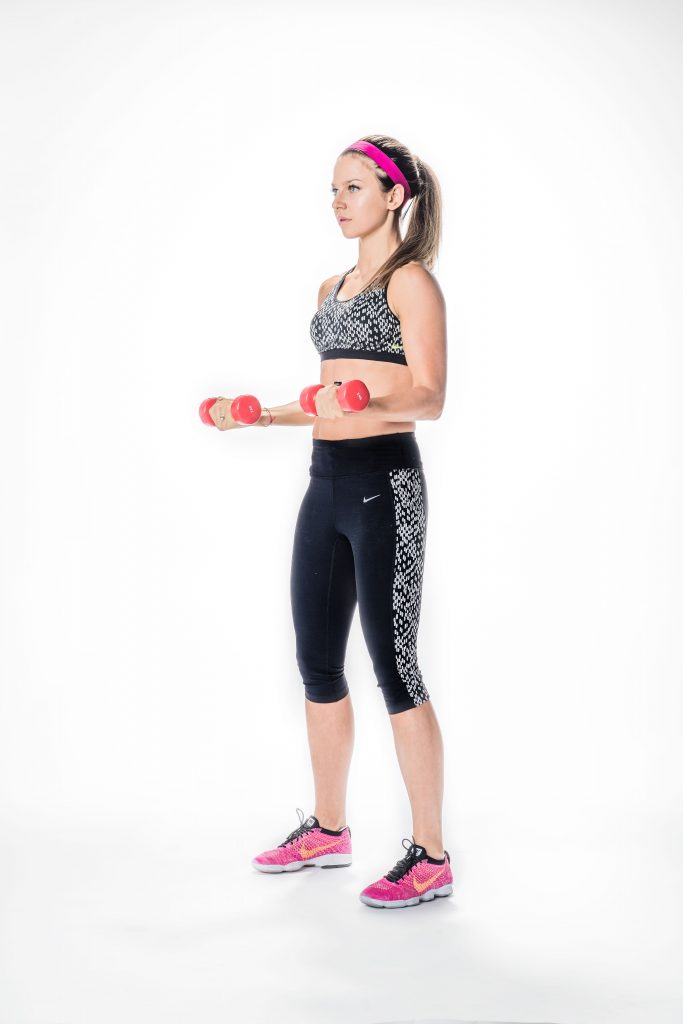
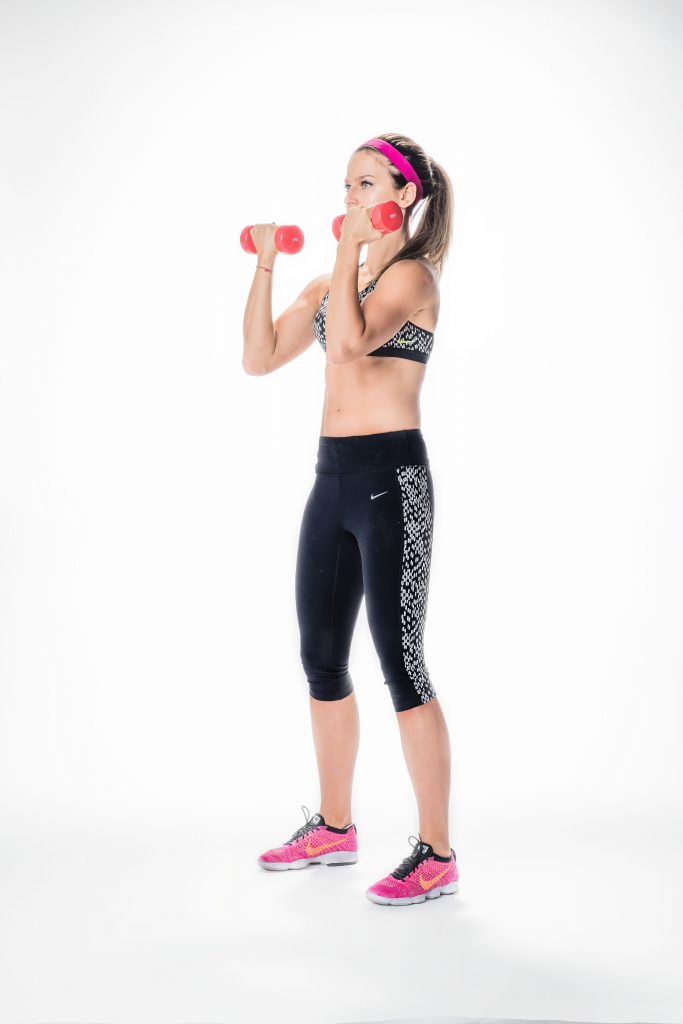
Four dumbbell exercises for the biceps, each shown in the start and finish position, with the rules that decide whether the work pays off.
Seven rules before you start
- Do not focus on the same muscle every day. It is neither a good way to build muscle nor to sculpt it. Muscles are stronger in the period between workouts, and building them takes place while resting, especially at night.
- Focus on your biceps not more than 3 times a week, unless you are doing functional training that engages and strengthens the whole body.
- Limit the length of your sessions. Exercising too long may cause injuries, which would thwart your efforts. Shoulder muscles are exceptionally sensitive, so they cannot be exposed to loads that are too big. Thirty minutes of isolated training seems to be the maximum.
- Combine exercises for different muscles in one workout, including the big ones.
- Find the dumbbell weight that suits you. Don’t be reckless, it is not worth it.
- Control every movement all the time, and return slowly to the starting position.
- Remember the breaks: take 45 seconds between sets to let your muscles rest.
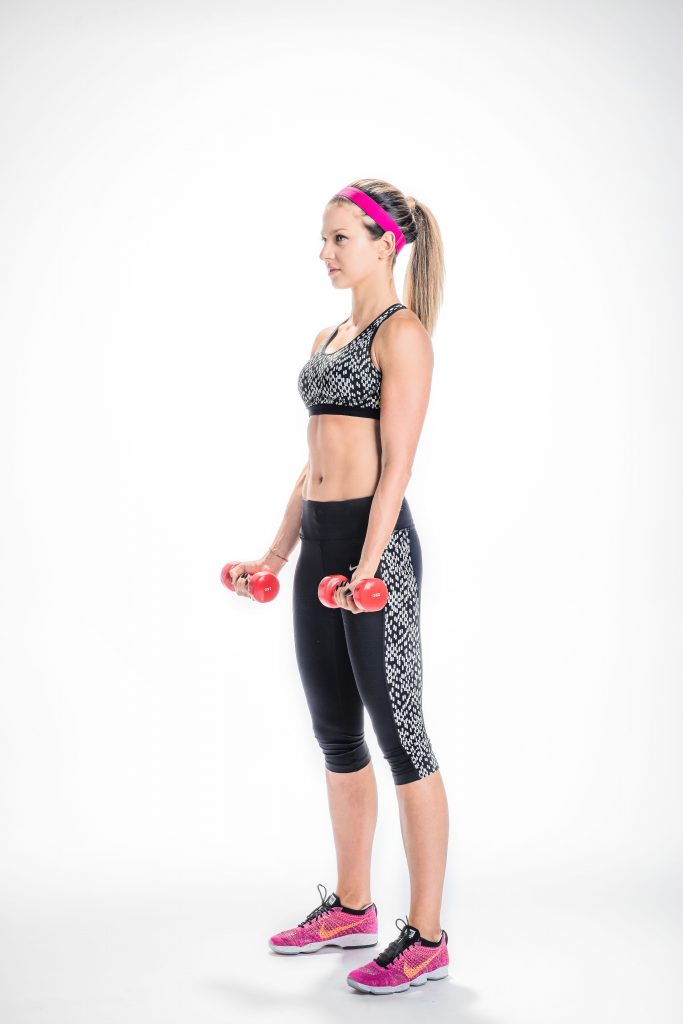
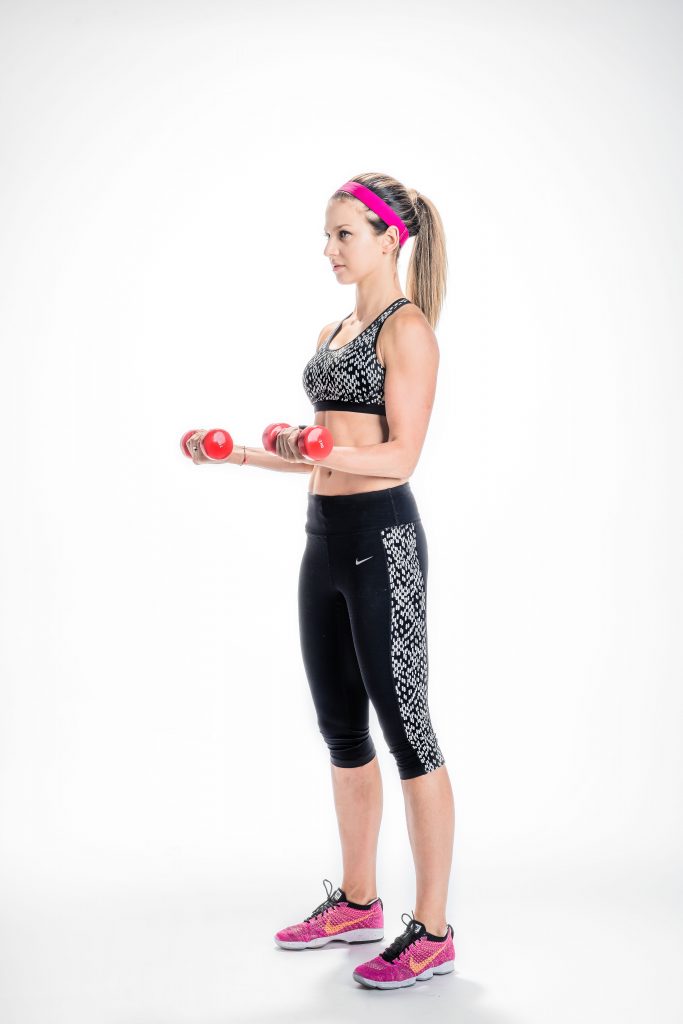
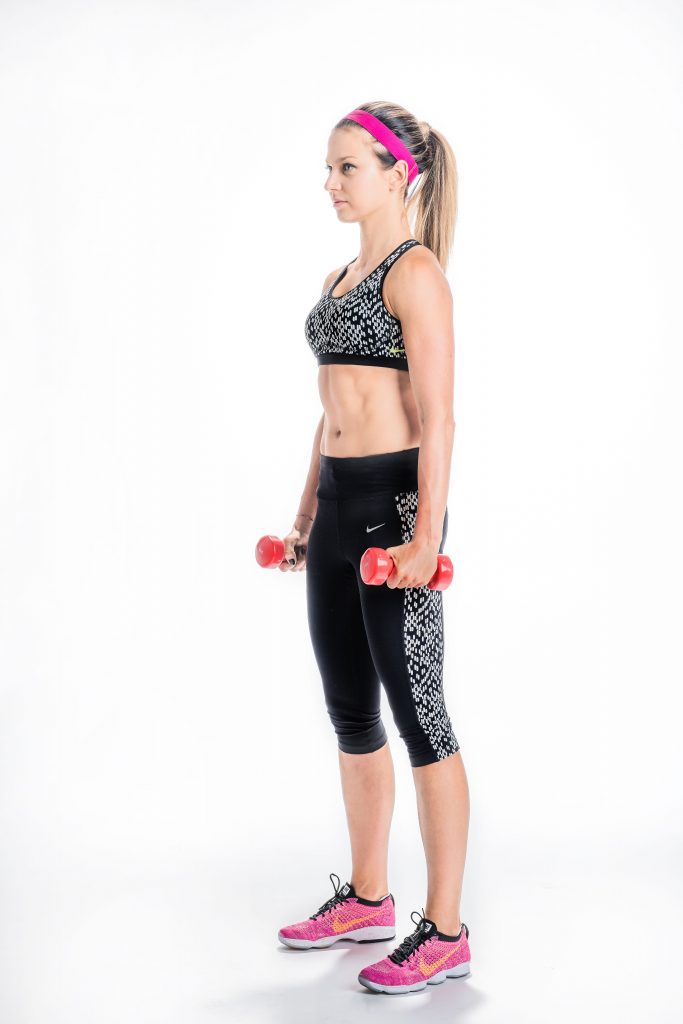
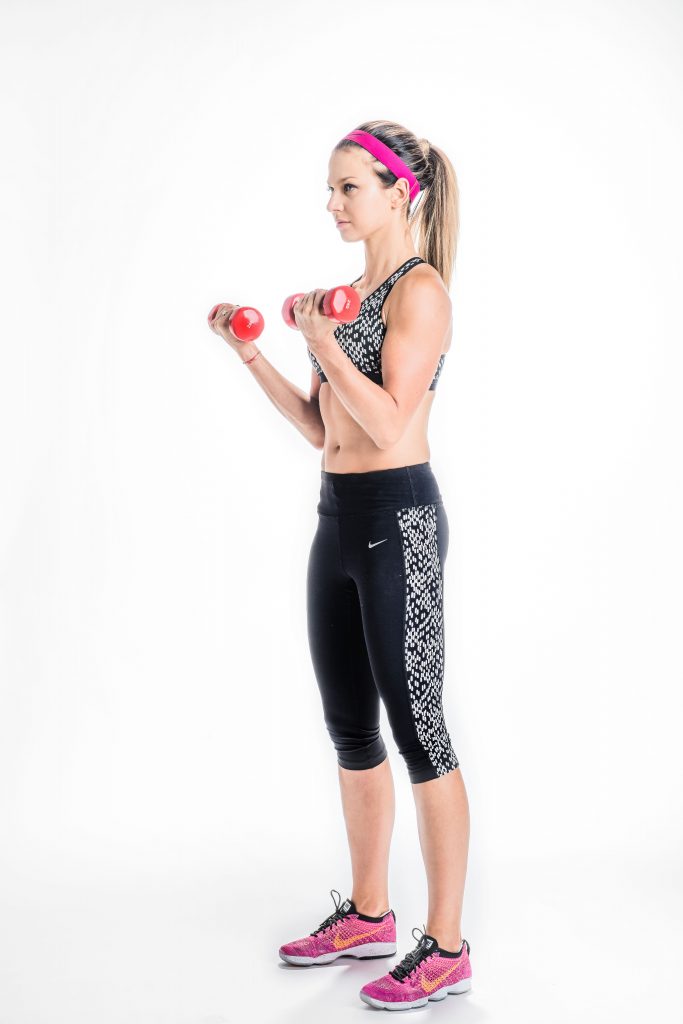
1. Curl with palms up
Stand straight with your feet hip-width apart. Your arms are straight along your body, holding the dumbbells with palms facing up. Curl your arms upwards to 90 degrees. Keep your back straight and your elbows close to the body.
2. Curl with rotation
Stand straight with your feet hip-width apart. Your arms are straight along your body, holding the dumbbells with palms facing each other. Curl your arms upwards while rotating your wrists. Keep your back straight and your elbows close to the body.
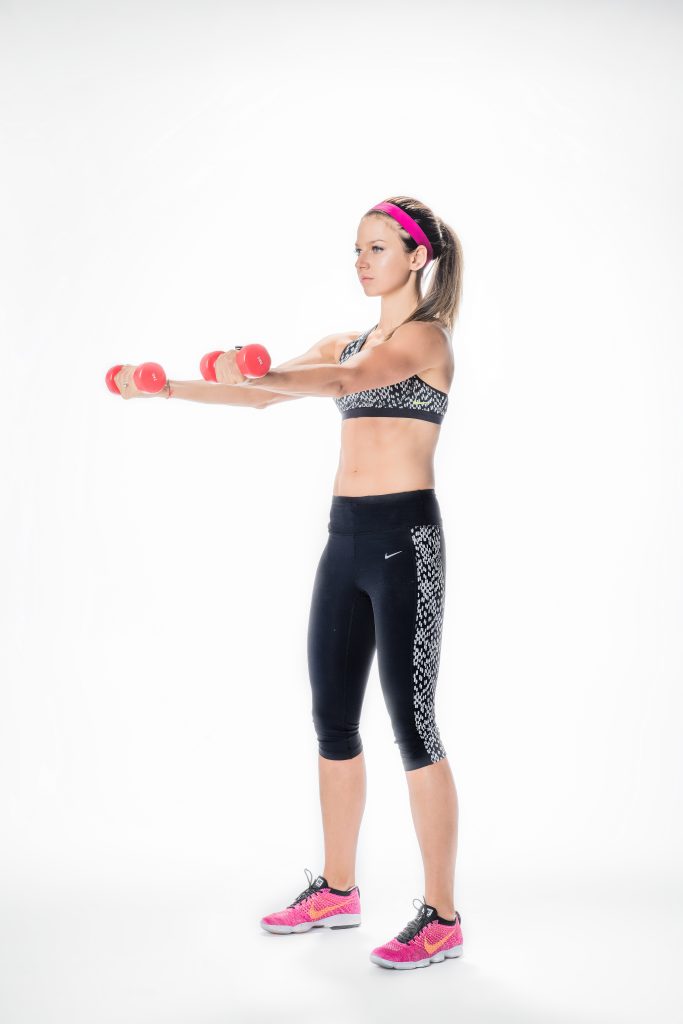
3. Dynamic straightening forward
Stand straight with your feet hip-width apart. Keep your elbows bent and close to the body, dumbbells in your hands with palms facing each other. Straighten your arms forward with a dynamic movement, rotating your wrists until your palms face upward. Keep your back straight.
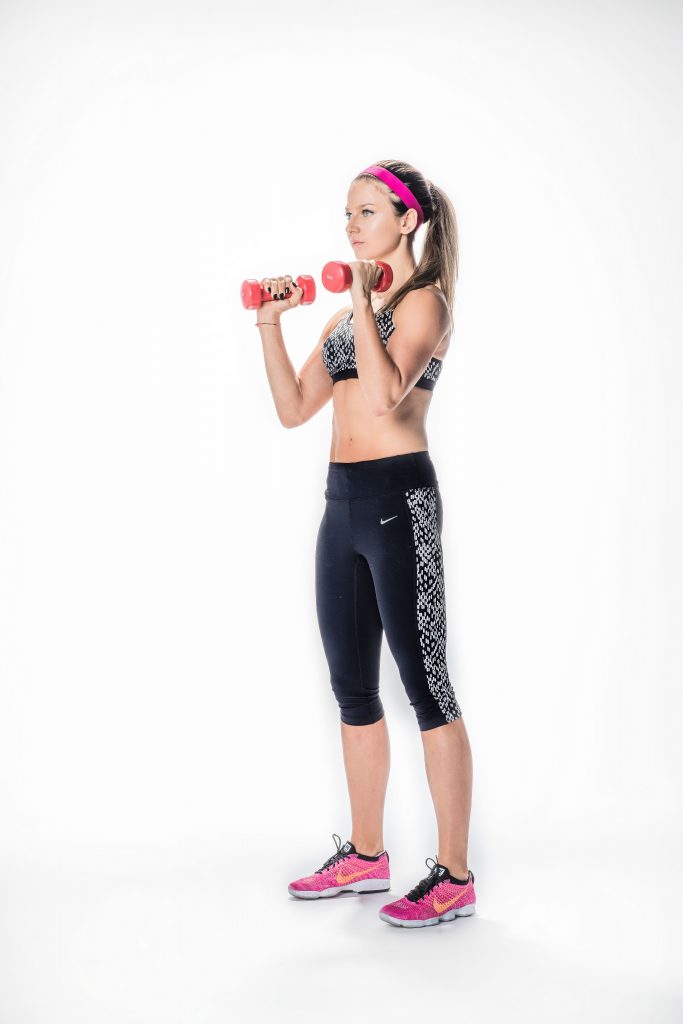
4. Curl with the elbows raised
Stand straight with your feet hip-width apart. Elbows bent to 90 degrees and close to the body. Hold the dumbbells with your palms facing up. Curl your arms up while slightly raising your elbows.
The elbow is the whole exercise
Three of the four exercises repeat the same instruction, elbows close to the body, and it is the one rule that decides whether the biceps is doing the work. The elbow is meant to be a hinge that stays in one place while the forearm moves around it.
The moment the elbow drifts forwards or the shoulder starts to help, the movement turns into a small front raise and the load spreads into the shoulder and the back. The easiest way to feel the difference is to stand with your back against a wall: if your elbows are travelling, you will notice immediately.
The same applies to the body. If the weight only goes up when your hips swing, it is too heavy. Swinging a dumbbell up and letting it drop is not a repetition, it is momentum, and it trains nothing while putting the load on the elbow joint.
What the wrist rotation is for
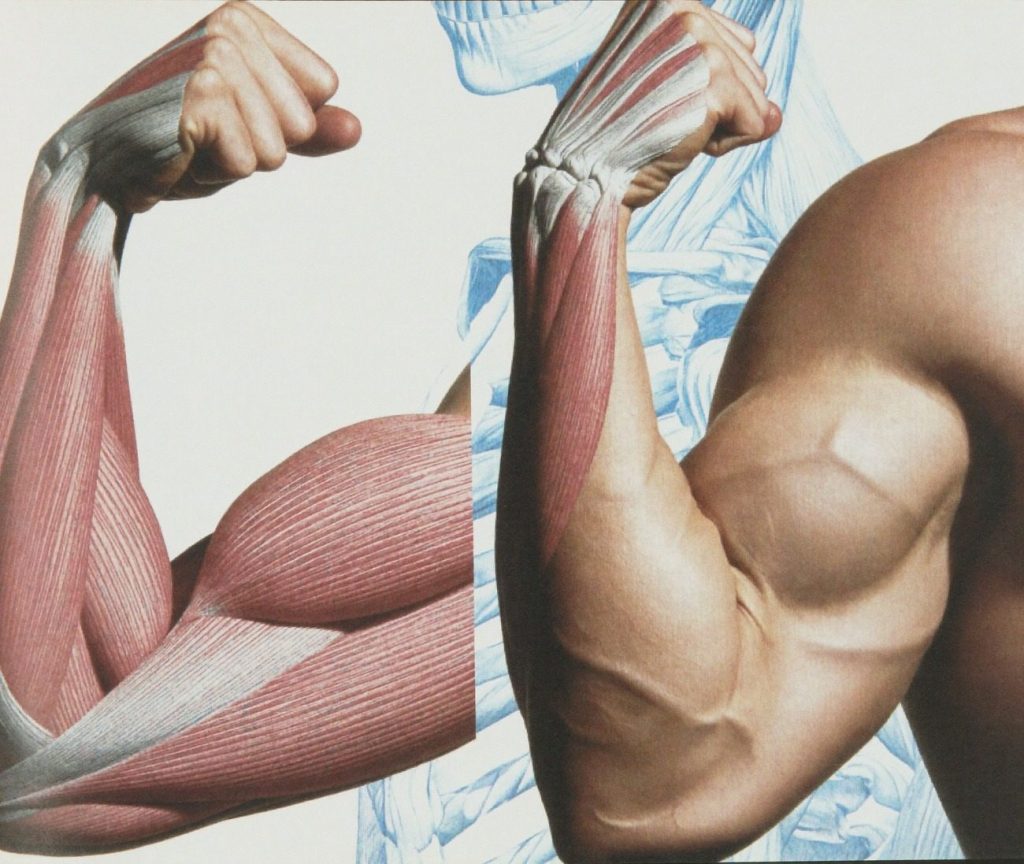
Exercise two is not simply a harder version of exercise one. The biceps does two jobs: it bends the elbow, and it turns the forearm palm-up, which is called supination. A curl with the palm already facing up only trains the first job.
Starting with the palms facing each other and rotating as you lift trains both at once, and that rotation is where most people feel the muscle work in a way a plain curl does not give them. Rotate early in the movement rather than at the top, where there is nothing left to work against.
Why the biceps is rarely the muscle that needs the most attention
Worth knowing before you build a week around it: the biceps is a small muscle and it is already working in every pulling movement you do. Rows, pull-ups, carrying shopping, lifting a child. For most people it gets plenty of work without a single curl.
That is the real reason behind rule two above. Three isolated sessions a week is a ceiling rather than a target, and a biceps that is sore all the time is usually a sign of too much isolated work rather than too little. If your arms are the goal, the fastest route is heavy pulling for the big muscles with a few curls on the end, not the other way round.
Grip, and where fatigue really shows up
The forearm often gives out before the biceps, especially in exercise three, where the dumbbells are held away from the body. That is normal and it is not a sign that the set is over.
Two things help: hold the dumbbell handle as low in the palm as you can rather than in the fingers, and use the 45-second break from rule seven properly, since the grip recovers faster than the muscle you are training. If the forearm keeps failing first, the weight is too heavy for the leverage of that particular exercise.
Frequently asked questions
Because the elbow is meant to be a hinge that stays in one place while the forearm moves around it. The moment it drifts forward or the shoulder helps, the movement turns into a small front raise and the load spreads into the shoulder and back. Standing with your back against a wall makes travelling elbows obvious.
If the weight only goes up when your hips swing. Swinging a dumbbell up and letting it drop is not a repetition, it is momentum, and it trains nothing while putting the load on the elbow joint.
The biceps does two jobs: it bends the elbow and it turns the forearm palm-up. A curl with the palm already facing up trains only the first. Starting palms-facing-each-other and rotating as you lift trains both, and the rotation should happen early in the movement rather than at the top.
Three isolated sessions a week is a ceiling rather than a target. The biceps is a small muscle already working in every pulling movement, so a biceps that is sore all the time usually means too much isolated work rather than too little.
No, it is normal, especially in the third exercise where the dumbbells are held away from the body. Hold the handle low in the palm rather than in the fingers, and use the full 45-second break, since the grip recovers faster than the muscle you are training. Arm work comes built into full plans with video for each exercise in the Diet & Training by Ann app.
If you would rather have arm work built into a full plan rather than added on top of one, with video for each exercise, that is what the Diet & Training by Ann app does.
Photos: Adam Mruk







Comments No Comments
Join the discussion…