


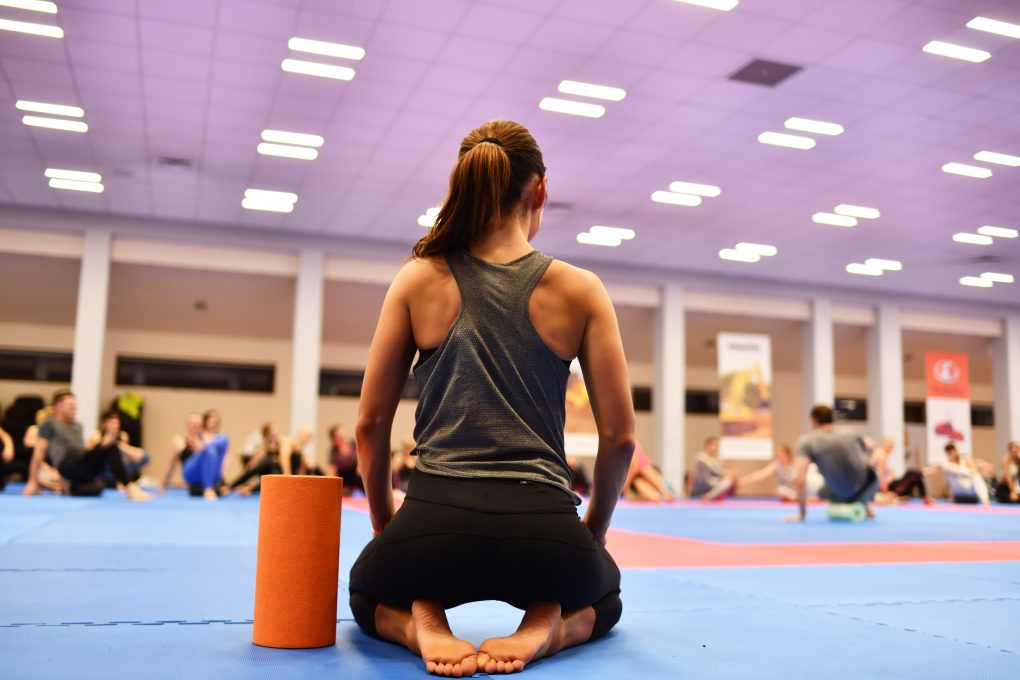
BLACKROLL. Rolling muscles – why is it worth doing?
In today’s post I would like to encourage you to use a muscle roller in your daily training. As a certified BlackRoll trainer, I will try to convince you how important this device is during training, in both amateur and professional sport.
What rolling is
Rolling is a myofascial massage technique done with special foam rollers. This technique has gained remarkable popularity, becoming almost an obligatory element of every training session. If you don’t yet know the benefits of rolling, check how many advantages it can bring you.
Why is it worth doing?
- Stimulation of muscle work. Rolling before training stimulates the work of muscles, thanks to which the exercises performed are even more effective. With systematic rolling before training, the muscles’ ability to work and their efficiency are increased, which means you get the desired result faster.
- Better blood circulation in the muscles. Rolling accelerates blood circulation in the muscles and increases their hydration and nutrition. Better circulation in the muscle tissue also promotes the efficient removal of toxins from the body.
- Faster muscle recovery. Rolling done after training not only relaxes and reduces tension in the muscles, but also speeds up their regeneration. Remember that rolling allows you to effectively get rid of muscle soreness.
- Improving flexibility and increasing the range of movement. Thanks to the massage with a properly selected roller, the fascia is moisturised and stimulated, which, used regularly, significantly improves the flexibility of the body and increases the range of movement.
- Reducing the number of injuries. Regular rolling lets you take care of the proper functioning of the body and its good condition. It prevents muscle pain and reduces the number of injuries resulting from overtraining or fatigue. It has also been proven that rolling after an injury shortens recovery time.
Other advantages of rolling
- Independence and ease of doing the exercise. Rolling is so simple and safe that you can do it yourself at home. That ease allows you to work on your body regularly, not only as an athlete but as anyone who cares about a healthy lifestyle.
- Stress reduction. Rolling loosens the body and reduces the effects of stress. Done in the evening it calms the body before going to bed, which makes it easier to fall asleep. So rolling is a kind of spa performed in the privacy of your home.
- Visible cellulite reduction. Rolling has a beneficial effect on the production of collagen. Thanks to this, performed regularly it can visibly reduce cellulite. At the same time, thanks to the cardiovascular stimulation mentioned earlier, the skin is better nourished, and thus becomes firmer and more beautiful day by day.
How often?
Rolling can be done both before and after training, and it can also be used as a therapeutic method. It is estimated that approximately 8 to 10 repetitions per muscle group are enough to see clear effects.
Before training
Pre-workout rolling should be done quickly, on slightly stretched muscles. Do several repetitions on the selected muscle group. Rolling time for one part should not be longer than 3-5 minutes.
After training
After training, use 8-10 full repetitions on the selected muscle group. Rolling time should be 10-15 minutes.
Therapeutically
Therapeutic rolling is used for deep and precise relaxation of selected parts of the body. Use it 1-2 times a week as a separate session. Recommended duration: 45-60 minutes.
How slowly to actually roll
The numbers above say how long and how many, and the thing that decides whether any of it works is pace. The usual mistake is rolling back and forth quickly, which feels productive and does very little. Move at roughly two to three centimetres per second, slowly enough that you can feel the roller passing over individual points rather than sliding along a whole muscle.
When you meet a tender spot, stop on it and stay there for 20 to 30 seconds rather than rolling straight over. Breathe out slowly while you hold: holding your breath makes the muscle tense against the pressure, which is the opposite of what you are trying to do. The tenderness should fade while you hold. If it sharpens instead, come off it.
How much pressure, and which roller
Pressure should register as uncomfortable, not painful. A useful test is whether you can still breathe normally and keep your shoulders relaxed. If you are gritting your teeth, take weight off by putting more of it through your hands or your other leg.
That is also how to choose a roller. A soft, smooth one is right at the start and for large muscle groups, and a firm or textured one goes deeper than most beginners want on day one. It is far better to start softer and progress than to buy the hardest roller and use it twice. Body weight does the rest: rolling one calf with the other leg lifted puts roughly twice the pressure through it as rolling with both legs down.
What not to roll
Three areas are best left alone. The lower back, because without the rib cage to protect it the spine takes the pressure directly and the muscles there tense up in response. The neck, for the same reason. And any joint or bone, including the knee, the elbow and the front of the shin, where there is no muscle between the roller and the bone.
Roll the muscles around a problem area rather than the area itself. Fresh injuries, swelling, varicose veins and skin that is broken or inflamed are all reasons to leave the roller in the cupboard and ask a physiotherapist first.
Summary
I hope I have convinced you that the roller is a good massage tool that can be used both before and after training. Rolling can also be effective support for the rehabilitation of people after injuries and surgical procedures, helping to increase the range of movement, relieve muscle tension and ease pain.
If you would rather have rolling and stretching built into a training plan rather than added on top of one, that is what the Diet & Training by Ann app does, alongside the workouts themselves.
Frequently asked questions
Roughly two to three centimetres per second, slowly enough to feel the roller passing over individual points rather than sliding along a whole muscle. Rolling back and forth quickly feels productive and does very little.
Stop on it and stay there for 20 to 30 seconds instead of rolling straight over, breathing out slowly while you hold. Holding your breath makes the muscle tense against the pressure. The tenderness should fade while you hold; if it sharpens, come off it.
Uncomfortable, not painful. The test is whether you can still breathe normally and keep your shoulders relaxed. If you are gritting your teeth, take weight off through your hands or your other leg. Rolling one calf with the other leg lifted roughly doubles the pressure.
A soft, smooth one. Firm and textured rollers go deeper than most people want on day one, and it is far better to start softer and progress than to buy the hardest roller and use it twice.
The lower back and the neck, because without the rib cage the spine takes the pressure directly, and any joint or bone, including the knee, elbow and the front of the shin. Roll the muscles around a problem area rather than the area itself, and ask a physiotherapist first about fresh injuries, swelling or varicose veins. Rolling and stretching come built into the training plans in the Diet & Training by Ann app.
Sources
- BlackRoll Polska training materials
- Beardsley C, Škarabot J. Effects of self-myofascial release: a systematic review. J Bodyw Mov Ther. 2015;19(4):747-758.
- Cheatham SW, Kolber MJ, Cain M, Lee M. The effects of self-myofascial release using a foam roll or roller massager on joint range of motion, muscle recovery, and performance: a systematic review. Int J Sports Phys Ther. 2015;10(6):827-838.
- Junker DH, Stöggl TL. The foam roll as a tool to improve hamstring flexibility. J Strength Cond Res. 2015;29(12):3480-3485.
- Macdonald GZ, Button DC, Drinkwater EJ, Behm DG. Foam rolling as a recovery tool after an intense bout of physical activity. Med Sci Sports Exerc. 2014;46(1):131-142.
- Madoni SN, Costa PB, Coburn JW, Galpin AJ. Effects of foam rolling on range of motion, peak torque, muscle activation, and the hamstrings-to-quadriceps strength ratios. J Strength Cond Res. 2018 Feb 1 [Epub ahead of print].
- Schroeder AN, Best TM. Is self myofascial release an effective preexercise and recovery strategy? A literature review. Curr Sports Med Rep. 2015;14(3):200-208.
Photo: Adam Mruk




Comments No Comments
Join the discussion…