


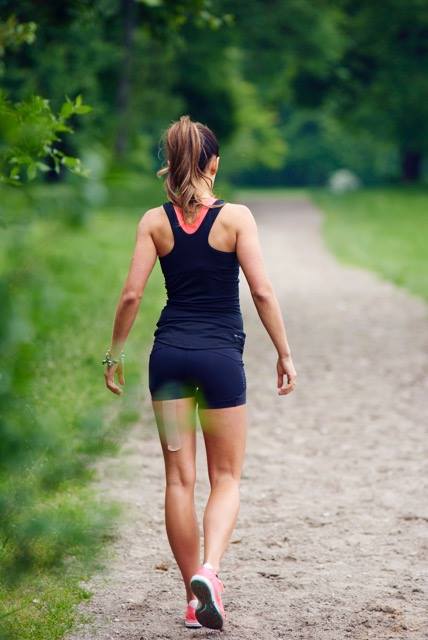
Slow jogging
I hope jogging is no longer fashion, but became everyday life of many Poles for good.
It’s a simple form of physical activity that can help to improve physical and mental health when done wisely as well as be good to relieve tension and improve mood.
Who slow jogging is for
Not everyone is keen on jogging, of course, and there is nothing wrong in it, there is no point in making anybody practice the sport they will not enjoy. However, some people would like to join the runners, but they are not sure (which is often right) if this activity is appropriate for them.
Among those there are senior citizens, obese people, people who are far from good condition for a variety of reasons, and even if they tried it, their efforts ended up in sudden HR increase, were short of breath or at least they were anxious and got discouraged from jogging for long.
What slow jogging is
You can try a much easier version of jogging – slow jogging! Slow jogging has as many benefits as regular jogging has, but it’s not that hard for the body. Slow jogging is jogging at the least possible pace. You neither chase yourself nor other people. Enjoy your pace and the fact that you are moving.
You can talk freely as the pace doesn’t cause breathlessness. According to professor Hiroaki Tanaka, the director of the Department of Exercise Physiology at Fukuoka, Japan the panacea for many contemporary complaints of humans is physical activity performed every day for 30 to 60 minutes at the pace that allows you to enjoy it.
For many of us sport is related to sweating rather than pleasure – says prof. Hiroaki Tanaka who is a precursor and propagator of slow jogging and has been popularizing for many years among Japanese people.

Twice the calories of a walk
It turns out that we lose twice as much calories during slow jogging than during walking! To burn 200-300 kilocalories we have to go for quite a long walk (7-10 km). Slow jogging even at a walking pace will help us burn the same number of calories just after 3,5-5 km! (citing www.fitsenior.pl)
That comparison is the whole argument for the method, and it is worth reading next to what walking on its own does, which has its own post here.
Slow jogging: the five rules
- run so slowly that you won’t be short of breath, don’t worry that strollers are overtaking you,
- always land on your midfoot,
- run straight, but relaxed,
- breathe easily with your mouth slightly open,
- keep smiling.
Where the smiling comes from
The last rule is not a figure of speech. In Tanaka’s method the target intensity is called the niko niko pace, from the Japanese for smile: the effort at which you could smile and hold a conversation without running out of breath. If you cannot finish a sentence, you are going too fast, and going too fast is the mistake the whole method exists to prevent.
Two more details from the method are worth knowing, because they are what make a very slow pace work at all. The first is cadence: aim for around 180 steps per minute, which sounds impossibly quick until you realise the steps are tiny. Short, quick steps landing under your body are what keeps a slow pace from turning into an awkward shuffle. The second is footwear: thin, flexible soles with no built-up heel, because a thick heel is what makes people land on it. There is more about choosing shoes in the post on how, where and in what to run.
How to start if you have never run
Start with less than you think you can do. Five minutes at a pace that feels almost embarrassing is a complete first session, and the 30 to 60 minutes a day that Tanaka talks about does not have to happen in one go: split it into two or three pieces across the day and it counts the same. Add minutes rather than speed, week by week, and use the conversation test rather than a watch to keep yourself honest.
If you are starting from nothing, the post on how to start running covers the first weeks, and pulse as the measure of training load explains what the numbers on a heart rate monitor mean if you would rather work with those than with the talk test. And if you would like the running to sit inside a plan alongside everything else, the Diet & Training by Ann app puts the week’s training and meals together.
Slow jogging has more and more supporters all over the world. Give it a try!
Frequently asked questions
Niko niko means smile in Japanese, and it is the name Hiroaki Tanaka gave to the target intensity of slow jogging: the effort at which you could smile and hold a conversation without running out of breath. If you cannot finish a sentence, you are going too fast.
As slow as it needs to be. The pace is set by your breathing rather than by a number, so for many people the first sessions are at roughly walking speed, and being overtaken by someone pushing a stroller is normal rather than a sign of doing it wrong.
Around 180 steps per minute. That sounds impossibly quick until you realise the steps are tiny: short, quick steps landing under your body, on the midfoot rather than the heel. The high cadence is what stops a very slow pace from turning into an awkward shuffle.
Thin, flexible soles with no built-up heel. A thick, raised heel is what encourages people to land on it, and landing on the midfoot is one of the five rules of the method.
Tanaka talks about 30 to 60 minutes a day, and it does not have to be one continuous run: split it into two or three pieces across the day and it counts the same. Five minutes at an almost embarrassingly slow pace is a complete first session, and from there you add minutes rather than speed. If you would rather have the running sit inside a weekly plan alongside your meals, that is what the Diet & Training by Ann app is for.






Comments 1 Comment
Join the discussion…
Love this! Thank you for sharing!