


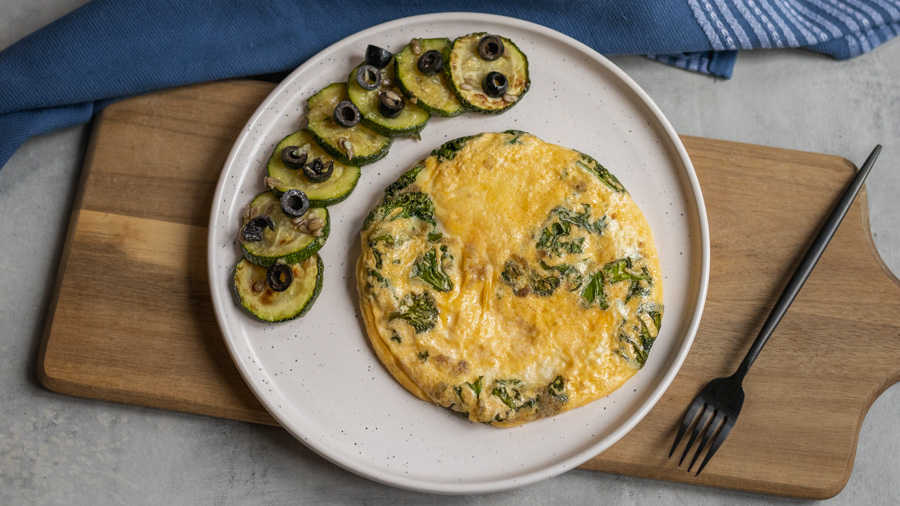
Fluffy Kale Omelet with Zucchini and Olives
INGREDIENTS (OMELET):
- 1 handful kale
- 1/2 garlic clove
-
3/4 teaspoon extra virgin coconut oil
- salt
- black pepper
- 3 eggs
- 3 tablespoons coconut drink
 Buy
Buy INGREDIENTS (ZUCCHINI WITH OLIVES):
- 1/2 zucchini
-
1/2 teaspoon extra virgin coconut oil
- 1/2 garlic clove
- salt
- black pepper
- a few olives
- 1 teaspoon sunflower seeds
Kale is a source of valuable fibre, vitamins, and minerals, but I know that not all of you like its characteristic, slightly bitter and nutty taste. Trust me and try it as an addition to a fluffy omelet. Zucchini will add lightness to the whole dish, and olives will give it a distinct flavour. This is an ideal recipe for those of you who want to have a healthy and really filling breakfast 🙂
Preparation
I chopped the kale and pressed the garlic. I heated the oil in a pan and fried the kale and garlic, and seasoned it with salt and pepper. I separated the egg whites from the yolks and beat them until stiff with a pinch of salt. I mixed the yolks with the coconut drink, then added the beaten egg whites and mixed everything very gently. I poured the mixture into a frying pan, covered it with a lid and fried it over low heat on both sides until the omelet became slightly golden.
I sliced the zucchini and fried the slices briefly in hot oil. At the end of frying, I added pressed garlic, spices, sliced olives and sunflower seeds.
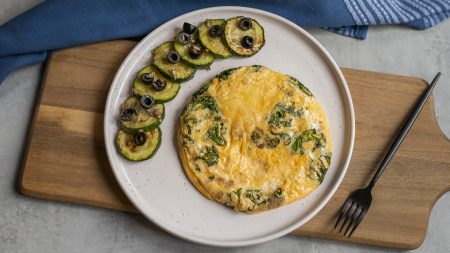
I served the omelet with fried zucchini and olives 🙂
The whites are the whole recipe
Everything that makes this omelet fluffy happens in the bowl before the pan. The whites have to reach stiff peaks, which means the mass stays put when you tip the bowl, and they will not get there if a speck of yolk or a drop of fat gets in. Separate the eggs one at a time into a small cup rather than straight into the bowl, so one broken yolk does not cost you the batch.
The pinch of salt in the recipe goes in at the start of beating and helps the foam form. Cold eggs separate more cleanly, but whites whip better at room temperature, so separate them straight from the fridge and let them stand for ten minutes before beating.
Folding, not mixing
“Mixed everything very gently” is the instruction that decides whether this works. Beaten whites hold air in a structure that stirring destroys within seconds, and a batter that has gone liquid and smooth will fry into a flat pancake rather than an omelet.
Add about a third of the whites to the yolk and coconut drink mixture first and stir that in properly to loosen it. Then fold the rest in with a spatula, cutting down through the middle and lifting over, turning the bowl as you go. Stop while streaks of white are still visible. Those streaks disappear in the pan and a fully uniform batter means you have already gone too far.
Low heat and a lid do the same job as an oven
The lid is not there to speed things up. It traps steam and sets the top of the omelet while the bottom colours, which is what makes it possible to turn a thick, airy omelet without it tearing.
Low heat is the other half. On high heat the base browns and sticks long before the inside sets, and a fluffy omelet is thick enough that the middle needs real time. Get the base golden and the top just firm to the touch, then turn it. The second side needs far less time than the first.
Taking the edge off the kale
Frying the kale with garlic before it meets the eggs is what handles the bitterness the intro mentions. Heat and fat soften that characteristic taste in a way raw kale in a salad never does.
Two things help further. Strip the leaves off the thick central stems and throw the stems away, because they are the most fibrous and the most bitter part. And salt the kale in the pan rather than afterwards, since salt draws out some of the bitter compounds while it cooks.
Zucchini, olives and the timing
Zucchini is nearly all water, so it needs a properly hot pan and a short time: put the slices in hot oil, leave them alone until one side colours, then turn. Crowd the pan or turn the heat down and they steam in their own liquid and go limp. Do not salt them until the end, for the same reason.
The garlic, olives and sunflower seeds all go in at the very end of frying, as the recipe says, because garlic burns in under a minute at that heat and the seeds only need warming. Time it so the zucchini is ready when the omelet is: a fluffy omelet starts sinking within a couple of minutes of leaving the pan, so this is a dish to serve immediately rather than one to keep. If you would rather have filling breakfasts like this one planned into the week with a shopping list, that is what the Diet & Training by Ann app does.
Fluffy kale omelet with zucchini
Ingredients
Method
- Strip the kale leaves off the thick stems, chop them and press the garlic.
- Heat the coconut oil in a pan, fry the kale with the garlic and season with salt and pepper.
- Separate the eggs one at a time and beat the whites with a pinch of salt until stiff.
- Mix the yolks with the coconut drink, stir in a third of the whites to loosen the mixture, then fold in the rest until streaks of white are still just visible.
- Pour the mixture into the pan, cover with a lid and fry over low heat until the base is golden and the top is just firm, then turn and finish the second side.
- Slice the zucchini and fry it briefly in hot oil, adding the pressed garlic, spices, sliced olives and sunflower seeds at the very end.
- Serve the omelet immediately with the zucchini and olives.
Notes
Frequently asked questions
Whipping the whites separately until stiff and folding them into the yolks rather than stirring. Stiff peaks means the mass stays put when you tip the bowl, and a speck of yolk or a drop of fat will stop the whites getting there at all.
Stir about a third of the whites into the yolk mixture first to loosen it, then fold the rest in with a spatula, cutting down through the middle and lifting over while turning the bowl. Stop while streaks of white are still visible: a completely uniform batter means the air has already gone.
The lid traps steam and sets the top of the omelet while the base colours, which is what makes it possible to turn something this thick without tearing it. Keep the heat low, or the base browns and sticks long before the middle sets.
Fry it with garlic before it goes anywhere near the eggs, since heat and fat soften that characteristic taste. Strip the leaves off the thick central stems and discard them, because they are the most bitter part, and salt the kale in the pan rather than afterwards.
Because it is nearly all water. It needs a properly hot pan, room to sit without crowding, and no salt until the end, or it steams in its own liquid instead of frying. Leave the slices alone until one side colours, then turn them. Filling breakfasts like this one come planned into the week with a shopping list in the Diet & Training by Ann app.




Comments No Comments
Join the discussion…