


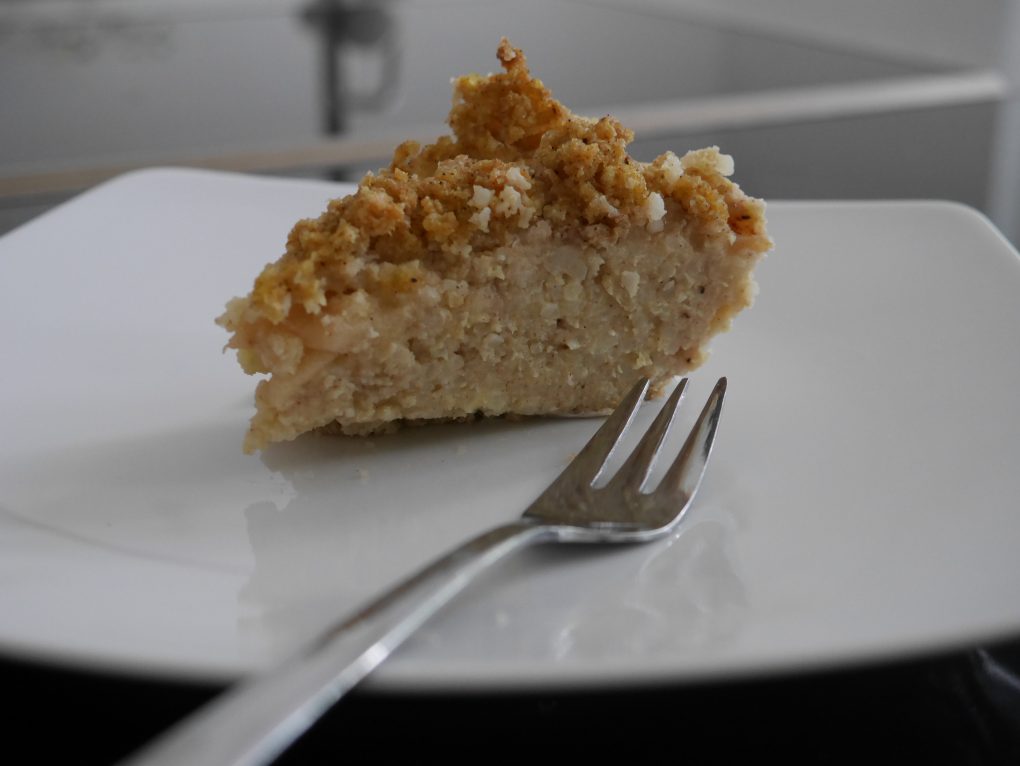
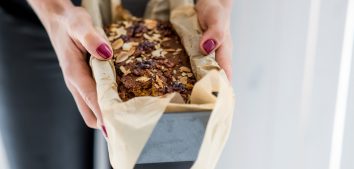
Millet groat apple pie
Millet groat is irreplaceable as a ingredient of sweetness 🙂 It gives consistency, taste and health. Today the apple pie version.
A baked millet and apple cake with no eggs, no raising agent and two teaspoons of sweetener, where the cooked grain itself does the work that flour and butter usually do.
Preparation
I poured boiling water over the groats, then boiled them over a low heat. I put them aside so they could soak and cool down. I put them in a bowl, adding flour, xylitol, butter and cinnamon, and blended everything into a consistent mass. I washed the apples, peeled them and sliced them. I put half the blended mass into a baking dish lined with baking paper, placed the sliced apples on top and covered them with the remaining portion. Bake for an hour at 180°C (350°F) and leave it in the oven to cool down.
There are no eggs and no baking powder, so nothing rises
Worth knowing before you make it: this is a set, not a sponge. What holds it together is the starch released by the cooked millet, helped by half a cup of corn flour, and both of those set as they bake rather than lift.
That explains the hour at 180 degrees, which looks long for a cake of this size. The time is not there to cook anything, since the millet is already cooked. It is there to drive off enough water for the starch to firm up, and cutting it short gives you a wet, sagging middle that no extra flour would have fixed.
Blend the millet properly, and while it is still soft
The grain has to become a paste, not stay as grains suspended in flour. A food processor handles it; a stick blender in a deep bowl also works, though it needs longer than you expect. Stop when the mass is smooth enough to spread with a spatula rather than spoon in lumps.
Cool the millet but do not chill it. Cooked millet sets hard in the fridge and then fights the blender; at room temperature it is still soft enough to break down. The recipe’s instruction to set it aside to soak and cool means exactly that, not overnight in the fridge.
Slice the apples thin and keep them in one layer
The apples are a filling between two layers of millet mass, and they release water as they bake with nowhere for it to escape. Thin slices, two or three millimetres, in a single overlapping layer, let that water disperse through the cake instead of pooling in the middle.
A thick layer of chunky apple gives you a wet seam that makes the cake fall apart when you cut it. A firm, tart apple holds its shape better than a soft one, and it also does most of the sweetening.
Two teaspoons of sweetener is not a typo
Against 400 g of millet groats this is a barely sweet bake, closer to a breakfast cake than a dessert, and that is the intention. The apples and the cinnamon carry it.
If you want it sweeter, add the extra to the millet mass rather than sprinkling it over the apples, where it draws out more water. The recipe’s own note that honey would do as well is sound, though honey adds liquid, so take it into account when judging the consistency of the mass.
Cooling in the oven, and cutting it
Leaving the cake in the switched-off oven to cool is part of the method rather than convenience. A starch-set cake taken straight out into a cold kitchen contracts quickly and cracks across the top, and the residual heat also finishes drying the middle.
Cut it completely cold. Warm, it tears along the apple layer; cold, it slices cleanly and holds together in the hand. It keeps four days in a tin and is good cold, which makes it worth baking a whole dish. If you would rather have baking like this planned into the week with a shopping list, that is what the Diet & Training by Ann app does.
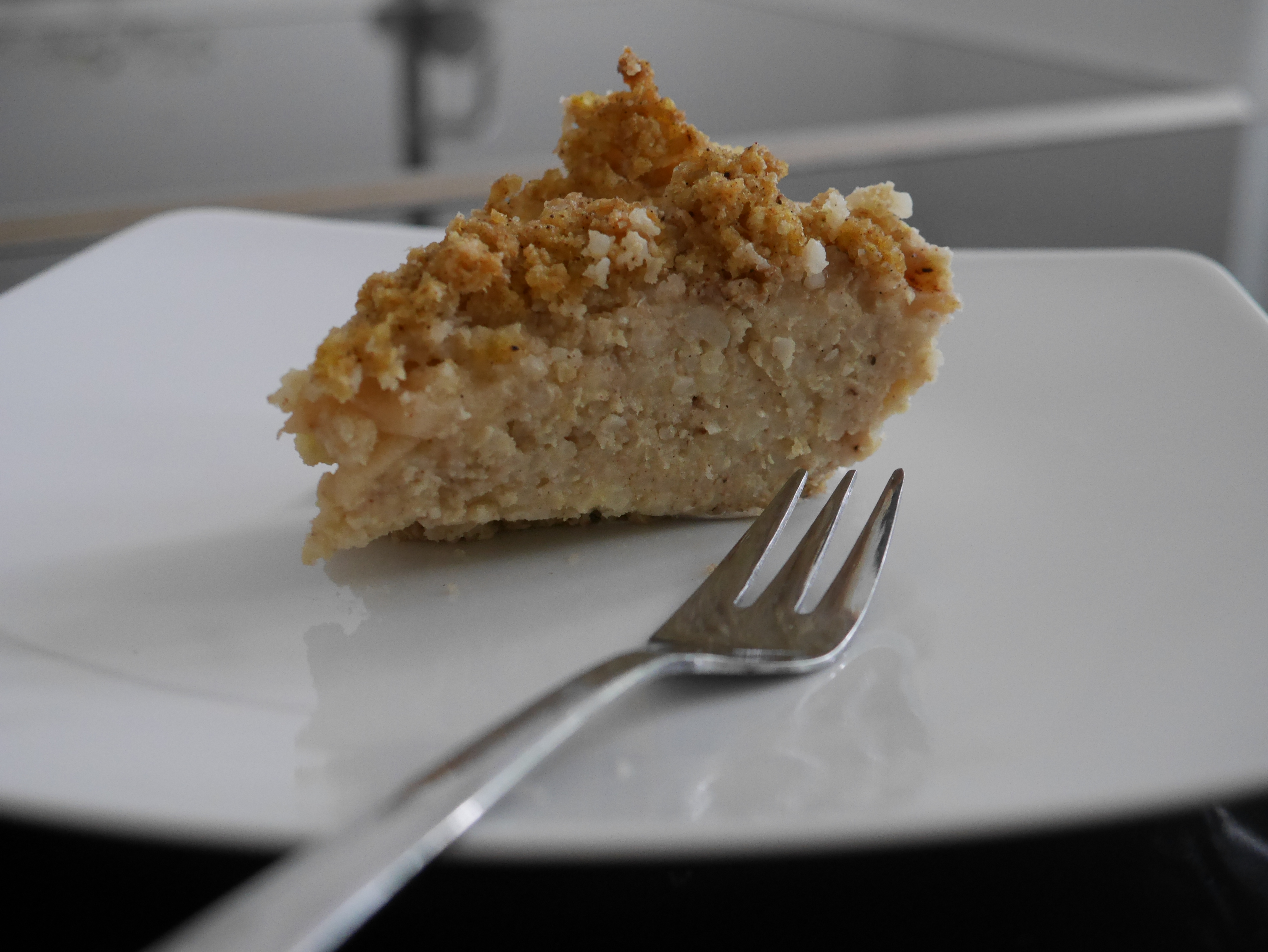
Millet groat apple pie
Ingredients
Method
- Pour boiling water over the millet groats, then cook them over a low heat and set them aside to soak and cool to room temperature.
- Blend the cooled millet with the corn flour, xylitol, clarified butter and cinnamon into a smooth, spreadable mass.
- Wash, peel and thinly slice the apples.
- Spread half the mass in a baking dish lined with baking paper, lay the apple slices over it in a single layer and cover with the remaining mass.
- Bake for an hour at 180 C (350 F).
- Leave the cake in the switched-off oven to cool, and cut it only when completely cold.
Notes
Frequently asked questions
Not to cook anything, since the millet is already cooked. The hour drives off enough water for the starch in the millet and the corn flour to set, which is what holds this cake together. There are no eggs and no raising agent, so nothing rises and cutting the time short leaves a wet, sagging middle.
Into a paste, not grains suspended in flour. Stop when the mass is smooth enough to spread with a spatula rather than spoon in lumps. A food processor handles it fastest, though a stick blender in a deep bowl works with more patience.
Cool it but do not refrigerate it. Cooked millet sets hard in the fridge and then fights the blender, while at room temperature it is still soft enough to break down.
Two or three millimetres, in a single overlapping layer. The apples release water as they bake and thin slices let it disperse through the cake, while a thick chunky layer leaves a wet seam that makes the cake fall apart when you cut it.
A starch-set cake taken straight into a cold kitchen contracts and cracks across the top, and the residual heat finishes drying the middle. Cut it completely cold, since warm it tears along the apple layer. It keeps four days in a tin. Baking like this comes planned into the week with a shopping list in the Diet & Training by Ann app.
Have a tasty millety!





Comments No Comments
Join the discussion…