


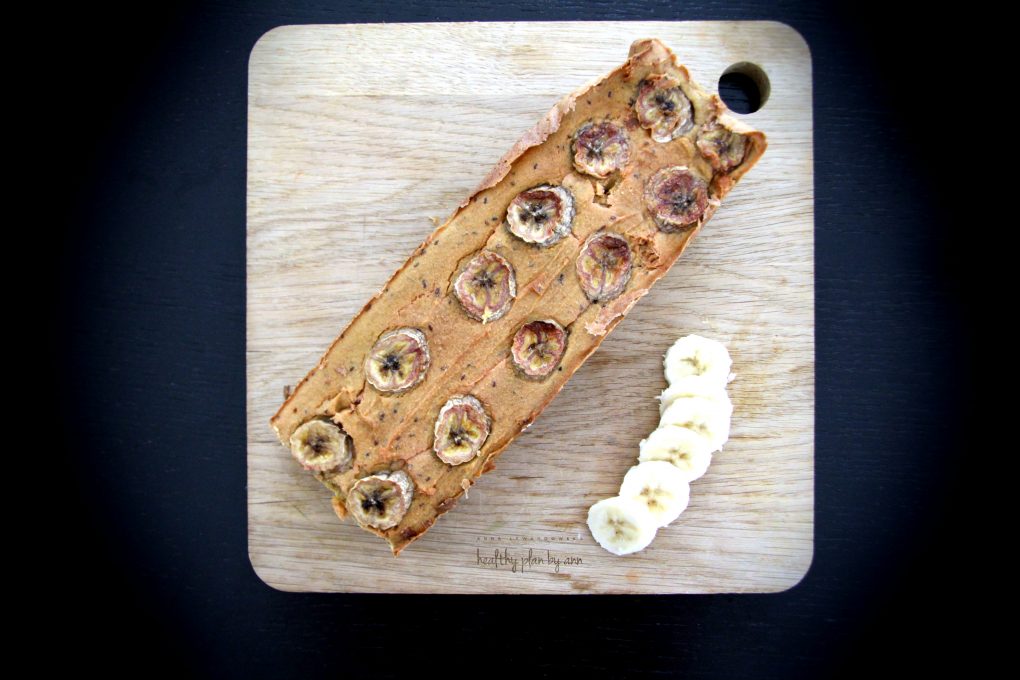
Banana and Mango Bread for a Post Workout Snack
You’ve finished your workout, but you have to wait an hour for dinner?
No idea what to snack on?
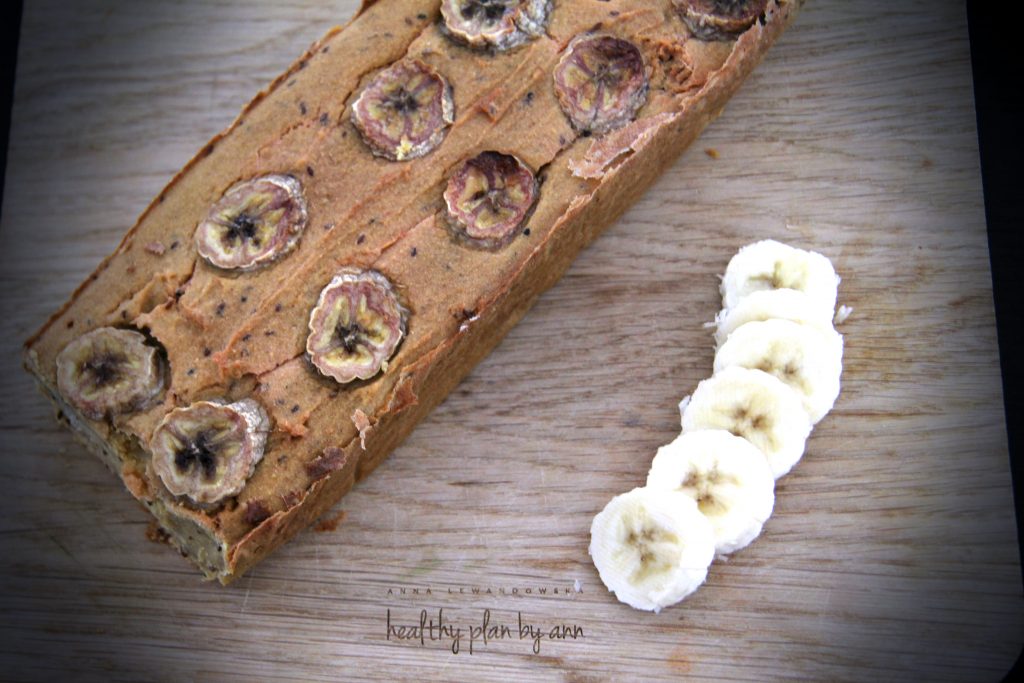
Here you have some bread from banana and mango, which will help replenish your muscle glycogen and boost energy. You may prepare it in advance and store it in the fridge. After your physical activity it will be perfect 🙂
What a fruit loaf does after a workout
Training draws on glycogen, the form in which muscles store carbohydrates, and the store has to be refilled from food. Bananas and mango are almost entirely carbohydrate, most of it in sugars the body absorbs quickly, which is exactly what this job needs – this is one of the few moments in the day when fast sugars are useful rather than a problem.
The practical advantage of a loaf over a shake is that it keeps. Appetite often disappears for an hour after hard training, and a slice waiting in the fridge is easier to face then than a full meal. Cut it in advance, take it with you, and eat it when hunger comes back. What to put around it is a separate question, and the post on what to eat before a workout covers the other end of the session.
Psyllium is what holds this loaf together
There is no gluten in any of these three flours, so something has to do its work. Here it is psyllium husk, a soluble fibre that soaks up many times its own weight in water and turns into a gel. That gel traps the gas from the baking powder and keeps the crumb from falling apart when you slice it.
This is why the recipe adds it at the very end, after blending. Psyllium starts gelling on contact with liquid, and a batter that already contains it will not blend smooth – you get lumps of gel instead of an even mixture. Stir it in, pour the batter straight into the tin, and do not leave it standing on the counter.
Keep to the single tablespoon. More psyllium does not make a better loaf, it makes a rubbery one, and it takes the bread from a pleasant amount of fibre to an uncomfortable one.
Baking your own snack solves one meal. The harder part is knowing how much of it a training day actually calls for, which is where the app helps: the menu is built for your goal, whether that is losing weight, holding steady or building muscle.
Three flours, three different jobs
Rice flour is the neutral base. It has no taste of its own and gives the loaf its structure, which is why it makes up the largest share.
Millet or buckwheat flour brings the flavour and the colour. Buckwheat is distinctly earthy and darkens the crumb, millet is milder and slightly sweet – the choice between them changes the loaf more than any other swap in this recipe.
Coconut flour is the one to leave alone. It absorbs several times more liquid than any other flour here, which is why 60 g of it is enough and why the batter looks thick before it goes into the tin. Swapping it one for one with rice flour will give you a dry loaf, and leaving it out entirely will give you a wet one.
Preparation
Put the dry ingredients into a bowl, slice the bananas and add them to the bowl. Do the same with the mango – peel it and put it in. Add the milk and the oil, then blend until smooth. Finally, add the psyllium and stir it in.
Line a roasting tin with baking paper and pour in the batter. Bake for 50 to 60 minutes at 180 C with hot air, watching it as it bakes and checking with a skewer whether the crumb has set.
You can add a little bit of ghee butter or homemade jam to taste. If you want a version without mango, the plain banana bread uses a different set of flours, and banana muffins bake in a third of the time when you want single portions.
Timing food around training is the part most people get wrong, not the recipe itself. Diet & Training by Ann plans the meals around your sessions, with over 200 training plans and a menu that adjusts when you move a workout to another day.
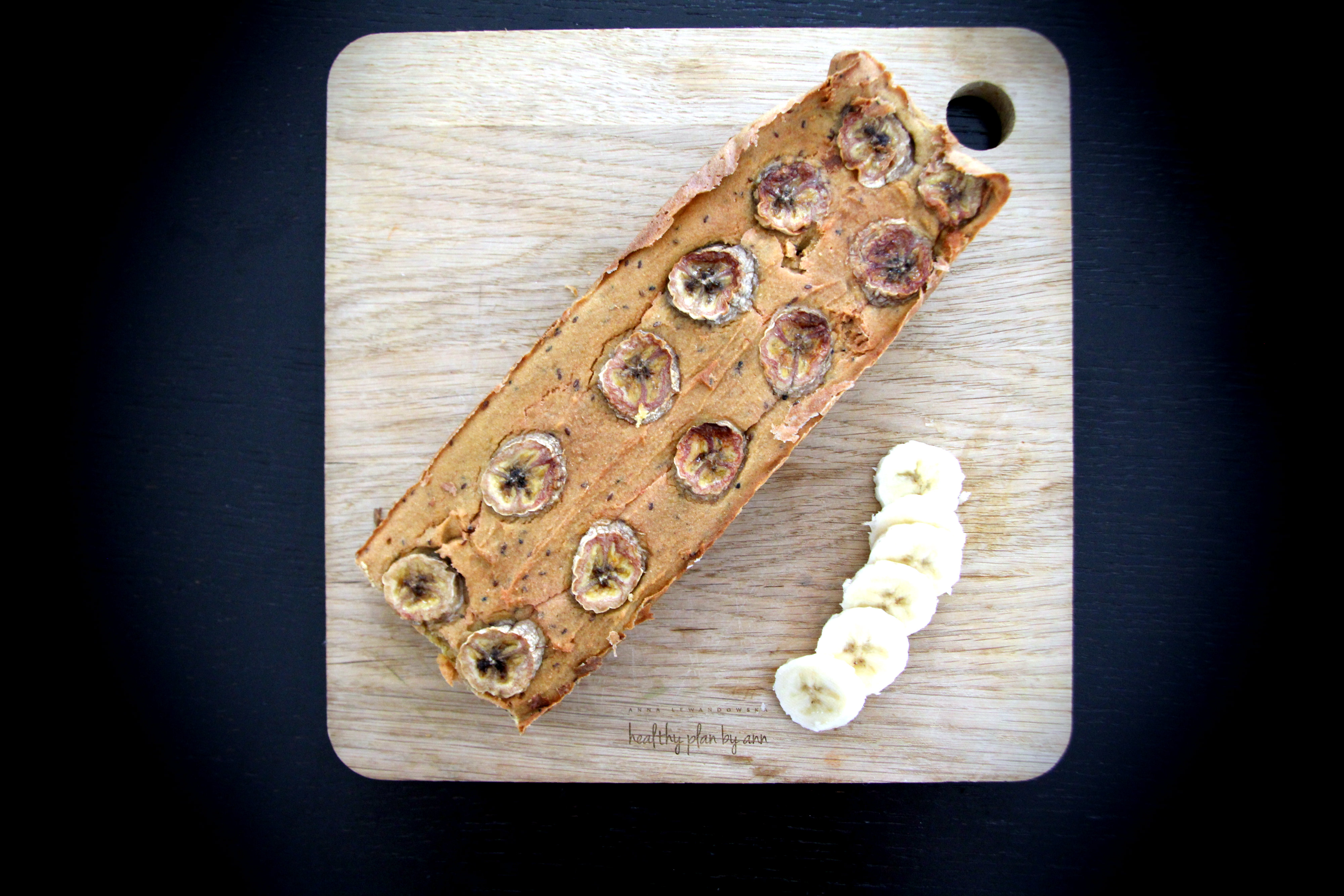
Banana and mango bread, a post workout snack
Ingredients
Method
- Put the dry ingredients into a bowl.
- Slice the bananas and add them, then peel the mango and add it too.
- Pour in the vegetable milk and the coconut oil and blend until smooth.
- Add the psyllium last and stir it in, then pour the batter straight into the tin without letting it stand.
- Line a roasting tin with baking paper and pour in the batter.
- Bake for 50 to 60 minutes at 180 C with hot air, checking with a skewer whether the crumb has set.
- Serve with a little ghee butter or homemade jam.
Notes
Frequently asked questions
Ground flaxseed is the closest swap, about two tablespoons in place of one of psyllium, though the loaf comes out denser and slightly nutty. Chia seeds work on the same principle. Leaving the binder out altogether gives you a bread that crumbles when sliced.
Not one for one. Coconut flour takes up several times more liquid than rice or buckwheat flour, so the same weight of another flour leaves the batter far too wet. If you have none, use about 20 g of rice flour in its place and reduce the plant milk a little.
Three to four days in a closed container in the fridge, and it slices better cold than warm. It also freezes well cut into slices, which is the easiest way to have one ready after training.
Yes, as long as the baking powder you use is certified gluten free, which the recipe specifies. Rice, millet, buckwheat and coconut flours contain no gluten. Buckwheat is often milled alongside wheat, so check the packet if you are coeliac.
Roughly 175 kcal a slice if you cut the loaf into ten. Most of it comes from the flours and the coconut oil, with the bananas and mango adding the fast carbohydrates that make it useful after training. The AI Calorie Calculator in Diet & Training by Ann gives you the figure for the slice you actually cut, from a photo.




Comments No Comments
Join the discussion…