


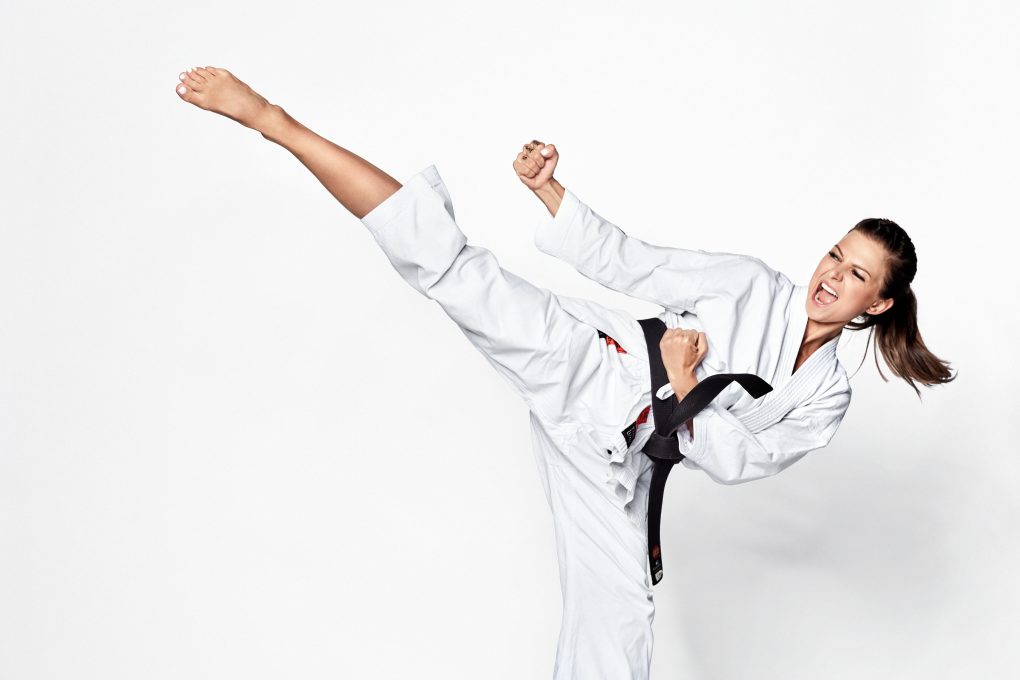
Karate – how sport changed me
How sport changed me?
We know each other since some time and you know that I love to promote a healthy lifestyle. I am convincing you that it’s worth being active for many years because it is one of the foundations of health. I wrote about it on my blog in six reasons to be active every day.
It is possible that one of you still does not know my story and does not know why sport is so close to my heart and why I devoted it not only to private life, but also to my professional life.
How karate found me
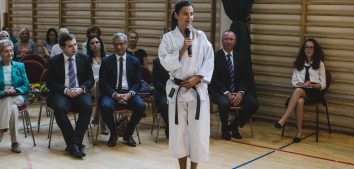
I became a karate adept at the age of ten. Quickly I swallowed the bug and training became my everyday life. I got into karate with my whole body because it’s not just a sport or self-defense art. It’s a discipline that taught me respect for others, self-control and honesty, these are just some of the values given to me by my trainers. With full awareness as I am saying – karate is not only sport, but also great values.
This discipline is accompanied by a special label, clothes and culture that create a unique atmosphere conducive to physical and mental development. In retrospect, I know that this sport has shaped me as a human being, it has made my strong character and it has undoubtedly significantly influenced my attitude towards life. Each workout is not just a muscle training!
Representing Poland, and knowing when to stop
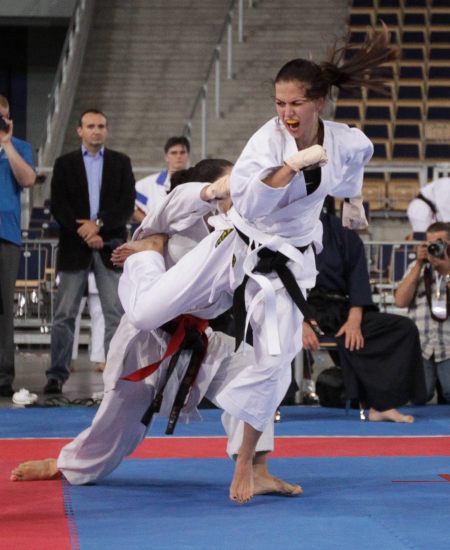
I was also involved in traditional karate as a professional athlete and I had the honor to represent Poland at international competitions. I am not able to express the emotions you feel when I heard the National Anthem – Mazurek Dąbrowskiego, when I stood with the medal on the podium … I miss it the most. Although the sublimity of this moment can not be compared with anything, at one point I have decided that it was time to finish this stage in life. Nothing happens without a reason – I gave up representing our country for other priorities!
Sometimes it seems to us that if we give up some of our life, activities, studies or hobbies, we lose something. Yes, but only in this way we gain time and space for something new that inspired us to act.
Earlier, I thought many times that traditional karate is my strong foundation, that I could not imagine my life without training in kimono. Every day I had such a tight schedule that it was impossible to find time for other things. I do not know when the changes took place, but slowly a space appeared in which I could pursue further goals. From my once-beloved karate, I have been given the same determination, motivation and self-confidence. They drive me to achieve further goals, but in other areas. One of the kimonos from that time, the one I won the Traditional Karate World Championship in, I later gave away for charity.
If it wasn’t karate
- If it wasn’t karate – I would not be in the place where I am now. I would not be a personal and fitness trainer.
- If it wasn’t karate – I would not organize dojo training camps for you (Japanese Center for the Martial Arts) or other events.
- If it wasn’t karate – maybe I would not go to university to study Physical Education 🙂
How sport changed me?
Nine things that karate turned around, and what each of them left me with.
- distracted > punctual. You know when and where you want to be. Harmony and order prevailed in my life. Taught to subordinate to the trainings of other plans, now I submit to my duties, which I considered to be a priority.
- rebel > disciplined. I respect overarching values and principles, I know my duties and fulfill them.
- a girl who wants to win > a woman who can lose. Failures happen to everyone, but they motivate you to work on yourself.
- living day by day, without plans, catching what the day will bring > organized and consistent in action. I know what to do, I plan the future, I assume different scenarios and solutions, I persistently strive to implement plans.
- complexes > self-confidence. I have learned my worth, I know what I can and I am persuading others not to doubt themselves.
- confusion > purpose and vision in life. I know my weaknesses and strengths, I know what I want and I am determined to pursue my goal.
- petite girl > athlete. I have earned my muscles and a healthy body, I know I have strength and I can overcome many difficulties.
- fear of pain > physical stress translating into mental strength. I can face difficulties.
- I’m mediocre > I’m getting medals. Hard work has been rewarded.
What a traditional karate session looks like
If the story has made you curious about the training itself, a traditional session is more structured than most gym work. It runs barefoot on a mat, it opens and closes with a bow, and it is usually built from three parts that repeat for years: kihon, the basic techniques drilled in lines; kata, set sequences of those techniques performed alone; and kumite, work with a partner, which starts as agreed exchanges long before anyone spars freely.
The etiquette around all this is not decoration. You bow when you step onto the mat and when you leave it, you address the instructor as sensei, and you wait rather than walk across someone else’s line. That is the part I meant by respect and self-control: it is trained in the room every session, not talked about.
Starting as an adult, or signing a child up
Children usually begin between six and ten, which is roughly when I did, and adult beginner groups exist in most clubs. Two practical things are worth knowing before the first session. The first is that you need almost nothing: come in a t-shirt and tracksuit bottoms, barefoot, and buy a karategi only once you know you are staying. The second is that the order of belt colours differs between organisations and schools, so compare clubs by the instructor’s certification and by how the beginner group is actually run, not by how quickly the belts come.
Traditional karate is also not the only way into this kind of movement. What I do now with the app took the parts that carry over: the drill structure, the repetition, the sequence you can follow without thinking about what comes next. Karate Cardio, which I put together from karate technique, is here on the blog as a training you can do at home, and the full set of plans is in the Diet & Training by Ann app.
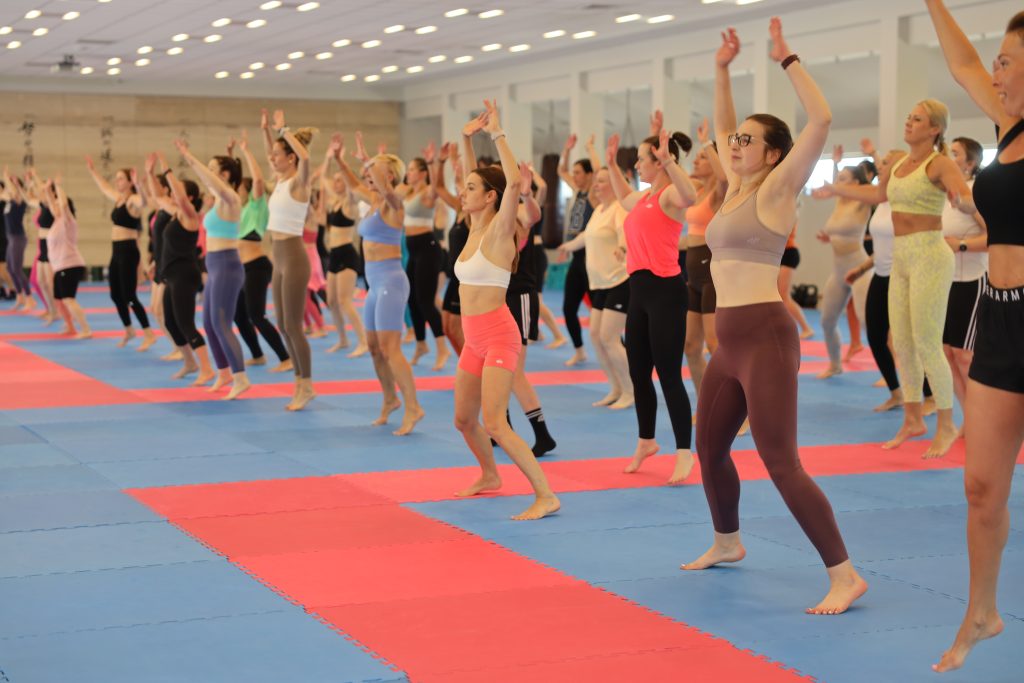
Sport has changed my life. I owe to sport everything I have achieved in my life. Sport is an idea, a value in itself.
Among you there are many professional and amateur athletes. How did daily exercises shaped your characters?
Frequently asked questions
Children usually begin between six and ten. Anna started at ten. Most clubs also run separate beginner groups for adults, so there is no upper age at which it stops being worth trying.
Almost nothing. Come in a t-shirt and tracksuit bottoms and train barefoot, since sessions run on a mat. Buy a karategi only once you know you are staying, because it is the one purchase that is no use if you stop after a month.
The three parts a traditional session is built from. Kihon is the basic techniques drilled in lines, kata is set sequences of those techniques performed alone, and kumite is work with a partner, which begins as agreed exchanges long before anyone spars freely.
It differs between organisations and schools, so there is no single order to memorise. That is also why belts are a poor way to compare clubs. Look instead at the instructor’s certification and at how the beginner group is actually run.
Not for the fitness side of it. Karate Cardio is built from karate technique and is designed to be done at home, without a partner and without a mat. What a dojo gives you that a living room cannot is the partner work and the etiquette, and those are the point of karate itself rather than of a workout. The at-home plans are in the Diet & Training by Ann app.




Comments No Comments
Join the discussion…