



How to Lose Body Fat in a Quick and Healthy Way?
The long-awaited vacation has finally arrived and with it a lot of ideas on how to prepare your body for the beach in a short time. During this period I always get many questions from you: is it possible to lose weight quickly and effectively? Can I not stick to my diet during my vacation? How to achieve visible results in a flash? Therefore, in this post I would like to write about a healthy way to burn fat. This topic may be especially important for those of you who care a lot about health and improving your appearance but are not necessarily keen on restrictive diets and limitations. Fast fat burning – yes, it is possible.
Many of you have certainly heard about “intermittent fasting” and its spectacular effects. The beneficial effects of fasting have been known to mankind since ancient times, and the trace of the periodic abandonment of food can be found in cultures and religions around the world. Consumerism, the lack of restrictions on food intake and the increasing access to poor-quality food adversely affect both our physical and mental health. The growing nutritional awareness in recent years has directly influenced the popularity of various types of dietary restrictions. As the study “The growing importance of health and the eating habits of Poles. SuperMenu 2021” showed, as many as 32% of us follow such restrictions. More and more often we decide on periodic fasting aimed at cleansing the body and improving its metabolic processes. This is a good idea, especially in the spring and summer season.
IF diet – effective and healthy
Intermittent Fasting is a revolutionary diet. It is about alternating periods of fasting with those during which we can eat normally. A properly planned diet rich in all the necessary ingredients helps you to burn fat in a healthy way and has a positive effect on the body. There are two basic models of intermittent fasting: the first one is called Alternate-Day Fasting (ADF), in which fasts are made for a minimum of 24 hours per week and the second one: Time-Restricted Feeding (TRF), consisting in designating the time interval for the fasting period within a day. There is also a separate post about intermittent fasting on the blog, with more on where the idea comes from.
You often ask me what I think about IF diet and whether is it really good for our health. The diet is based on the Healthy Eating Pyramid, thanks to which the body is provided with all the necessary nutrients, vitamins and minerals as well as the necessary number of calories. The IF diet should include sources of wholesome protein, healthy fats with a predominance of omega-3, omega-6 and omega-9 fatty acids, and complex carbohydrates. We should cut out products that contain the so-called empty calories of low nutritional value, wheat products, simple sugars, and deep-fried foods. It is recommended to choose products of high quality while on this diet. This will ensure the proper functioning of the body, also during the 16-hour fast, when we can only drink calorie-free fluids. I suggest drinking water, herbal teas and unsweetened coffee and tea.
Who should not try it
Remember, however, that intermittent fasting should not be used by diabetics, pregnant and lactating women, children and adolescents, the elderly and those suffering from eating disorders. This part is worth reading before the rest, not after. If you take medication with meals, the eating window changes when you can take it, so that is a conversation with a doctor rather than something to work out alone. And if the reason you are drawn to a fasting schedule is that eating feels difficult to control, this is not the method to start with.

Fast burning without restrictions
Intermittent fasting does not limit certain products, but during its use you should stick to the principles of healthy eating and adjust the amount of calories to your individual needs. Before starting the diet, it is a good idea to consult a dietitian who, after a short interview, will be able to adjust the caloric content of the menu depending on the body’s needs and the purpose why we decided to fast. People who want to lose weight should opt for a caloric deficit, and those who want to build muscle mass – an energy surplus. More calories are intended for physically active people and fewer for those who lead a sedentary lifestyle. During the 8-hour eating window, it is assumed that you will eat 3 wholesome meals, rich in all micro and macronutrients. Breaks between meals should last 2.5-3 hours – thanks to this model, the urge to snack is effectively eliminated and it is easier to maintain a 16-hour fast. Setting that level yourself is the part most people get wrong, so if you would rather have it calculated from your goal and turned into three planned meals, that is what the Diet & Training by Ann app is for. How a caloric deficit is set, and why it is not the same as eating as little as possible, is the subject of the post on the reduction diet.
How the eating window works in practice
The 16 and 8 hours sound strict on paper and turn out to be mostly a question of where you put the window. Sleep covers seven or eight of the fasting hours, so what is left is the stretch before the first meal and the stretch after the last one. Two shapes cover most lives: an eleven to seven window, which means no breakfast but a normal dinner with the family, or a nine to five window, which keeps breakfast and moves dinner earlier. Neither is better than the other. The one that works is the one you do not have to fight every evening.
Three practical points. Put the window where your training sits, because most people would rather not train on the last hour of a sixteen-hour fast. Keep the fluids going through the fasting hours, since water, herbal tea and unsweetened coffee are what makes the morning stretch unremarkable. And expect the first week to be the loud one: the urge to snack shows up at the hours you used to snack, which is information about habits rather than about hunger.
Building healthy habits
The IF diet is also helpful in developing certain eating habits. Due to the limitation of the time during which we can have meals, it eliminates a typical problem that affects people trying to lose excess weight, i.e. snacking, especially at night. The study “The growing importance of health and the eating habits of Poles. SuperMenu 2021” shows that we have a frequent problem with it. As many as 89% of Poles eat snacks between meals. Most often, fruit and vegetables (73%), but we also really often go for sweets (53%). The other side of that habit, eating enough rather than eating less, is in the post on why you have to eat to lose weight.
That is why the IF diet is ideal for people who are looking for a quick way to reduce body fat and for those who want to take care of their health 🙂
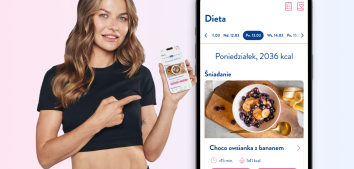
Whichever window you choose, the part that decides the outcome is what goes into those three meals. That is the work the Diet & Training by Ann app does for you: the calorie level follows the goal you set, the meals are planned for the week, and the shopping list comes with them.
Frequently asked questions
This post names diabetics, pregnant and lactating women, children and adolescents, the elderly and people with eating disorders. If you take medication with meals, the eating window changes when you can take it, so speak to a doctor first rather than working it out alone.
Alternate-Day Fasting, where fasts last a minimum of 24 hours per week, and Time-Restricted Feeding, where the fasting period is a set interval within the day. The 16 and 8 hour split that most people mean by fasting is the second of the two.
Calorie-free fluids only. Anna suggests water, herbal teas and unsweetened coffee and tea. Keeping the fluids going through the morning is what makes the stretch before the first meal unremarkable.
Three, with breaks of two and a half to three hours between them. That spacing is the point of the model: it leaves no gaps to fill with snacks and makes the following fast easier to keep to.
No. It does not exclude particular products, but the principles of healthy eating still apply and the calories still have to match your own needs, which is why it is worth setting the level with a dietitian before starting. Someone losing weight needs a deficit, someone building muscle a surplus, and an active person more than a sedentary one. If you would rather have that level set and the meals planned around it, that is what the Diet & Training by Ann app does, with a shopping list to match.




Comments No Comments
Join the discussion…