


Bachata – History, Benefits, and Fun
Promoting and practicing physical activity is pure pleasure for me. As you know, my adventure with bachata began after moving to Barcelona. It is a great way to spend time and exercise. The body works while the head rests – that’s because dancing is an ideal form of reducing stress, tension in the body, and releasing endorphins.
The History of Bachata
Bachata is not only a dance, it is also the music that started it all. It was invented by the poor inhabitants of the Dominican Republic, who after work took their instruments and various objects in their hands, played them and danced to the rhythm of the music. They were mostly love songs. Therefore, the dance itself was sensual, and the dancing couples were close to each other.
Do you know what the word bachata means? In some regions of the Dominican Republic it simply meant garbage, but for others it meant fun. Looking at people dancing bachata, the second one seems to be the perfect term.
Currently, bachata is known all over the world and we distinguish different varieties:
- Dominicana: it is the original style from the Dominican Republic, as the name suggests. It shows similarities to Latin dances. You count to four while dancing. The basic step is BOX STEP, which itself is quite simple. The movement of the hips and the whole body is very important.
- Moderna: it is a simplified version of the Dominicana style, the pace of the dance itself with the music is slower. Due to the degree of difficulty, it is the most frequently chosen bachata style chosen for learning and thus the most popular one.
- Sensual: contrary to appearances, the open position of the body prevails here. The dance includes the movements of the whole body, the movement of the hips is of course extremely important, but it is less exposed than in the original Dominican version of this dance. However, it is undeniably the most sensual of all the styles.
The Benefits
Bachata, like other types of dance, can bring us many benefits! It is a good way to both train your body and relax your mind. It’s also a great way to spend time with other people. You can dance solo or in pairs. Dancing with a partner allows you to strengthen your bond, overcome your own weaknesses, and feel greater closeness and trust.
Dance is a great way of expressing yourself, your emotions, character, and way of being. By dancing, you will increase your body awareness and gain self-confidence.
Did you know that dancing stimulates your thought processes and increases creativity? It really does! That is why it is all the more worth it, not only will you reduce your stress level, but you will also become more creative at work. What’s more, dancing, like other forms of physical activity, can make you more consistent and punctual.
Bachata is a whole body workout as you will not only burn a lot of calories, but you will also work on coordination, general fitness and flexibility. If your goal is to reduce excess body fat or just take up regular physical activity, bachata is the way to go! You can start training at any age, regardless of your fitness level.
What a first class is like
Three things stop people signing up, and none of them survives the first hour. You do not need a partner: beginner classes rotate, so everyone dances with everyone and the teacher pairs up whoever is left over. You do not need dance shoes either. Anything flat with a smooth sole is right, and the one thing to avoid is a grippy running trainer, because bachata turns on the ball of the foot and a sticky sole is how ankles get twisted. And you do not need any sense of rhythm to start; counting to four out loud is the whole technique in week one.
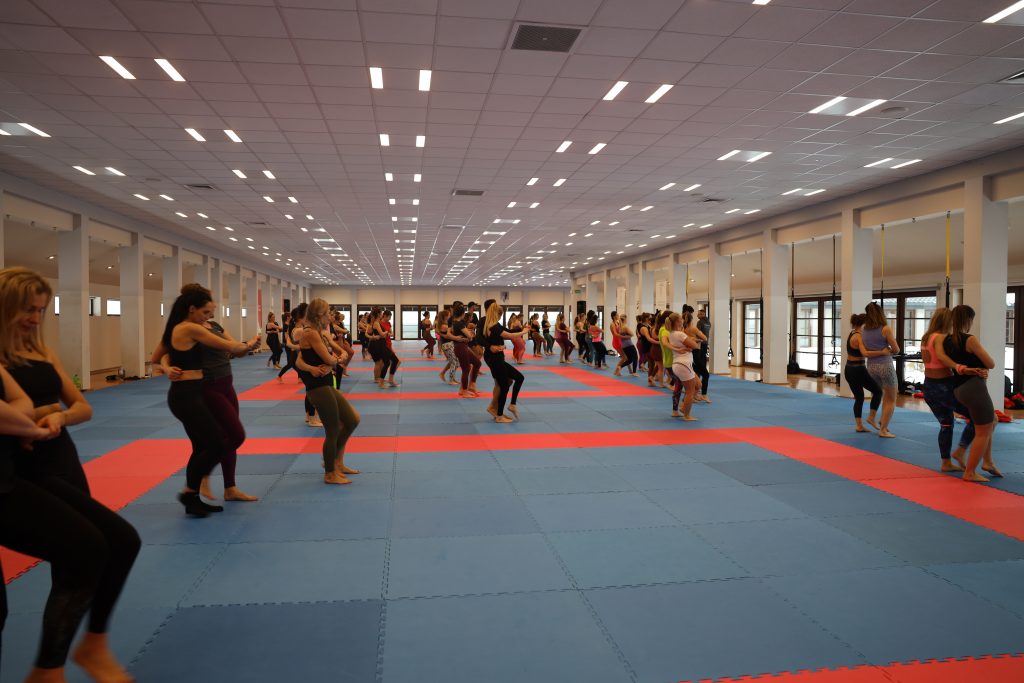
A beginner class usually runs an hour and splits into the same three parts every time: the basic step on your own, then the same step with a partner, then one figure built on top of it. Expect to spend most of the first month on the basic and on how to lead or follow a change of direction, because that is what everything else is attached to. Bring water, because an hour of it is warmer work than it looks from the side.
Then there is the part that keeps people dancing: the social. Most schools run one evening a week where you simply dance what you have learnt, and it is worth going long before you feel ready, since three songs at a social teach you more about following the music than a whole class does. If dancing is going to be your regular activity, it is worth having it in the plan alongside everything else, and that is what the Diet & Training by Ann app is for: the training week and the meals in one place.
Training Equals Good Fun
Of course it does! Isn’t this a great way to get regular physical activity? Since sport is physical effort, we can treat it as a fun way to spend free time and relax despite working up a sweat in the dance hall.
Believe me, it’s not hard to fall in love with this form of movement. Bachata is more than just dance, it’s a whole culture, it’s an opportunity to move to another place, to find yourself again in dance.
I hope that I’ve managed to excite your enthusiasm to check out bachata and I’m sure all its benefits will make it a permanent part of your daily plans! 🙂
Frequently asked questions
Three are usually distinguished. Dominicana is the original style from the Dominican Republic, danced on a count of four with a box step and a lot of hip and body movement. Moderna is a simplified version of it, danced to slower music, and it is the one most people learn first. Sensual keeps the body open and moves the whole body, with the hips less exposed than in the Dominican version.
No. Beginner classes rotate, so everyone dances with everyone, and the teacher pairs up whoever is left over.
Anything flat with a smooth sole. What to avoid is a grippy running trainer, since bachata turns on the ball of the foot and a sticky sole is how ankles get twisted. Proper dance shoes can wait until you know you are staying.
It depends on the region of the Dominican Republic. In some it simply meant garbage, and in others it meant fun. Watching people dance it, the second reading seems the right one.
Yes. This post is explicit that you can take it up at any age and at any level of fitness, and a beginner class assumes no sense of rhythm at the start: counting to four out loud is the whole technique in the first week. If you would like the dancing to sit in a week alongside your other training, the Diet & Training by Ann app plans the two together.
Bibliography
- Byczyńska D. Ciało w tańcu. Analiza socjologiczna. Łódź 2012
- Kulczyk K i wsp. Taniec jako forma aktywności fizycznej dla kobiet w różnym wieku. Człowiek w zdrowiu i chorobie, Tarnów 2016, s. 344-358
Comments No Comments
Join the discussion…