


Health Benefits of Lacto-Fermented Foods
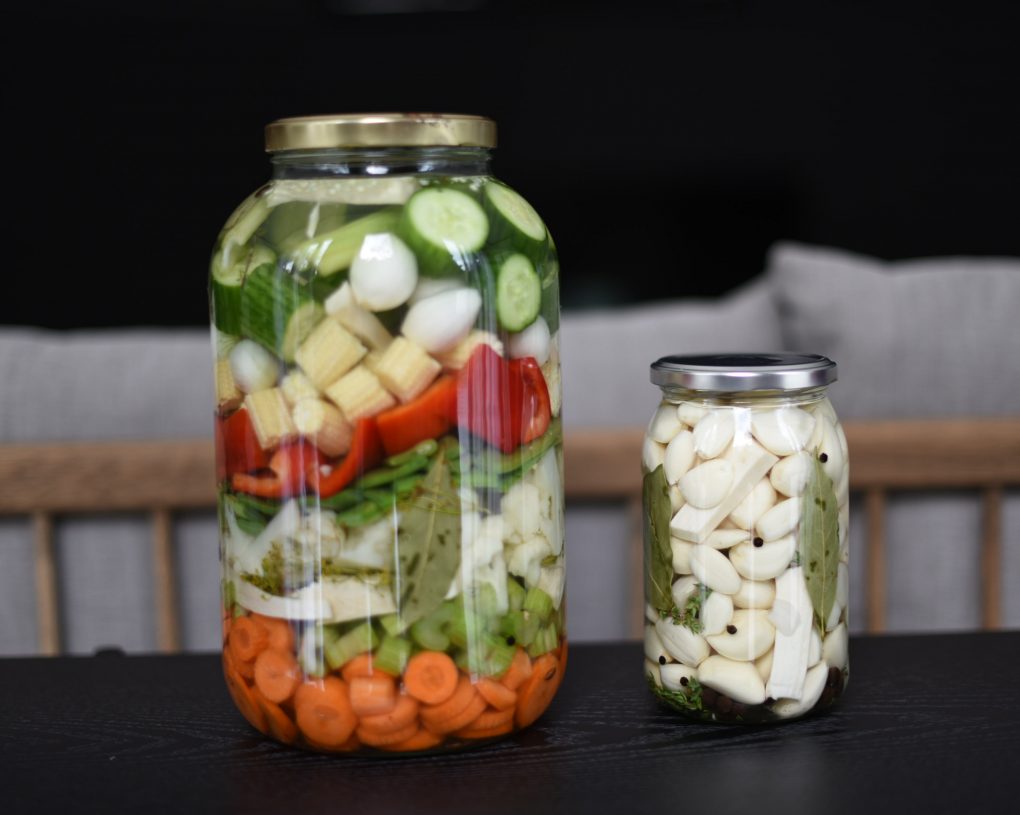
I love lacto-fermented beets, cucumbers, cabbage, garlic, zucchini, lemon…! I buy lacto-fermented foods at eco food markets or I prepare them myself at home. One of my favorite recipes is sauerkraut with turmeric…
But, let’s get to the point. If we want to take care of our bodies, we need to remember about our gut health. That’s where lacto-fermented foods, probiotic yogurts as well as dietary fiber come in handy. Remember: a healthy gut guarantees our health and well-being, as everything derives from there.
What is lacto-fermentation?
The process of lacto-fermentation involves the transformation of fermentable sugars contained in plants, such as: sucrose, fructose, glucose and others, into organic acids, ethanol, carbon dioxide and mannitol. This process wouldn’t be possible without the presence of lactic acid bacteria.
Properties of lactic acid bacteria
As I’ve mentioned before, fermented foods are a source of lactic acid which has a lot of valuable health benefits. First of all, lactic acid has a positive effect on the composition of our gut microbiota, it supports digestion and absorption of nutrients. What’s more, it has a beneficial effect on reducing cholesterol. Lactic acid bacteria also play an important part in the synthesis of certain vitamins, e.g. K and B.
Which products can we ferment?
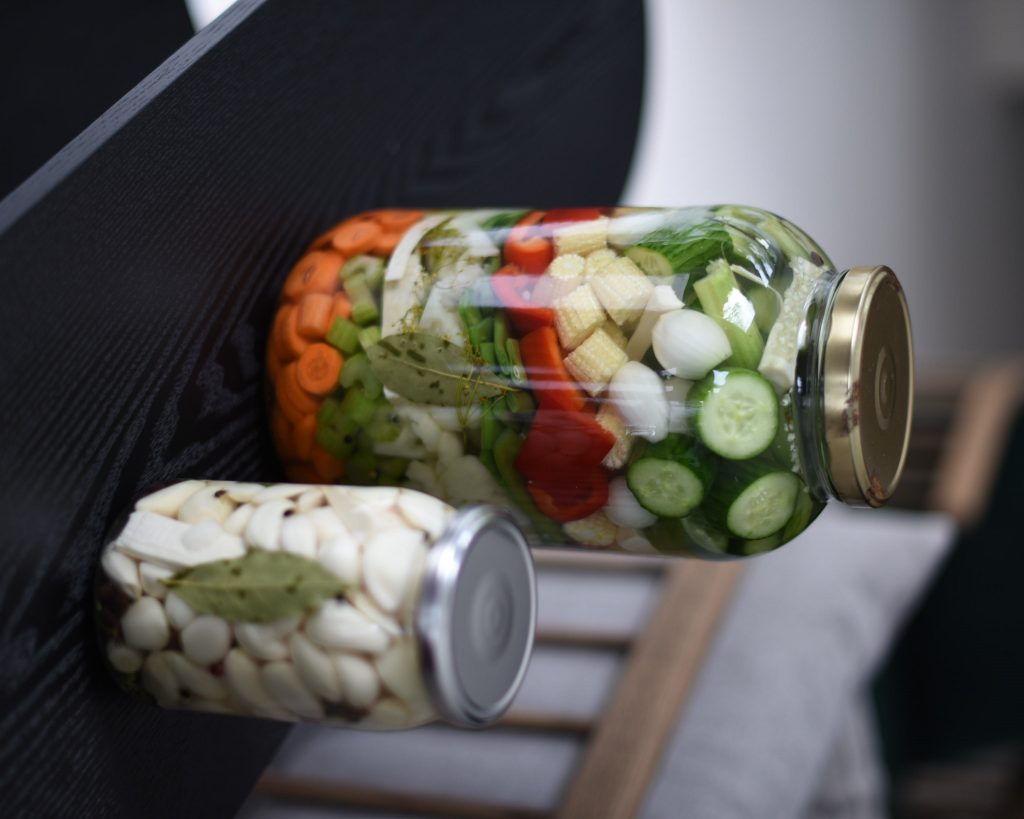
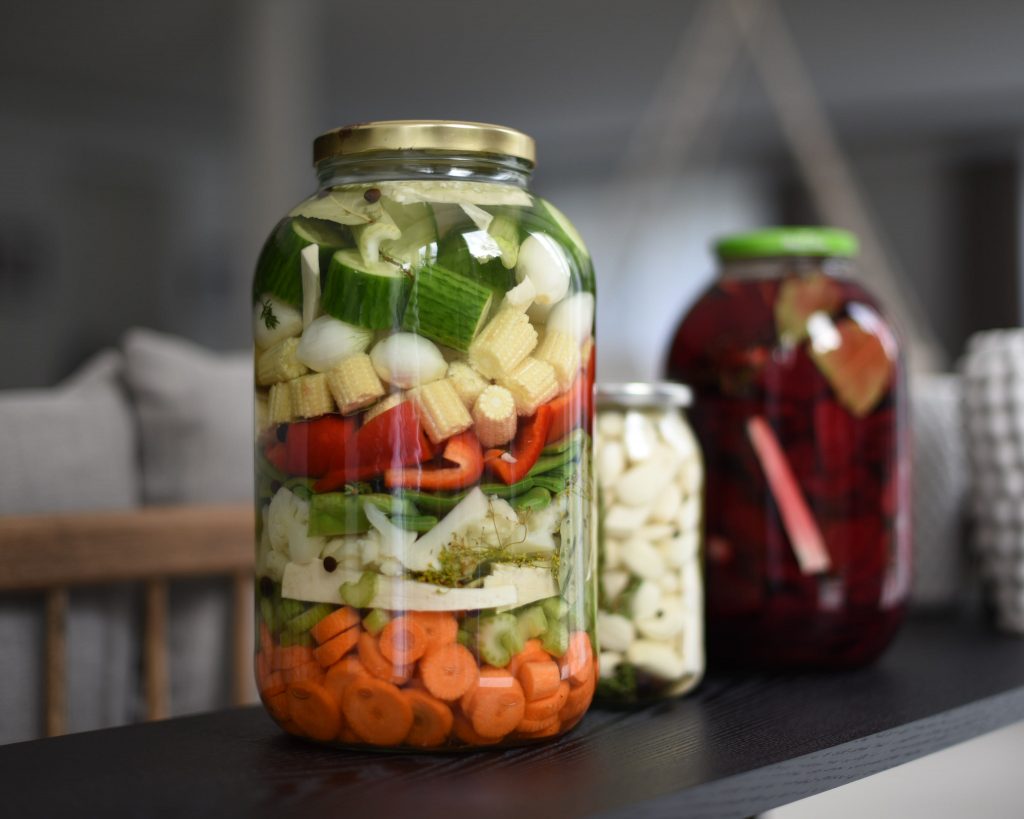
We usually ferment cabbage, cucumbers, and beets. But actually we can ferment virtually all vegetables, as well as some fruits (e.g. pears, plums and apples). However, the most suitable products are those that have a high water and sugar content. Personally, I especially recommend fermented garlic, potatoes, lemon, zucchini, carrots, turnips and many more.
Trust me: Fermenting is really worth it! And the process itself is really easy: you only need water and salt.
How to do it: water, salt and a jar
The proportion is the only number worth remembering: 2% salt by weight, which is 20 grams of salt to a litre of water. Dissolve it in cool water, chop the vegetables, pack them into a clean jar as tightly as they will go, and pour the brine over until everything is covered.
Everything below the surface is the whole technique. Whatever floats above the brine is in contact with air, and that is where mould starts, so weigh the vegetables down with a smaller jar, a folded cabbage leaf or a clean stone. Close the lid loosely, or open it once a day, because fermentation produces carbon dioxide and a tightly sealed jar will eventually make that your problem.
Then leave it at room temperature, out of direct sunlight, and start tasting on the third day. Most vegetables are somewhere you like them between three days and two weeks; the warmer the room, the faster it goes. When the taste is right, move the jar to the fridge, which slows everything down rather than stopping it. Cloudy brine and a white haze are normal. Fuzzy growth on the surface is not, and that jar goes out rather than being rescued.
If you would rather start from a finished recipe, there is creamy borsch made with fermented beetroot and baked fish with cauliflower and lacto-fermented vegetables on the blog, and a broader look at the subject in fermented foods in our diet.
Health benefits of lacto-fermented foods
There are numerous benefits of eating fermented products. Below you can find some of them:
- they are low in calories;
- they are rich in C and B vitamins;
- they contain a lot of antioxidants, minerals (e.g. potassium, phosphorus, magnesium), and fiber;
- they contain lactic acid bacteria;
- they improve the condition of your skin, hair and nails;
- they improve digestion and bowel function;
- they boost the immune system.
Working them into meals is easier when the week is planned rather than assembled dish by dish; the Diet & Training by Ann app builds the plan and the shopping list together.
On the other hand, remember that fermented foods also contain a lot of salt, which, when consumed in excess, can increase blood pressure. Therefore, they should be eaten in moderation, mainly as a side dish 🙂
Frequently asked questions
Two per cent by weight, which is 20 grams of salt to a litre of water. Dissolve it in cool water before pouring it over the vegetables.
Start tasting on the third day. Most vegetables land somewhere you like them between three days and two weeks, and the warmer the room, the faster it goes. Once the taste is right, the jar goes into the fridge, which slows the process down rather than stopping it.
Because anything above the surface is in contact with air, and that is where mould starts. Weigh the vegetables down with a smaller jar, a folded cabbage leaf or a clean stone.
No. Cloudy brine and a white haze are what a working ferment looks like. Fuzzy growth on the surface is different: that jar goes out rather than being rescued.
Virtually all of them, and some fruit as well, including pears, plums and apples. The best candidates are those high in water and sugar. Beyond cabbage, cucumbers and beetroot, Anna recommends garlic, potatoes, lemon, courgette, carrots and turnips. Fitting them into the week is easier with a plan; that is what the Diet & Training by Ann app does, shopping list included.






Comments No Comments
Join the discussion…