


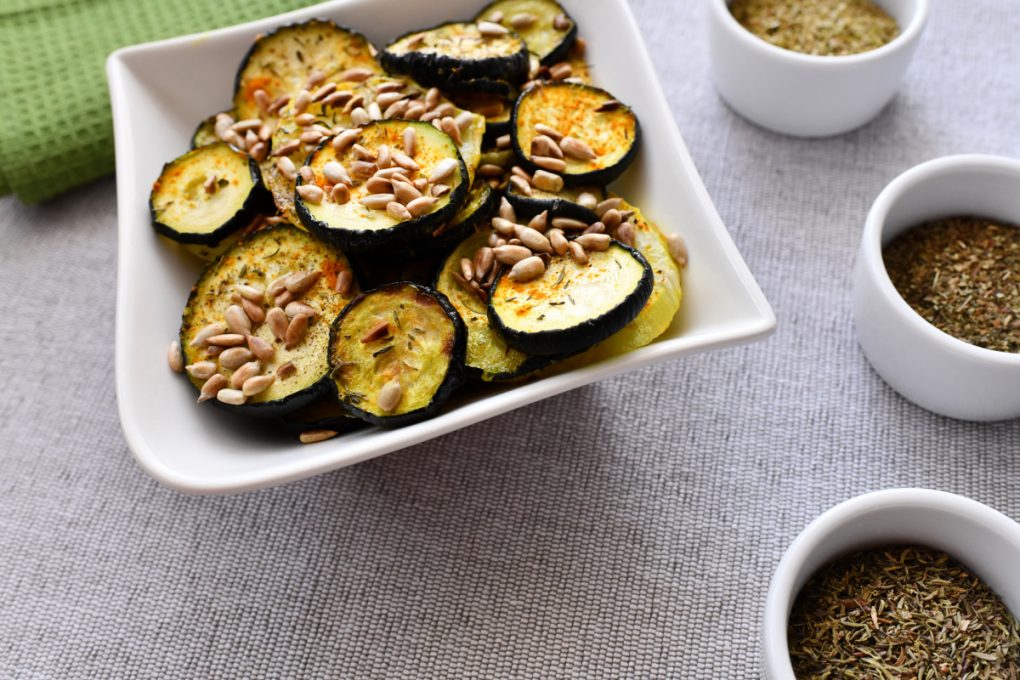
Roasted kohlrabi and zucchini with seeds and spices
We often eat the kohlrabi raw, it is delicious and crispy. However, today I would like to offer you another way to serve this vegetable – we will roast it and serve with the zucchini. If you are searching for an original way to use the kohlrabi, look at this recipe:)
Choosing and prepping the kohlrabi
Smaller bulbs are the ones to reach for. A kohlrabi the size of a tennis ball is sweet and tender, while the large ones turn woody towards the centre and no amount of roasting will fix that. The leaves, if they are still attached, should look fresh rather than limp, because that tells you how long the vegetable has been sitting around.
Peeling matters here in a way it does not with zucchini. The skin is tough and stays tough in the oven, so take it off with a knife rather than a peeler, going deep enough to remove the fibrous layer underneath.
Why the thickness of your slices decides everything
Kohlrabi is denser than zucchini and needs longer to soften, so cutting both to the same thickness gives you one vegetable still firm and the other collapsing. Slice the kohlrabi thinner, around half a centimetre, and leave the zucchini a little thicker. They then finish at the same time.
Spread everything in a single layer with a bit of space between the pieces. Crowded vegetables steam instead of roasting, and steamed kohlrabi is exactly the soggy result you were trying to avoid.
The spice mix and why it works
Basil, thyme and oregano carry the herbal side, turmeric brings colour and a warm earthiness, and cayenne provides just enough heat to keep the dish from tasting flat. Garlic goes in with the olive oil rather than dry, so it coats the vegetables instead of burning on the paper.
The sunflower seeds are toasted separately in a dry pan and added at the very end. Roasted alongside the vegetables they would scorch long before the kohlrabi is done.
What to serve it with
This works as a side to fish or chicken, as a warm base for a grain bowl with millet or quinoa, or on its own with a spoonful of thick yoghurt. If you are planning a week of meals, it also reheats well enough to make a double batch worthwhile.
Preparation
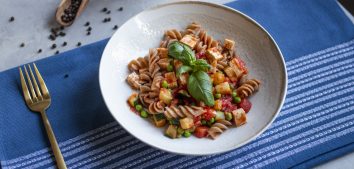
I peeled and cut the kohlrabi. I washed the zucchini and cut it into slices. On baking paper I placed the vegetables, sprinkled with spices, olive oil and roast them for about 15-20 minutes at 180°C (350°F). I roasted the sunflower seeds in a pan and sprinkled the dish.
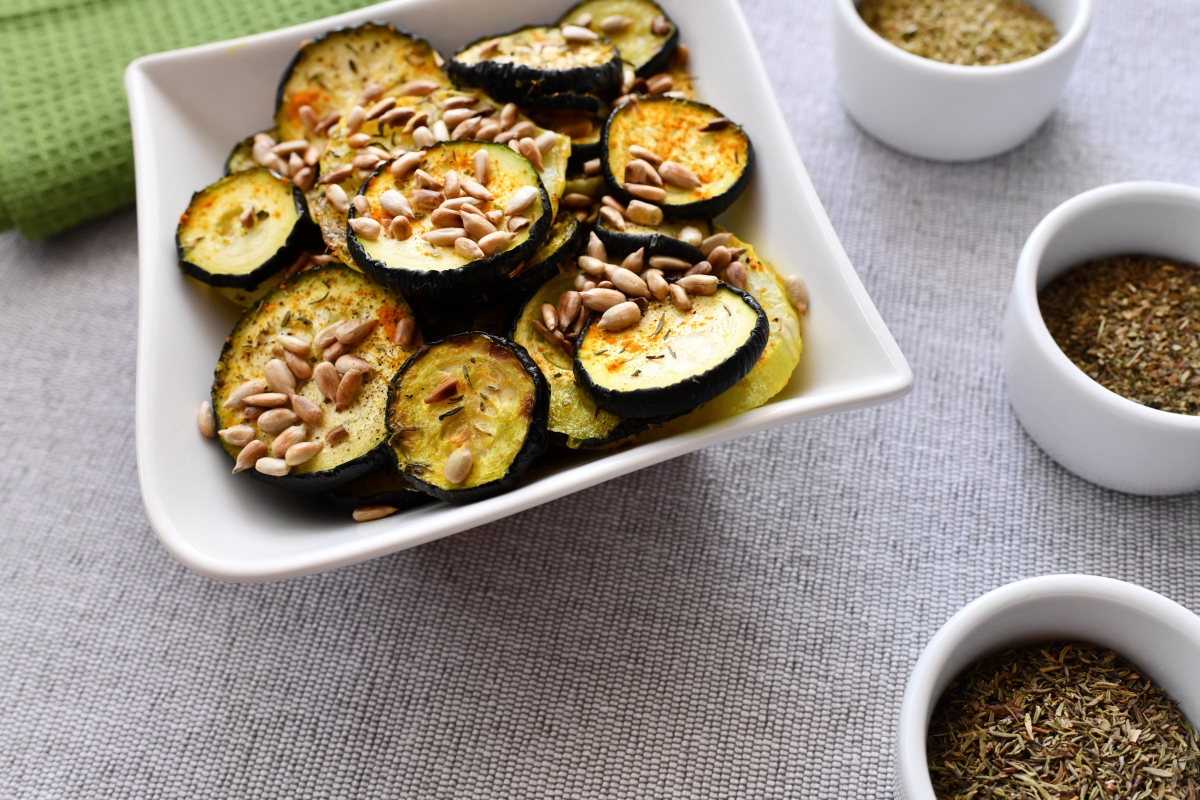
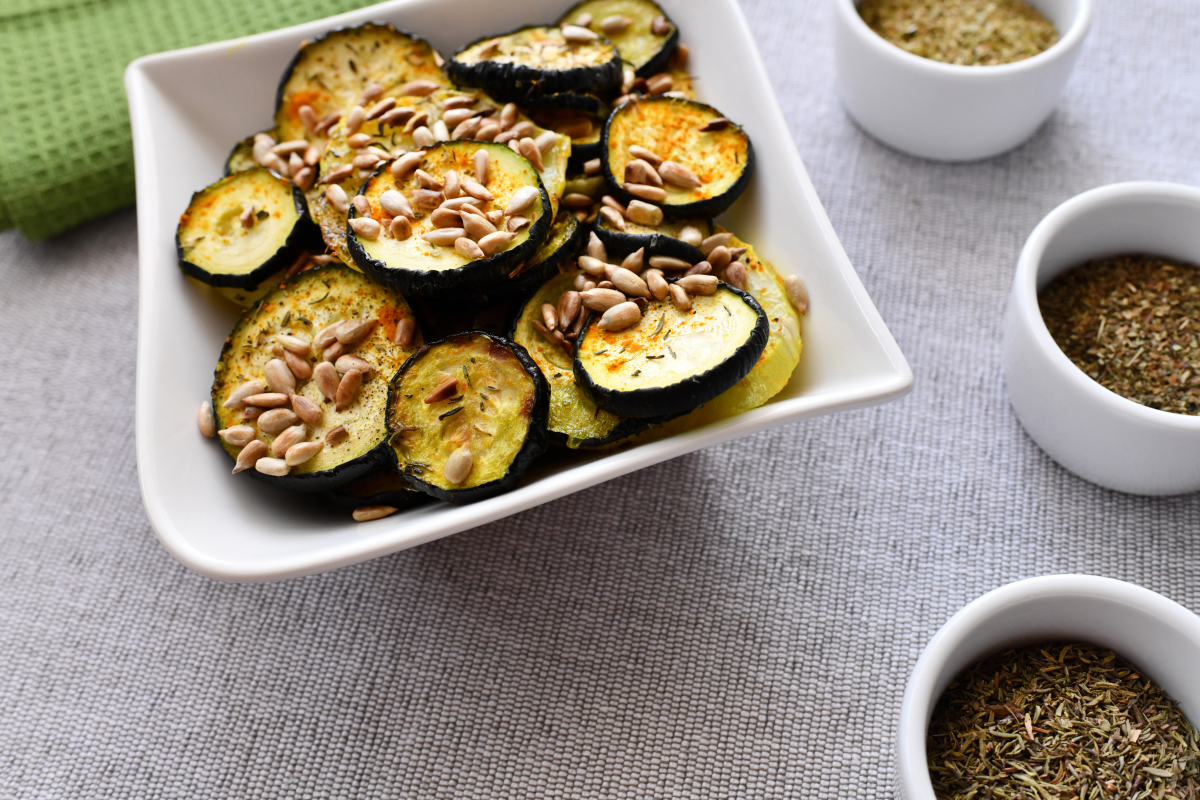
Roasted kohlrabi and zucchini with seeds and spices
Ingredients
Method
- Peel the kohlrabi and cut it into slices about half a centimetre thick.
- Wash the zucchini and cut it into slightly thicker slices, so both vegetables finish at the same time.
- Spread the vegetables on baking paper in a single layer, sprinkle with the spices and the crushed garlic, and drizzle with olive oil.
- Roast for about 15 to 20 minutes at 180°C (350°F).
- Toast the sunflower seeds in a dry pan and sprinkle them over the finished dish.
Notes
Frequently asked questions
About 15 to 20 minutes at 180°C (350°F), sliced around half a centimetre thick. Kohlrabi is denser than most vegetables, so thicker slices need noticeably longer and thinner ones can dry out before the edges colour.
Yes. The skin is tough and stays tough in the oven, so it is worth taking it off with a knife rather than a peeler, deep enough to remove the fibrous layer underneath. Zucchini, by contrast, can go in unpeeled.
Yes, and that is how it is most often eaten in this kitchen, because raw kohlrabi is sweet and crisp. Roasting takes it in a different direction, softening the texture and bringing out a milder, nuttier flavour.
Basil, thyme and oregano carry the herbal side, turmeric adds colour and a warm earthiness, and a pinch of cayenne keeps the dish from tasting flat. Garlic works best crushed into the olive oil rather than added dry, so it coats the vegetables instead of burning.
Two things decide it. Slice the kohlrabi thinner than the zucchini, because it is the denser of the two, and spread everything in a single layer with space between the pieces. Crowded vegetables steam rather than roast, which is exactly how they end up soft. Toast the sunflower seeds separately in a dry pan, they would scorch in the oven. If you would rather have side dishes planned for you, the Diet & Training by Ann app builds the week around your goal, with swaps for anything you do not feel like eating.


Comments No Comments
Join the discussion…