


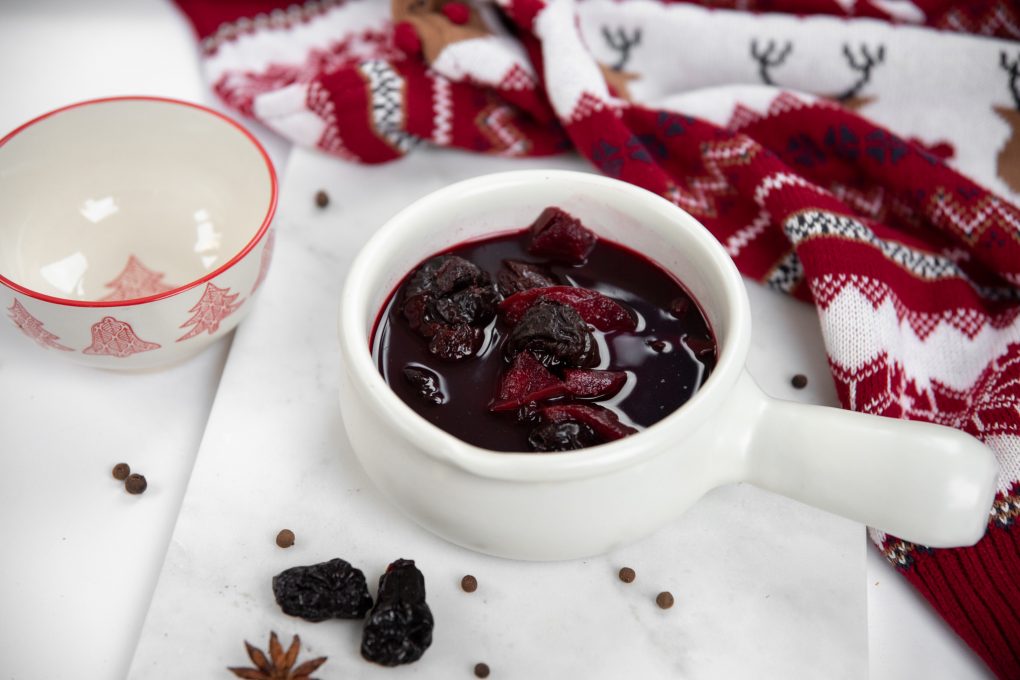
Red Borscht with Apples
Today I’ve prepared one more recipe for a Christmas must have. If you can’t imagine Christmas Eve without borscht, then this is just the right option for you. This dish combines beetroots with apples which are perfect for bringing out the taste of beets. It’s also worth mentioning that you can get these essential Polish products in any grocery shop, even the smallest one. And one last tip for you: the recipe is great not only for Christmas.
Preparation
I put the mushrooms and dried fruit into separate pots and soaked them in water for a few hours. I cooked half the beets (not peeled) for about 1 hour. In the meantime I peeled the other half, finely chopped them and cooked with mushrooms (in the same water). I added about 3 litres of water and then added the dried fruit. I peeled the onion and the garlic, chopped them finely and fried on a pan in olive oil. Then I put them to the borscht and cooked the soup for 2 more hours. I drained off the soup and poured it again to the pot. Next, I grated the other half of the beets, added them to the borscht and boiled it. At the end I poured in the apple juice, lemon juice, added the spices and cooked the soup for half an hour.
Why the beets are split in two
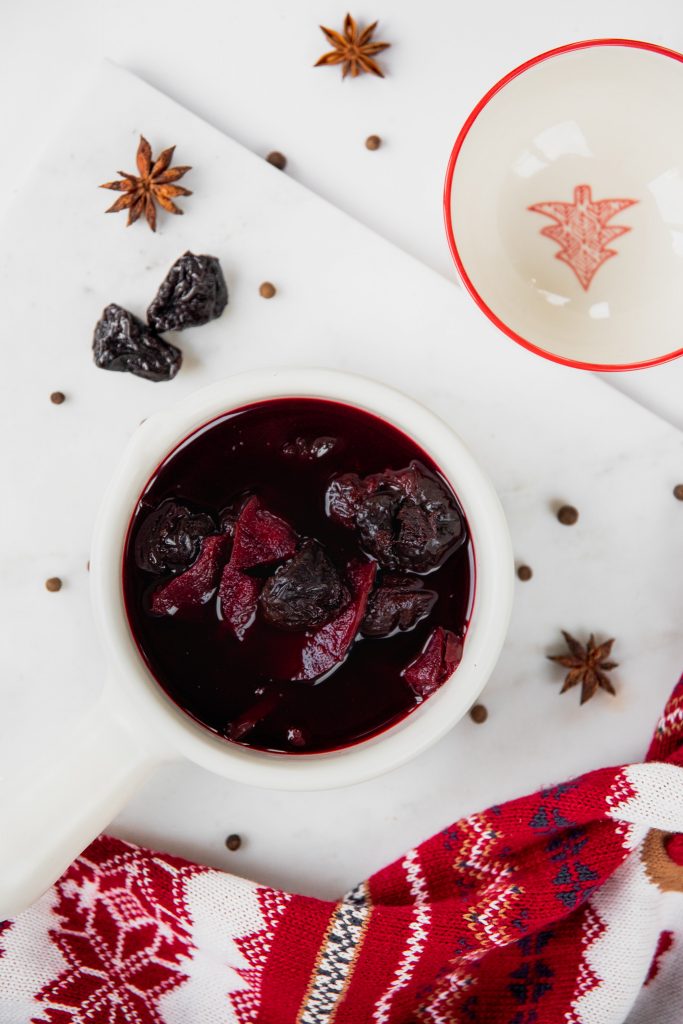
The half that is chopped and cooked with the mushrooms for three hours is there for the taste. It gives everything it has to the stock and comes out grey and spent, which is exactly what is supposed to happen.
The half boiled whole in its skin is there for the colour. Grated in near the end, it goes into a pot that has already finished its long cooking, so its pigment has only minutes of heat to survive rather than hours. This is the whole trick behind a borscht that comes out deep red instead of brown, and it is why the steps cannot be merged into one.
Keep the colour: acid in, hard boil out
Beetroot colour breaks down with prolonged heat, and it holds far better in an acidic pot. That is what the apple juice and the lemon juice are doing at the end, beyond the sweet and sour balance they give: they set the colour at the point when the grated beets have just gone in.
From the moment the grated beets are added, keep the pot just below a boil. A rolling boil for even a few minutes takes the borscht from red towards brown, and nothing brings it back. The same applies to reheating leftovers the next day.
The mushroom water is the stock
Dried mushrooms give most of their flavour to the water they soak in, so that water goes into the pot with them, which is what “cooked with mushrooms (in the same water)” means in the method above. Pour it in carefully and leave the last centimetre behind, because grit settles at the bottom.
A few hours of soaking is the minimum for porcini, and overnight in the fridge is better. The dried fruit soaks separately for the same reason in reverse: its water is sweet and would take over the pot.
Straining, and why it is worth making a day ahead
Draining the soup and pouring it back into the pot is what gives a clear borscht rather than a vegetable soup. Do it through a fine sieve and do not press the solids through, because pressing is what makes it cloudy.
Borscht is better on the second day, so making it a day ahead is the plan rather than a compromise. It keeps four days in the fridge and freezes well, both times better without the dried fruit, which turns mushy. Reheat it gently, below a boil. If you would rather have Christmas cooking planned out with a shopping list, that is what the Diet & Training by Ann app does.
Two more borscht recipes on the blog, if you want to compare: a clear Christmas Eve borscht and the fermented beet leaven it is traditionally built on.
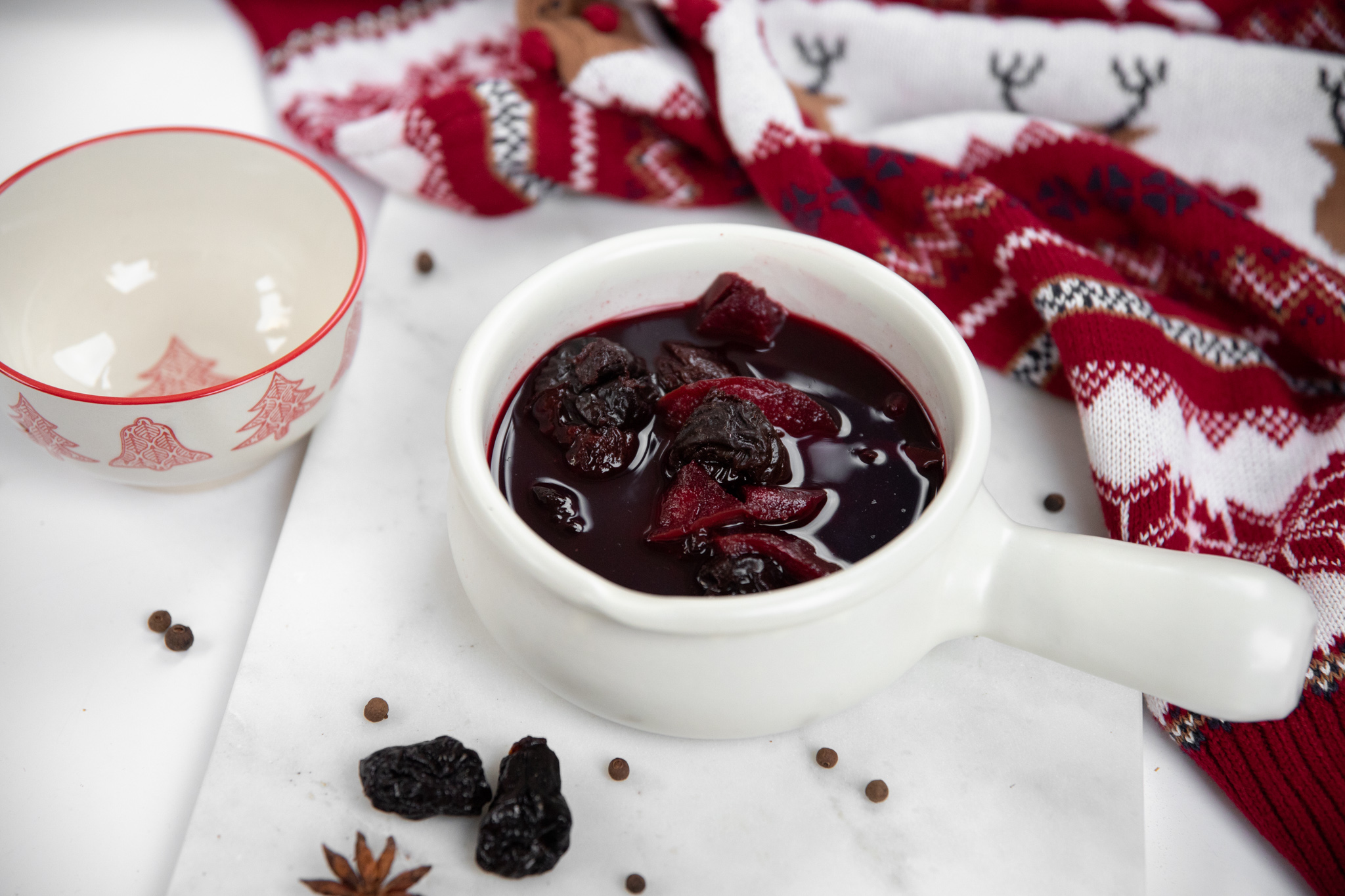
Red borscht with apples
Ingredients
Method
- Soak the dried mushrooms and the dried fruit in separate pots of water for a few hours.
- Cook half the beetroots whole and unpeeled for about 1 hour.
- Peel the other half, chop them finely and cook them with the mushrooms in their soaking water.
- Add about 3 litres of water, then the soaked dried fruit.
- Peel and finely chop the onions and garlic and fry them in olive oil, then add them to the pot and cook for 2 more hours.
- Strain the soup through a fine sieve and pour it back into the pot.
- Grate the beetroots cooked whole, add them to the borscht and bring it back to a simmer.
- Pour in the apple juice and lemon juice, add the spices and cook for half an hour, keeping the pot below a boil.
Notes
Frequently asked questions
One half is chopped and cooked into the stock for three hours and gives up all its flavour, coming out grey and spent. The other half is boiled whole in its skin and grated in near the end, so its colour has minutes of heat to survive rather than hours. That split is what makes the borscht deep red rather than brown.
Keep the pot below a boil from the moment the grated beetroots go in, and do not skip the apple and lemon juice. Beetroot pigment breaks down with prolonged heat and holds much better in an acidic pot, so the acid at the end sets the colour. The same rule applies when reheating.
You should. Dried mushrooms give most of their flavour to the water they soak in, so it goes into the pot with them. Pour it in carefully and leave the last centimetre behind, because grit settles at the bottom. The dried fruit soaks separately, since its water is sweet and would take over the pot.
Strain it through a fine sieve after the long cooking and pour it back into the pot, and do not press the solids through. Pressing is what makes it cloudy.
Borscht is better on the second day, so a day ahead is the plan rather than a compromise. It keeps four days in the fridge and freezes well, both times better without the dried fruit, which turns mushy. Reheat gently, below a boil. Christmas cooking comes planned out with a shopping list in the Diet & Training by Ann app.





Comments No Comments
Join the discussion…