


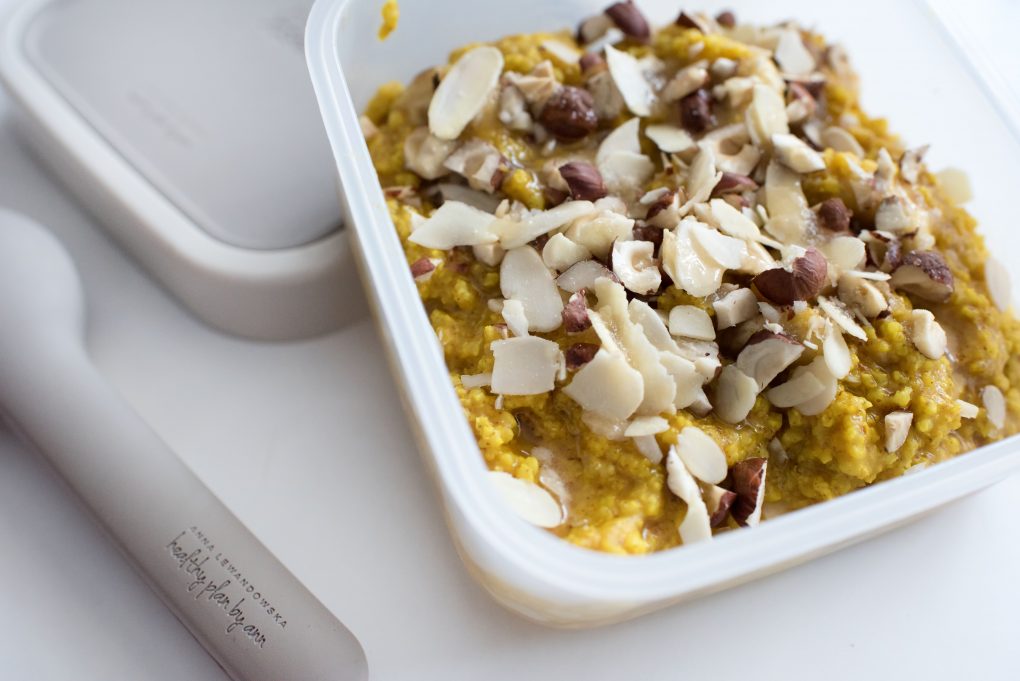
Energizing and warming millet with ghee
Ingredients:
- 1/2 cup millet
- 2 cups water
- 1 cup plant milk
-
2 tablespoons ghee butter
- pinch sea salt
- pinch turmeric
- pinch cardamon
- pinch cinnamon
- 1 ripe banana
- 2 tablespoons tahini
- 1 teaspoon honey
- 1 teaspoon flaxseeds
 Buy
Buy Recently I wrote about the properties of ghee butter a few times. Time for a recipe. I will also briefly remind you about the main properties of millet.
Millet is a wealth of nutritional value. It is easily digestible, so perfect for people with liver, intestinal or pancreatic problems. It contains zinc, which is important for the regeneration of the body, and silicon, an element that improves metabolism and is very important for athletes. Millet provides us with iron, calcium, potassium and B vitamins. It is a source of wholesome protein. Millet deacids, cleanses, adds energy and strengthens the work of the large intestine.
Preparation
Rinse the millet with running water, then with boiling water to overcome the taste of bitterness. Cook the millet with water, adding flaxseed and spices: turmeric, cinnamon, cardamom. Cook for a while, and at the end add salt, sliced banana and ghee butter.
Warm it up on a low heat in a saucepan and add the plant milk when the water has been absorbed. Let it cool down slightly and then add honey and tahini paste. You can sprinkle it with any nuts. I recommend almond flakes or crushed hazelnuts.
Why millet is scalded before cooking
The boiling-water rinse is not a formality, and it is the step most often skipped. Millet grains carry fats in their outer layer that oxidise as the grain sits in storage, and that is what makes a batch taste bitter and slightly soapy. Cold water alone does not shift it, but a kettle poured over the grains in a sieve does.
Rinse under running water first until the water runs clear, then scald and drain immediately. The older the packet, the more this matters. Millet that has been in a cupboard for a year and a bag opened last week are effectively two different ingredients.
The liquid comes in two stages
Half a cup of millet to two cups of water is a generous ratio, and it is meant to be. The grain absorbs almost all of it, and the plant milk only goes in afterwards, once that water has gone. Pour everything in at the start and you get a pan of milk boiling over while the grain in the middle is still hard.
The water stage is cooking, the milk stage is finishing. Add the milk off the boil, on low heat, and stir until the porridge is as loose as you want it. Millet keeps drinking liquid as it cools, so stop while it still looks slightly wetter than the bowl you want.
What goes in at the end, and why
Salt, banana and ghee join the pot at the end of the water stage rather than the beginning. The banana only needs a couple of minutes to soften and sweeten the whole pan, and left in longer it disappears into mush.
The honey and the tahini wait until the porridge has cooled slightly, which is exactly what the recipe says and worth following. Honey stirred into something boiling loses its aroma and tastes simply of sugar, and tahini stirred into a very hot pan splits into grainy threads instead of melting in smoothly.
Keeping and reheating
Cooked millet sets firm in the fridge, much more so than oats, so a portion kept for the next day comes out as a solid block rather than a porridge. That is normal and it loosens with a splash of plant milk over low heat, stirred until it comes back together.
It keeps three days. The nuts and the tahini go on after reheating rather than before, so make the base plain if you are cooking for two days. If you would rather have breakfasts like this one planned into the week with a shopping list, that is what the Diet & Training by Ann app does, and if you want to make the ghee yourself there is a recipe for ghee butter on the blog.
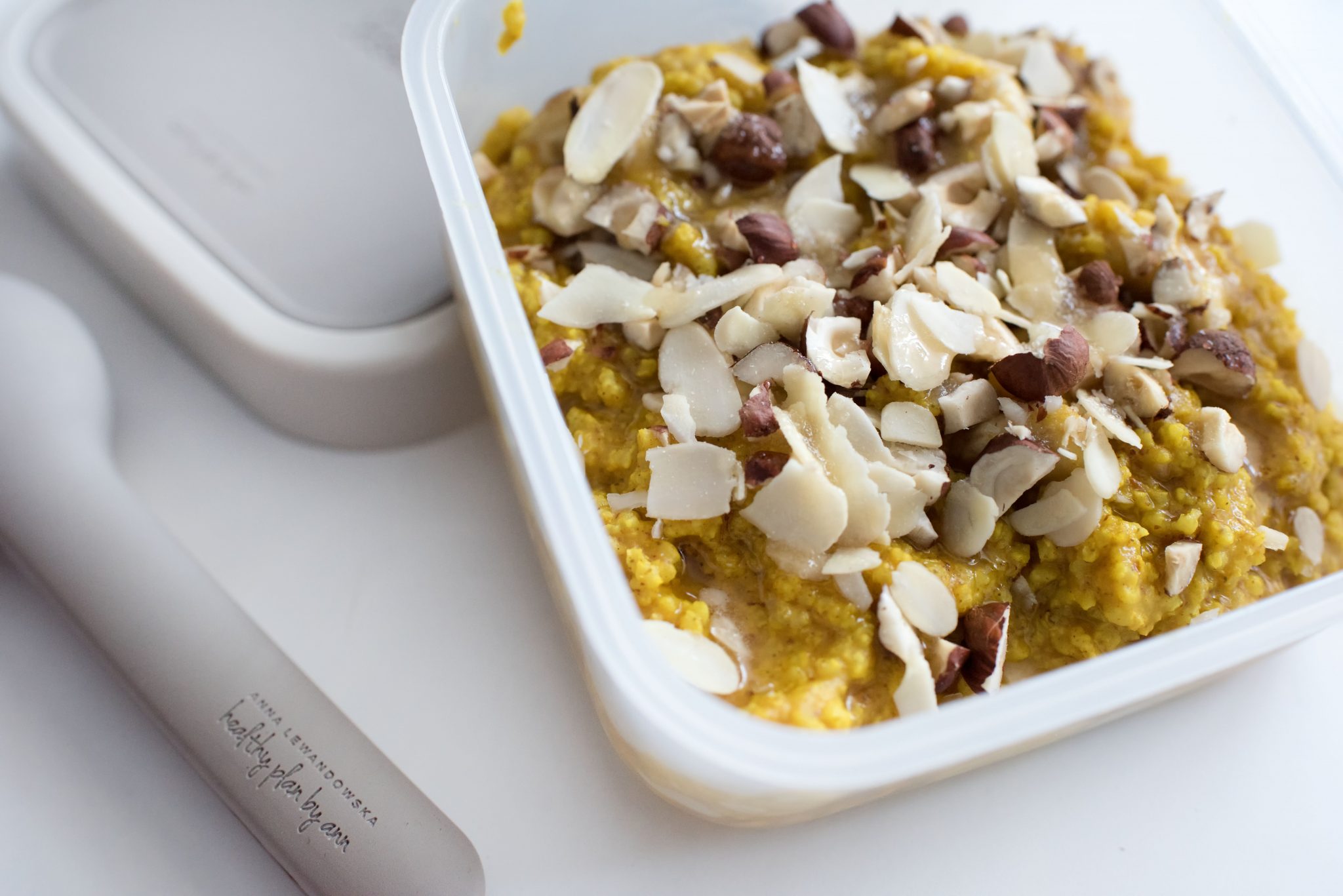
Warming millet porridge with ghee
Ingredients
Method
- Rinse the millet under running water until the water runs clear, then scald it with boiling water and drain, to remove the bitterness.
- Cook the millet in the water with the flaxseed, turmeric, cinnamon and cardamom.
- Towards the end add the salt, the sliced banana and the ghee butter.
- Once the water has been absorbed, add the plant milk over low heat and stir until the porridge is as loose as you want it.
- Let it cool slightly, then stir in the honey and the tahini and sprinkle with almond flakes or crushed hazelnuts.
Notes
Frequently asked questions
Because the fats in the grain’s outer layer oxidise in storage and that is what makes a batch taste bitter. Cold water alone does not shift it. Rinse under running water until it runs clear, then pour a kettle over the grains in a sieve and drain straight away.
The water stage is the cooking and the milk stage is the finishing. Pour everything in at the start and the pan boils over while the grain in the middle is still hard. Add the milk off the boil, once the water has been absorbed, and stir until the porridge is as loose as you want.
At the end of the water stage. The banana needs only a couple of minutes to soften and sweeten the whole pan, and left in longer it disappears into mush.
Honey stirred into something boiling loses its aroma and tastes simply of sugar, and tahini stirred into a very hot pan splits into grainy threads instead of melting in. Letting the porridge cool slightly first is the difference.
Cooked millet sets firm in the fridge, much more than oats, so a kept portion comes out as a solid block. Loosen it with a splash of plant milk over low heat, stirring until it comes back together. It keeps three days, and the nuts and tahini go on after reheating. Breakfasts like this one come planned into the week with a shopping list in the Diet & Training by Ann app.






Comments No Comments
Join the discussion…