



Phytic Acid – Is It Good or Bad?
Phytic acid is a compound that can be found in many plant foods. It is often classified as an anti-nutritional substance because it limits the absorption of some nutrients. Does it only have a negative impact on health? I will try to answer this question.
Phytic acid: occurrence and consumption
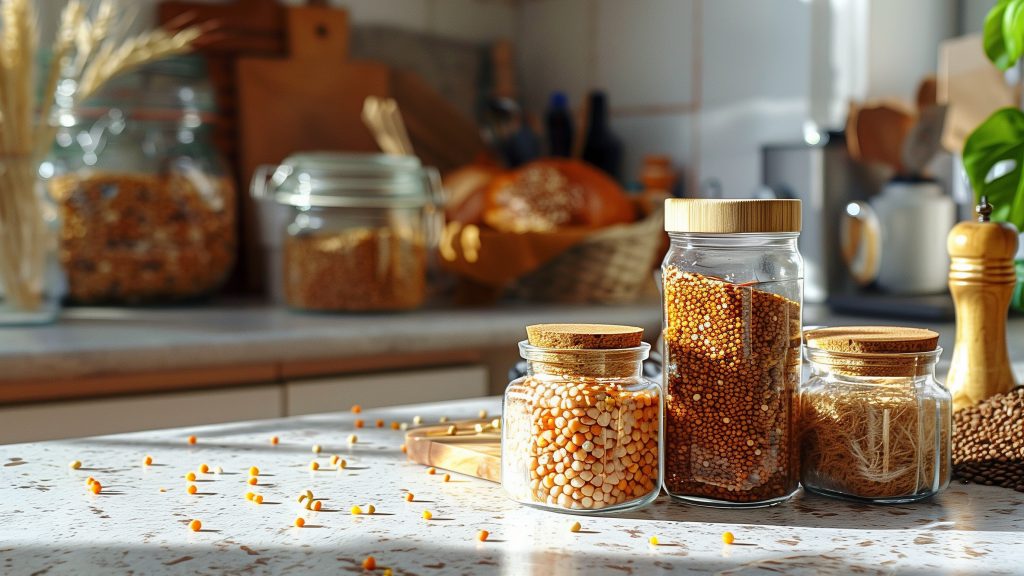
Phytic acid is found in the largest amounts in legume seeds, cereals, pseudocereals, nuts, and seeds. You can find it in soybeans, chickpeas, lentils, beans, oats, wheat, rye, buckwheat, rice, corn, sesame. In smaller amounts, it is also present in some fruit and vegetables.
Plant-based diets (vegan or vegetarian) may be associated with approximately 5 times higher phytic acid consumption than in people who follow the so-called mixed diet (i.e. rich in meat and other animal products). This is all due to legumes, which are a valuable source of protein in plant-based diets.
The phytate content of plant foods depends on many factors, such as: cultivation method, harvest time, plant variety, as well as the degree of product processing. For example, wild rice contains significantly more phytates than white rice, because phytates are mainly found in the outer layer of the grain (the more refined the product, the lower the phytate content).
Good or bad?
Phytic acid forms insoluble complexes with minerals, which limits the absorption of these ingredients. These are primarily zinc, iron, and calcium. People at risk of deficiencies in these ingredients (e.g. struggling with anemia, which I wrote more about in diet and anemia) should try to reduce the intake of phytates in their diet.
However, not everything related to phytic acid is negative. Phytates are strong antioxidants. They can also have a positive effect on the glycemic index by lowering it. As a result, they are a beneficial ingredient in the meals of people who care about stable glycemia. Studies suggest that appropriate phytate consumption may reduce the risk of some cancers, limit the formation of kidney stones and reduce the formation of advanced glycation end-products (AGEs) in people with type 2 diabetes, which damage the walls of blood vessels.
How to reduce phytate content
Fortunately, there are processing techniques that can significantly reduce the phytate content of grains and legumes, and thus prevent the loss of the minerals we care about (zinc, iron, calcium). Soaking, fermentation, sprouting, and cooking are methods that activate naturally occurring phytases in plant foods, enzymes that can hydrolyze (break down) phytate.
In addition, phytic acid is soluble in an acidic environment, so it is worth adding acidic ingredients to your meals, such as an apple cider vinegar dressing or lemon juice in your salad.
Soaking, in practice
This is the method most worth building into a normal week, because it costs no attention, only planning. Dried legumes want 8 to 12 hours in plenty of cold water, chickpeas and beans at the longer end, lentils at the shorter. Grains and oats need less, around 7 to 8 hours, which in practice means overnight.
Two details decide whether it was worth doing. Throw the soaking water away and cook in fresh water, because what has left the seed is dissolved in it. And use warm rather than cold water where you can, since the plant’s own phytase enzymes work faster at room temperature than in the fridge. A tablespoon of lemon juice or vinegar in the soaking water helps for the same reason the dressing does: the enzyme works better in a slightly acidic environment.
Fermentation and sprouting
Fermentation is the most effective of the four methods, which is why sourdough bread and a yeast loaf are not equivalent here. A long sourdough fermentation gives the phytase hours to work on the flour, while a quick yeast dough gives it barely any. The same applies to fermented soy: tempeh and miso carry far less phytate than the beans they are made from.
Sprouting takes one to three days, with a rinse twice a day, and it works on legumes, buckwheat and sunflower seeds. It is the most work of the four and the one with the clearest visible result, since the seed itself is doing the breaking down.
What to eat alongside, and who should actually care
You can also work on the other side of the equation. Vitamin C eaten with a meal improves iron absorption from plant foods, so a squeeze of lemon on lentils or peppers in a chickpea salad is doing more than adding flavour. Coffee and tea work the other way and are better kept an hour away from an iron-rich meal rather than drunk with it.
Worth saying plainly: for most people eating a varied diet, none of this needs managing. It matters if you are at risk of iron, zinc or calcium deficiency, if you are fully plant-based, or if legumes and wholegrains are the base of nearly every meal. If you suspect a deficiency, a blood test and a conversation with a doctor or dietitian settle it, which guessing does not.
Phytates, though often called anti-nutritional substances, should not negatively affect nutritional status when they are part of a varied and balanced diet. There are methods by which we can limit their adverse effects. Remember that phytates do not only play a negative role, and products rich in these substances actually contain many other valuable nutrients (vegetable protein or vitamins). You just need to understand how to process them and how to incorporate them into your diet to benefit from them as much as possible.
If you would rather have varied, balanced meals planned into the week with a shopping list, that is what the Diet & Training by Ann app does.
Frequently asked questions
It is a compound found in largest amounts in legume seeds, cereals, pseudocereals, nuts and seeds: soybeans, chickpeas, lentils, beans, oats, wheat, rye, buckwheat, rice, corn and sesame. It sits mainly in the outer layer of the grain, so the more refined a product is, the less of it remains.
Dried legumes want 8 to 12 hours in plenty of cold water, chickpeas and beans at the longer end and lentils at the shorter. Grains and oats need around 7 to 8 hours, which in practice means overnight. Throw the soaking water away and cook in fresh water.
Yes. The plant’s own phytase enzymes work faster at room temperature than in the fridge, so warm water beats cold. A tablespoon of lemon juice or vinegar in the soaking water helps too, because the enzyme works better in a slightly acidic environment.
Fermentation. A long sourdough fermentation gives the phytase hours to work on the flour, while a quick yeast dough gives it barely any, which is why sourdough and yeast bread are not equivalent here. Sprouting takes one to three days with a rinse twice daily, and soaking is the easiest to build into a normal week.
No. For most people eating a varied diet, none of this needs managing. It matters if you are at risk of iron, zinc or calcium deficiency, if you are fully plant-based, or if legumes and wholegrains are the base of nearly every meal. If you suspect a deficiency, a blood test and a conversation with a doctor or dietitian settle it. Varied, balanced meals come planned into the week with a shopping list in the Diet & Training by Ann app.
Bibliography
- Kibil, I. (2018). Wege. Dieta roślinna w praktyce (D. Gajewska, Ed.). PZWL
- Ostrowska, J., Jeznach-Steinhagen, A. (2016). Czynniki wpływające na wartość indeksu glikemicznego oraz jego zastosowanie w leczeniu dietetycznym cukrzycy. Forum Medycyny Rodzinnej, 10(2), 84–90
- Petroski, W., Minich, D. M. (2020). Is there such a thing as “anti-nutrients”? A narrative review of perceived problematic plant compounds. Nutrients, 12(10), 2929






Comments No Comments
Join the discussion…