


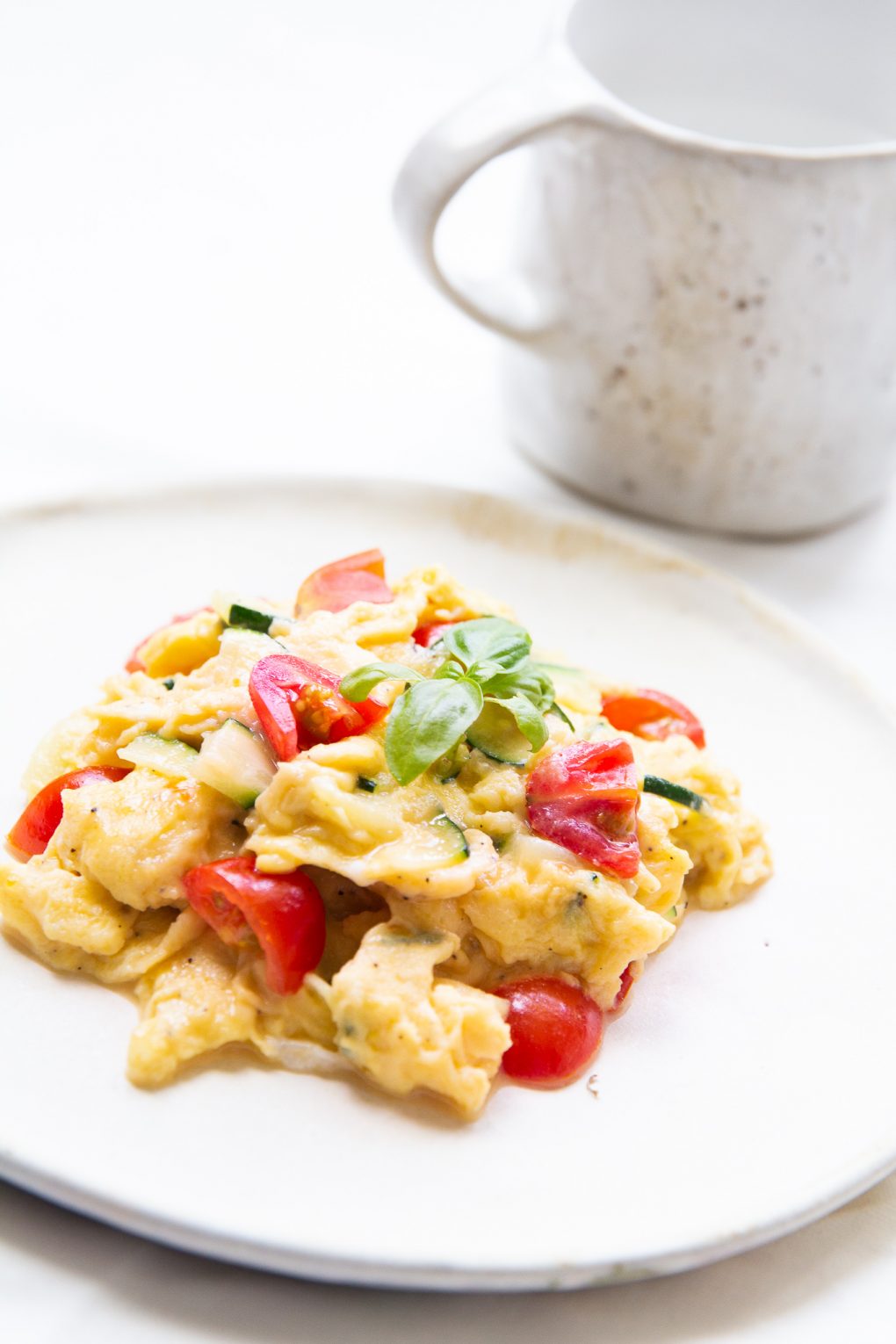
Scrambled Eggs with Tomatoes & Zucchini
INGREDIENTS:
- 5 eggs
- 1 zucchini
- 2 tomatoes
- 1 onion
-
1 teaspoon clarified butter
- a pinch of salt
- a pinch of pepper
 Buy
Buy Do you prefer a fat and protein breakfast, or one rich in carbs? This time I go for the first option. Scrambled eggs are always a good solution for a quick and nutritious breakfast. And if you are bored with the traditional version, create your own taste combinations. The more colourful and varied it gets, the better. Today I serve scrambled eggs with courgette and tomatoes, which make the plate full of colour and the palate full of new flavours.
Preparation
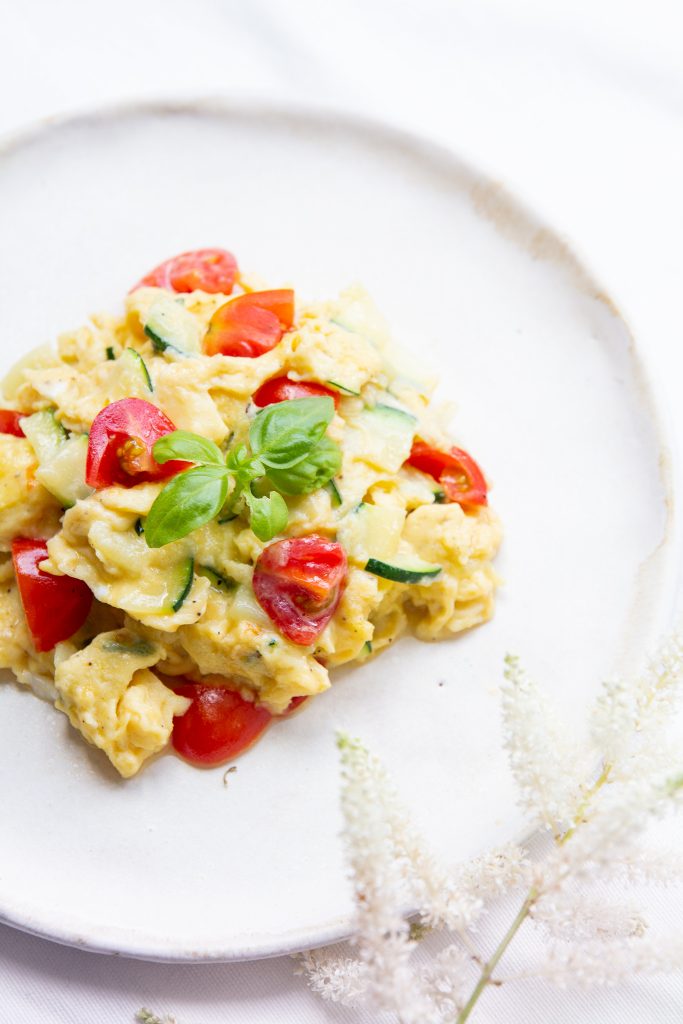
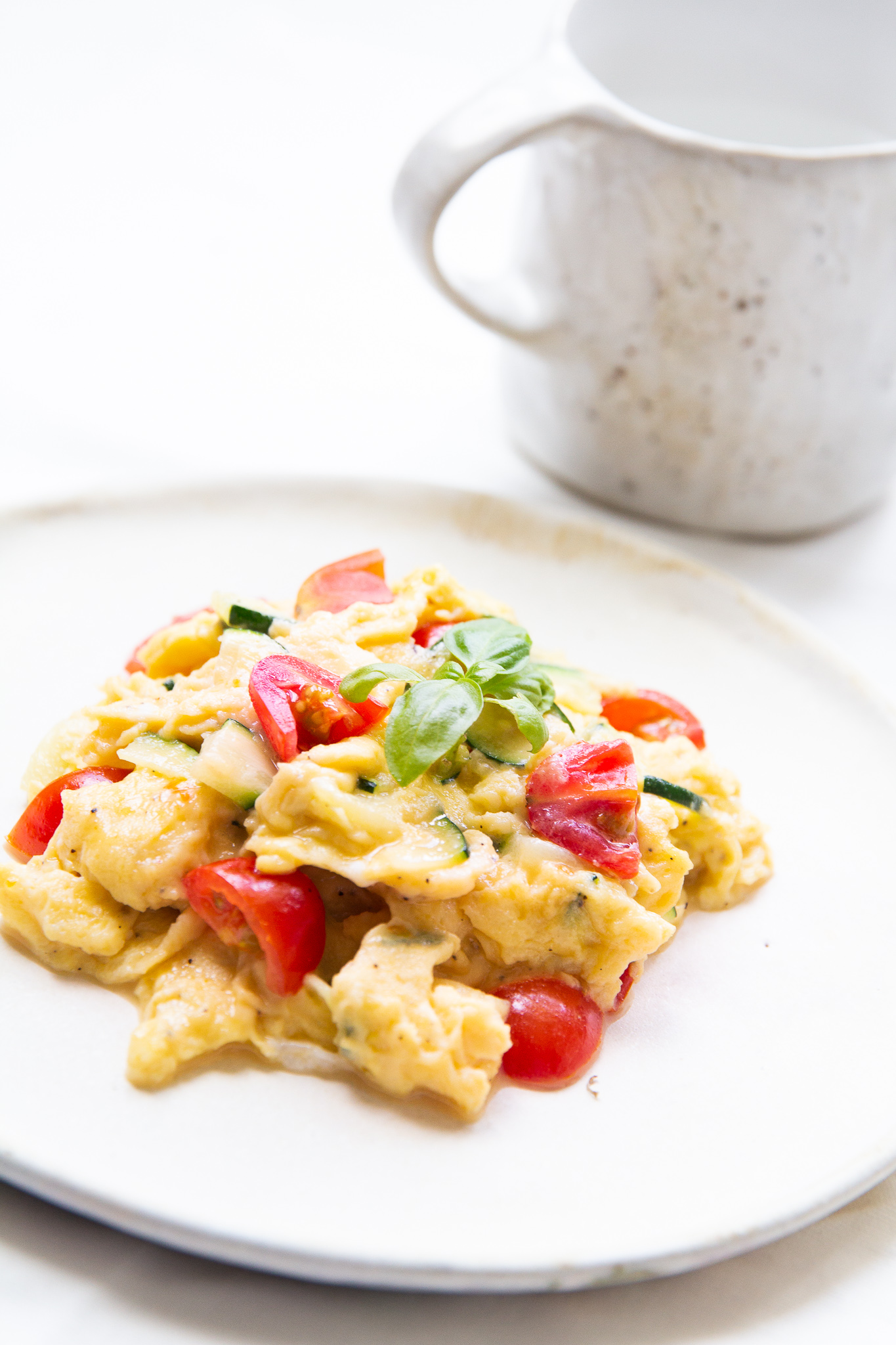
I peeled and diced the onion and the tomatoes, and grated the courgette. Then I melted some butter in the skillet, added the vegetables and simmered them for a while. Then I poured in the eggs and fried them until they set. I added salt and pepper to taste.
Get the water out of the vegetables first
Courgette and tomato are the two wettest things you can put in a pan, and this is why the recipe cooks them before the eggs go in rather than all together. Grated courgette in particular releases a surprising amount of liquid.
Let that liquid actually evaporate rather than stopping while the pan still looks wet. Eggs poured into a watery pan will not set properly: they go grey and weep on the plate, and no amount of extra cooking fixes it, it only makes the eggs rubbery. If you are in a hurry, squeeze the grated courgette in your hands over the sink before it goes in.
Salt at the end, not at the start
The recipe salts to taste at the very end, and that order is worth keeping. Salt added to raw eggs starts breaking down their proteins, and eggs that have stood salted turn watery in the pan.
It also matters for the vegetables: salting tomatoes early draws more water out of them, which is the opposite of what the previous step is trying to achieve. Season everything once the eggs have set.
Low heat and patience
Five eggs on high heat set in under a minute and come out dry and slightly rubbery. On low heat the same five take three or four minutes and stay soft and creamy, which is the whole difference between scrambled eggs at home and scrambled eggs somewhere that does them well.
Stir slowly and not constantly. Pushing the eggs around the pan without stopping breaks them into small dry grains, while folding them over every ten or fifteen seconds gives you large soft curds. Take the pan off the heat while the eggs still look slightly underdone, because they carry on setting from the pan’s own heat.
Which fat, and how much
Clarified butter is in the recipe rather than ordinary butter because the milk solids have been removed, so it takes the heat without browning and going bitter. A teaspoon is enough for a non-stick pan, more for a stainless one.
Butter also carries flavour in a way that a neutral oil does not, which matters in a dish with five ingredients and nowhere to hide. If you want to keep it dairy-free, coconut oil behaves the same way at this temperature.
What else works in place of the vegetables
The invitation to create your own combinations is worth taking literally, with one rule: group the additions by how much water they carry. Mushrooms, courgette, tomato and spinach all need cooking down first, exactly like the vegetables here.
Anything dry goes in with the eggs or after them: cheese, herbs, smoked fish, olives, avocado on the side. Five eggs make two proper portions, and this is a dish to serve immediately, since scrambled eggs keep setting and tighten within minutes of leaving the pan. If you would rather have breakfasts like this one planned into the week with a shopping list, that is what the Diet & Training by Ann app does.
Scrambled eggs with zucchini and tomatoes
Ingredients
Method
- Peel and dice the onion and the tomatoes, and grate the courgette.
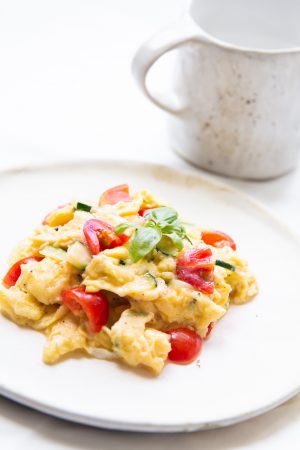
- Melt the clarified butter in a skillet, add the vegetables and cook them until their liquid has evaporated.
- Lower the heat, pour in the eggs and fold them over every ten to fifteen seconds until they set into large soft curds.
- Take the pan off the heat while the eggs still look slightly underdone.
- Season with salt and pepper to taste and serve immediately.
Notes
Frequently asked questions
Because courgette and tomato are the two wettest things you can put in a pan, and grated courgette in particular releases a lot of liquid. Eggs poured into a watery pan will not set properly: they go grey and weep on the plate. Let the liquid evaporate first, or squeeze the grated courgette over the sink.
At the end, once they have set. Salt added to raw eggs starts breaking down their proteins and eggs that have stood salted turn watery in the pan. Salting the tomatoes early has the same problem in reverse, drawing more water out of them.
Low heat and patience. Five eggs on high heat set in under a minute and come out rubbery, while on low heat they take three or four minutes and stay creamy. Take the pan off while they still look slightly underdone, since they keep setting from the pan’s heat.
Every ten to fifteen seconds, folding rather than pushing. Constant stirring breaks the eggs into small dry grains, while folding gives you large soft curds.
Almost anything, grouped by how much water it carries. Mushrooms, courgette, tomato and spinach all need cooking down first. Anything dry goes in with the eggs or after them: cheese, herbs, smoked fish, olives, or avocado on the side. Breakfasts like this one come planned into the week with a shopping list in the Diet & Training by Ann app.





Comments No Comments
Join the discussion…