


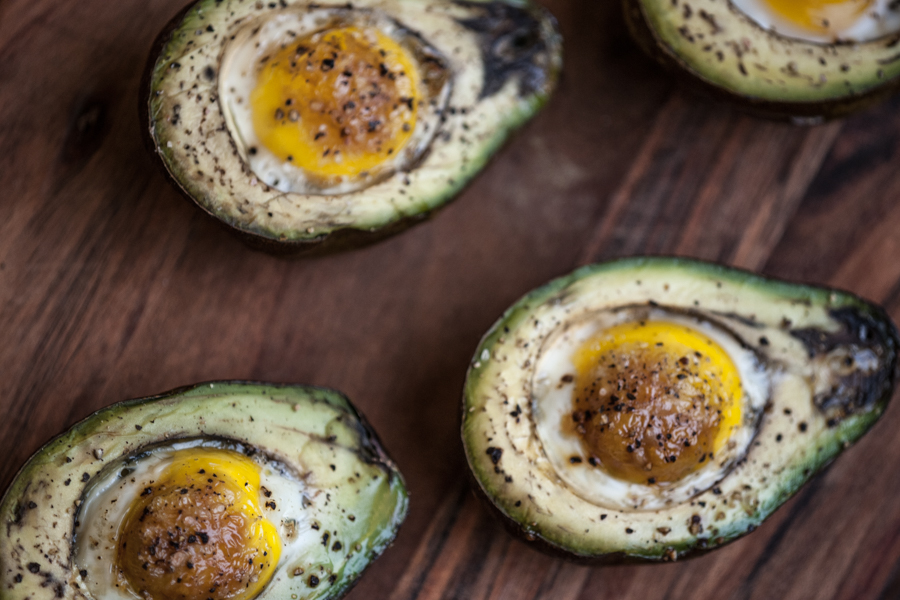
high-fat, high-protein breakfast
You’ve probably noticed that I started to suggest breakfast consisting of proteins and fats more often.
And yet throughout the first years of the blog I used to promote the following principle: It’s time for a morning meal -> carbohydrates!
Well, what can I say, building menus is very much like living a life – it’s about constant learning, gaining experience, observations, and drawing conclusions for yourself and for others. There is only one principle that proves to be true – no diet is good for us all.
What cortisol does before you get out of bed
Many processes in the human body are affected and regulated by circadian rhythm. For instance, cortisol reaches its highest level in more or less half an hour after morning awakening. I elaborated more on cortisol in the post about it being both a friend and an enemy.
Cortisol stimulates the release of glucose supplies, so that your body at night is provided with enough energy to perform basic biological functions. If sugar level drops considerably at night, not only does your organism increase cortisol secretion, but it also produces more glucagon and epinephrine (they break down glycogen in liver), which will slow down digestion, making the body capable of surviving without external energy supply. This situation is familiar to many people – they don’t feel hungry in the morning and they have a rough time accepting the fact that eating breakfast is a necessity. Having a coffee instead of a meal strongly affects these processes and their results.
Cortisol, epinephrine (adrenaline), and glucagon all increase blood sugar concentration. A healthy body has a mechanism which keeps its level in check – it’s insulin at work, of course. If the first meal we eat consists mainly of carbohydrates, it will cause an additional increase in blood glucose and insulin spike, which before long will result in a decrease in blood sugar levels. We will feel hungry and in some of us it will cause weakness or drowsiness.
Why I changed my own breakfast
I experienced these symptoms when I had reduced my training load. Beforehand, during periods of intensive physical activity, carbohydrates for breakfast would send a jolt of energy through me, required for great physical effort. With the lifestyle I’m leading today, however, I more and more often decide to go with a high-fat, high-protein breakfast.
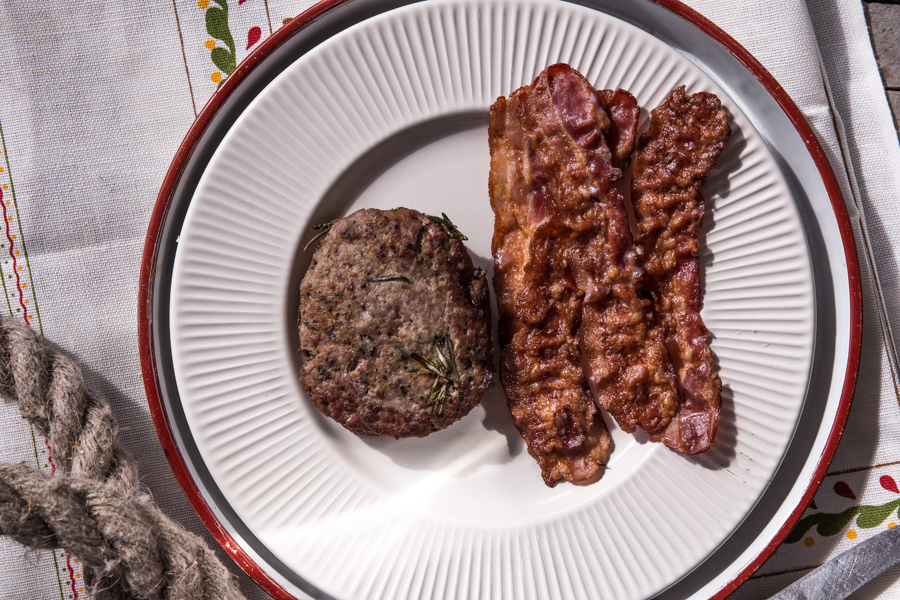
High-fat, high-protein breakfasts:
- Do not cause such a sudden jump in blood sugar levels. That is why they are healthier for people with insulin resistance and diabetes.
- I would recommend it to people who live under constant stress and those who suffer from neuroses (high blood cortisol levels)
- They prove to be effective when it comes to people with sleep disorders
- They promote fat reduction
- They give you a sense of satiety that lasts longer than that after having a carbohydrate meal
What it looks like on a plate
In practice this is a narrower change than it sounds: the eggs, the fish or the meat stay, the bread and the sweet toppings go, and something fatty comes in alongside, which usually means avocado, butter, olive oil or a couple of rashers of bacon. There are already several of them written out here on the blog:
- baked eggs, the quickest of them
- beef tartare, for a morning with more time
- chicken stew with a fried egg
- tofu scramble, if you would rather keep it plant based
You can use these recipes to make egg dishes, meat fricassees, steak tartare etc. Enjoy!
If you are not hungry in the morning
That feeling is exactly what the paragraphs above describe, and it is not a reason to skip the meal. Two things help. Push the first meal an hour later rather than replacing it with coffee, since coffee on its own works on the same processes that are already running. And make that first meal smaller than you think it should be: two eggs with avocado is a complete breakfast, and appetite in the morning tends to come back within a couple of weeks of eating one.
Whether the balance suits you is something you can only tell by watching, and that goes for the amounts as much as for the type. If you would rather not weigh it up meal by meal, the Diet & Training by Ann app sets the amounts from your goal and plans the week, breakfast included.
And what about carbohydrates?
We are not giving up on them! They are essential for us, but their number should depend on your lifestyle and also other factors, like the condition of your thyroid. We sure eat carbohydrates in-between training and workout sessions.
I also recommend athletes to increase their carbohydrate intake before important competitions, training sessions, and matches a day or two beforehand. In this case, it’s good to consume a food portion containing only carbohydrates before going to sleep.
The essential thing here is the OBSERVATION of your body’s responses, drawing conclusions, and adjusting the diet accordingly. In case of doubt or discomfort -> perform specialized tests that will measure your sugar and cortisol levels, and consult a doctor.
Stay healthy!
Frequently asked questions
The eggs, fish or meat stay and the bread and sweet toppings go, with something fatty alongside: avocado, butter, olive oil or a couple of rashers of bacon. Two eggs with avocado is already a complete version of it.
Because it peaks about half an hour after you wake up, and it is one of the hormones that raise blood sugar overnight so the body can run without food. That is the state your first meal lands in, which is why the composition of that meal is worth thinking about at all.
Push the first meal an hour later rather than replacing it with coffee, and make it smaller than you think it should be. Coffee instead of a meal works on the same processes that are already running, and morning appetite tends to return within a couple of weeks of eating breakfast.
No. Anna is explicit that they are essential and that the amount should follow your lifestyle and other factors, such as the condition of your thyroid. They belong around training sessions, and athletes are advised to increase them a day or two before an important competition.
By watching what happens rather than by rule. If something feels off, the post recommends specialised tests for sugar and cortisol levels and a conversation with a doctor rather than more guessing. If you would rather not weigh the amounts up meal by meal, the Diet & Training by Ann app sets them from your goal and plans the week.
Photo: Marta Wojtal





Comments No Comments
Join the discussion…